Washington, D.C., December 5, 2025 — The United States military conducted a lethal strike on a suspected drug smuggling vessel in the Caribbean on Thursday, killing four individuals, according to the Pentagon. The operation comes amid intensified scrutiny over the Trump administration’s controversial campaign against alleged narco-terrorists in international waters.
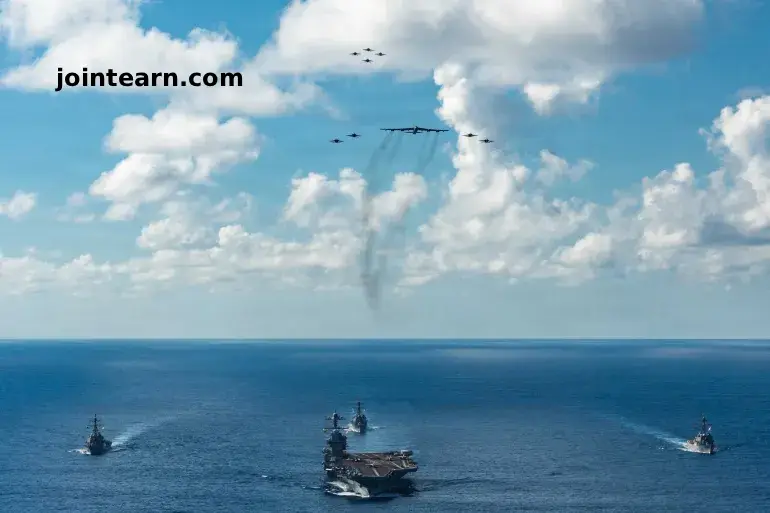
![The US Navy’s Gerald R. Ford Carrier Strike Group in the Atlantic Ocean. Photo: US Navy/Petty Officer 3rd Class Gladjimi Balisage via Reuters]
Details of the Strike
The Pentagon reported that the latest strike targeted a vessel identified as being operated by a Designated Terrorist Organization. Intelligence indicated that the boat was transporting illicit narcotics along a well-known trafficking route in the Eastern Pacific.
In a statement, the U.S. Southern Command confirmed:
“Four male narco-terrorists aboard the vessel were killed. The strike was directed by Secretary of Defense Pete Hegseth and carried out in international waters.”
This marks another deadly operation in the Trump administration’s months-long campaign against drug trafficking, which has reportedly killed more than 80 individuals suspected of smuggling narcotics.
Controversy Over Prior Strikes
The strike has drawn renewed scrutiny following revelations about a September 2, 2025, attack on the same vessel. Reports suggest that the boat had already been struck once during that incident, and a second attack may have killed surviving crew members. The White House maintains that the second strike was lawful, claiming it was ordered by Admiral Frank “Mitch” Bradley and complied with the laws of armed conflict.
Legal experts, however, have expressed concerns that targeting unarmed survivors or shipwrecked individuals could constitute a war crime, violating both international law and the U.S. military’s own guidelines, which prohibit firing on incapacitated vessels.
Congressional Briefings
Admiral Bradley appeared before congressional committees in closed-door sessions, denying any orders to “give no quarter” or deliberately target all personnel aboard.
Senator Tom Cotton, chair of the Senate Intelligence Committee, reportedly stated that Bradley clarified no such instructions were given. However, Representative Adam Smith, top Democrat on the House Armed Services Committee, suggested video evidence indicates survivors may have been killed after the boat had capsized.
Human Rights Concerns
Human rights organizations and families of victims have criticized the Trump administration’s approach as extrajudicial killing. The family of Colombian fisherman Alejandro Carranza recently filed a complaint with a regional human rights body, claiming his death during a September strike violated his right to life.
Despite legal and ethical questions, the administration continues to justify its actions as part of a broader “war” against narco-terrorism, emphasizing national security and the disruption of drug trafficking networks.
Geopolitical Implications
The strike occurs as U.S. military assets continue to surge near Venezuela’s coastline, heightening tensions in the region. Venezuelan President Nicolás Maduro has condemned the operations, framing them as part of a U.S. campaign to destabilize his government.
President Trump has also issued repeated warnings that land-based strikes on Venezuela could happen “very soon”, signaling potential escalation in U.S.-Venezuela relations.
Summary
The latest Caribbean strike underscores the Trump administration’s aggressive anti-narcotics policy, while raising complex questions about international law, human rights, and presidential authority in military operations. As investigations and congressional scrutiny continue, the global community watches closely to see how the U.S. balances security objectives with legal and ethical obligations.


Leave a Reply