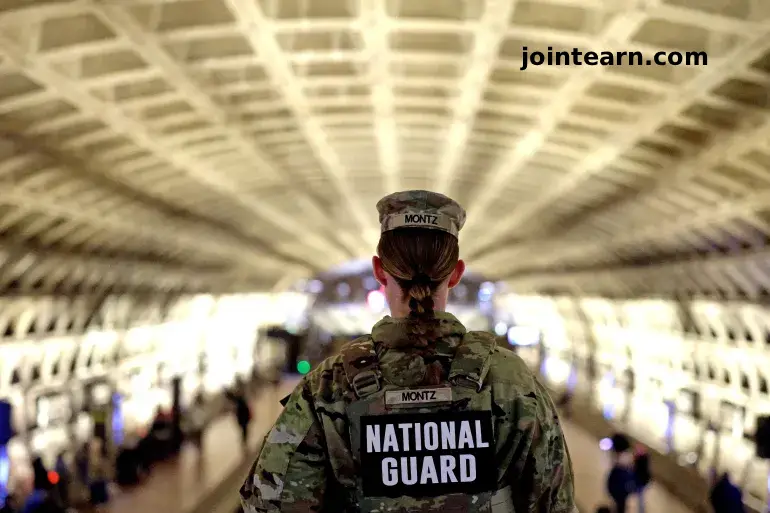
Washington, D.C., December 5, 2025 — A federal appeals court has temporarily allowed President Donald Trump to maintain National Guard troops in Washington, DC, halting a lower court’s order that required their withdrawal in the coming weeks. The decision comes amid growing concerns about public safety in the nation’s capital following a fatal shooting involving National Guard personnel.
![National Guard patrols at Gallery Place Metro Station, Washington, DC, December 3, 2025. Photo: Alex Wong/Getty Images/AFP]
Appeals Court Decision
On Thursday, a three-judge panel of the U.S. Court of Appeals for the DC Circuit granted a stay on District Judge Jia Cobb’s November ruling. Judge Cobb had ordered that federal troops deployed in Washington, DC, be withdrawn by December 11, a deadline later extended by 21 days.
The appeals court emphasized that the pause “should not be construed in any way as a ruling on the merits”, leaving the underlying legal questions unresolved. The Trump administration had requested the delay to evaluate its response and explore potential appeals.
Deployment of the National Guard
The Trump administration has stationed at least 2,000 National Guard troops in Washington, DC, reservists who are not full-time soldiers. According to the president, their deployment is part of a broader initiative aimed at crime prevention and public “beautification” projects in the city.
However, the deployment has faced legal challenges in multiple Democratic-run cities, including Los Angeles, Portland, and Chicago, where courts have scrutinized the federal government’s authority to place National Guard units on the streets for non-military missions.
Background: Fatal Shooting Raises Stakes
The appeals court decision comes days after a tragic shooting in the city. On November 26, an Afghan immigrant named Rahmanullah Lakanwal, a former CIA contractor, shot and killed Army Specialist Sarah Beckstrom and critically wounded Air Force Staff Sergeant Andrew Wolfe near the White House.
Following the attack, the Trump administration announced it would deploy an additional 500 National Guard members to Washington, DC, citing heightened security needs. Authorities have charged 29-year-old Lakanwal in connection with the shooting, which has intensified debates about public safety and the role of military personnel in domestic law enforcement.
Legal Controversy
District Judge Jia Cobb ruled in November that the Trump administration had “acted contrary to law” by deploying the National Guard for crime-deterrence missions without a formal request from the city’s civil authorities. Critics argue that such actions blur the line between military and civilian authority, raising constitutional questions about the president’s powers in federal territories.
Trump’s legal team argued that the president has broad authority to protect federal interests in the capital and that removing troops too quickly could jeopardize public safety, particularly in the wake of the recent shooting.
Political Implications
The case highlights a broader struggle over federal authority, public safety, and partisan politics. Trump has faced resistance from Democratic-led cities across the country, which have questioned the legality of deploying federal troops for domestic operations.
Supporters of the deployment argue that National Guard presence deters crime and ensures security in high-risk areas, while critics contend that it risks militarizing American streets and undermining local governance.
What’s Next
The appeals court stay is temporary, and the legal battle is ongoing. The Trump administration will continue to evaluate its options while the courts review the merits of the original order. Meanwhile, public safety officials and city leaders remain focused on preventing further incidents and coordinating with federal authorities to protect residents and National Guard personnel alike.
As the case progresses, it is expected to set important precedents regarding the use of National Guard troops in federal territories and the limits of presidential authority in domestic deployments.


Leave a Reply