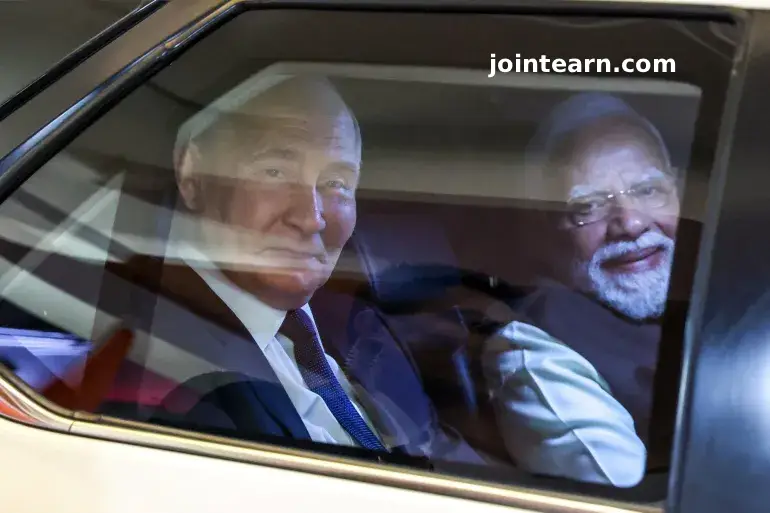
New Delhi, India – December 4, 2025 – Russian President Vladimir Putin has publicly questioned U.S. pressure on India regarding its oil purchases from Russia, highlighting Washington’s own imports of Russian nuclear fuel. Putin’s remarks came as he arrived in New Delhi for a state visit designed to strengthen India-Russia ties, underscoring the close relationship between Putin and Indian Prime Minister Narendra Modi.
![Putin and Modi arrive for an informal dinner at the Prime Minister’s Residence in New Delhi. Photo: Alexander Kazakov/Sputnik]
Warm Reception in New Delhi
Putin received a warm welcome at the airport from Prime Minister Modi, who greeted the Russian president with an embrace, signaling a rare personal rapport. Following the reception, the two leaders traveled together to a private dinner at Modi’s residence, highlighting the importance India places on its diplomatic relationship with Moscow despite pressure from the United States.
Al Jazeera correspondent Neha Poonia noted that the reception sent a clear message:
“Putin is not a pariah. Countries like India are willing to maintain ties despite pressure from Western nations.”
Modi described the relationship as “time-tested” and “benefitting our people,” emphasizing India’s continued commitment to cooperation with Russia.
Putin Defends Energy Cooperation
Before his arrival, Putin questioned the logic of U.S. criticism in an interview with Indian media:
“The United States itself still buys nuclear fuel from us for its own nuclear power plants. India should enjoy the same privilege.”
Putin stressed that energy cooperation with India “remains unaffected by political swings or the tragic events in Ukraine” and accused unnamed actors of attempting to constrain India for political reasons.
India’s Balancing Act
India has significantly increased its Russian oil imports, rising from 2.5% of total crude purchases before 2022 to nearly 36% today, making India the world’s second-largest buyer of Russian oil. By purchasing discounted Russian crude, Indian refiners have reportedly saved approximately $12.20 per barrel.
However, the U.S. under President Donald Trump has responded with punitive measures, including 50% tariffs on Indian goods and sanctions on major Russian oil producers. These policies have begun to impact Indian refiners, with Reliance Industries, the country’s largest private refiner, announcing it will halt exports of petroleum products derived from Russian crude.
Strategic Agreements on the Agenda
During the visit, Putin and Modi are expected to hold formal summit talks and announce agreements spanning:
- Defence cooperation, including potential sales of S-400 missile systems and Su-57 stealth fighter jets.
- Shipping and logistics partnerships to enhance trade routes.
- Healthcare collaboration, including medical technology exchanges.
- Labour mobility agreements to facilitate skilled workforce movement.
Both nations aim to reach $100 billion in bilateral trade by 2030, though declining oil imports may slow progress toward this target.
Global Implications
The visit highlights India’s delicate diplomatic balancing act between Washington and Moscow. While India navigates Western sanctions and geopolitical pressures, it continues to assert strategic autonomy by deepening energy, defence, and trade relations with Russia.
The state visit also comes amid global scrutiny of Russia’s ongoing conflict in Ukraine, with Putin using the visit to reinforce alliances outside the Western sphere and challenge the perceived double standards of U.S. foreign policy.


Leave a Reply