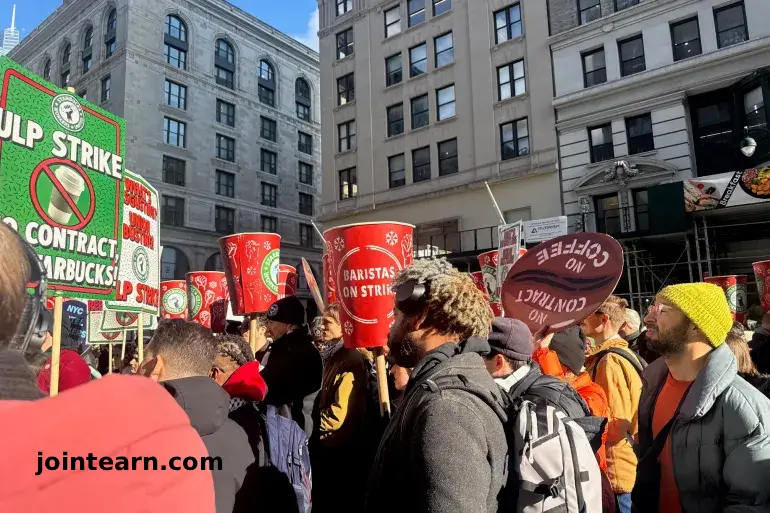
New York City, December 5, 2025 – The coffee giant Starbucks is facing mounting pressure as unionized workers and supporters stage open-ended strikes across the United States, with hundreds of demonstrators taking to the streets of New York City this week. High-profile politicians and local leaders have joined the picket lines, amplifying calls for fair wages, improved working conditions, and meaningful labor negotiations.
NYC Picket Lines Highlight Starbucks Labor Dispute
In the heart of Manhattan, picketers gathered along Fifth Avenue in front of the iconic Empire State Building, brandishing signs with slogans such as “No Contract, No Coffee” and “Baristas on Strike.” These rallies are part of a broader campaign led by Starbucks Workers United, the union representing baristas and other Starbucks employees seeking stronger labor rights and benefits.
Among those detained during Thursday’s demonstration were two employees who identified themselves as “T-bone” and “Elon,” highlighting the tension between corporate management and rank-and-file baristas. Elon told Al Jazeera, “Stop stalling contracts, negotiate with the workers and sign a contract for fair wages.”
While Starbucks officials claim that only a small fraction of the protestors were actual employees, union representatives insist that more than 100 baristas participated, emphasizing the deep-rooted frustration among the workforce.
Ongoing Strike Action Across the Country
The strike, now in its third week, began on November 13, 2025, as part of a nationwide push for contract negotiations. The union argues that Starbucks has repeatedly stalled bargaining discussions, leaving employees without clear paths to wage increases and benefits improvements. The disputes stem from offers that many workers consider insufficient, including proposals of 2 percent raises that do not address healthcare gaps or other systemic workplace issues.
Starbucks spokesperson Jaci Anderson defended the company’s position, stating, “We’re focused on continuing to offer the best job in retail, including more than $30 an hour on average in pay and benefits for hourly partners. Partner engagement is up, turnover is nearly half the industry average, and we receive over one million job applications annually.”
However, Starbucks Workers United counters that starting wages for baristas in many states are far below what employees need to sustain a living wage. For instance, barista positions in Brooklyn, New York, start at $17.25 per hour, and supervisory roles in Kansas begin at $19.37 per hour—figures that often fail to include tips or adequate hours for full benefits.
Dispute Over Pay Raise Claims
Tensions escalated further as Starbucks alleged that union demands would translate into a 65 percent immediate pay increase and 77 percent over three years, including premium pay for weekends, early and late shifts, inventory sorting, and promotional days like Starbucks’ Red Cup Day.
Union representatives called this a misrepresentation of their proposals. Michelle Eisen, spokesperson for Starbucks Workers United, explained, “The company combined multiple proposals to inflate our requests. Our goal is simply fair pay and benefits for the work performed every day.”
Political Pressure and Legal Settlements
Political figures are increasingly weighing in on the Starbucks labor dispute. Outgoing NYC Mayor Eric Adams and Mayor-elect Zohran Mamdani have publicly pressured Starbucks to negotiate. Earlier this week, the city secured a $38.9 million settlement for Starbucks violations of the Fair Workweek law, which mandates predictable schedules and fair work hours.
Senator Bernie Sanders also joined striking workers outside a Brooklyn Starbucks, highlighting the growing national spotlight on the company’s labor practices. Sanders emphasized that thousands of stores have unionized, yet Starbucks continues to resist meaningful contract negotiations.
Long-Term Labor Challenges
The ongoing labor unrest at Starbucks is part of a broader trend of unionization that began in Buffalo, New York, in 2021. Employees have long accused the company of union-busting tactics, including surveillance and mandatory anti-union meetings. Historical actions under former CEO Howard Schultz and current CEO Brian Niccol, who took over in 2024, have failed to resolve these systemic tensions.
The CEO-to-worker pay gap has drawn particular criticism. Niccol earns nearly $96 million annually—over 6,600 times the median employee salary—fueling public scrutiny as baristas continue to push for fair compensation.
The Path Forward
As strikes continue and public attention intensifies, workers hope Starbucks will return to the negotiating table. Union leaders maintain that front-line employees hold the key solutions to operational and labor challenges. Meanwhile, the company insists that discussions can resume once the union is ready, while emphasizing the small proportion of unionized staff involved in demonstrations.
The Starbucks union dispute reflects broader issues in the U.S. labor landscape, highlighting the ongoing struggle between corporate management and employees seeking fair wages, benefits, and workplace rights. With ongoing protests, legal settlements, and political pressure, the outcome of this strike could set a significant precedent for labor relations in the retail and service industries nationwide.


Leave a Reply