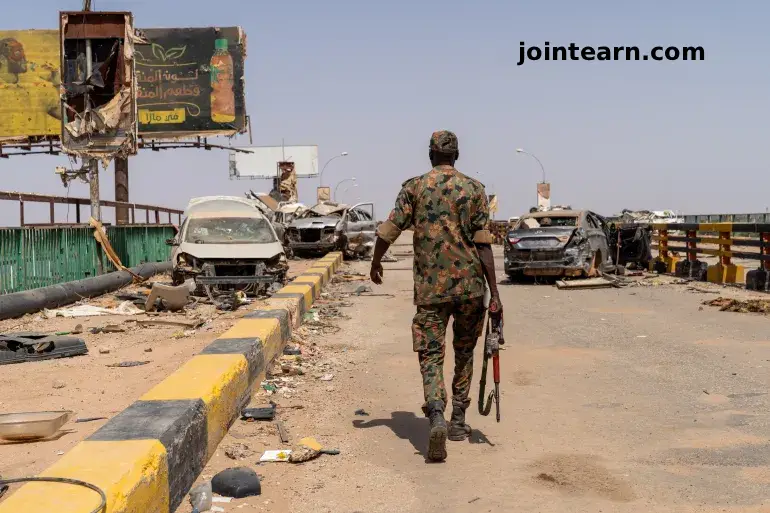
Khartoum, Sudan, December 5, 2025 – Nearly all households in Sudan’s capital, Khartoum, are facing severe food shortages, while the healthcare system remains largely non-functional months after the military recaptured the city from the Rapid Support Forces (RSF), according to a new assessment by humanitarian organizations.
The report, compiled by Medical Teams International and Norwegian Church Aid, surveyed more than 1,250 households and 70 healthcare facilities across Khartoum between August and September. Findings reveal that 97 percent of families lack sufficient food, with three-quarters consuming fewer than 1,800 calories daily, well below nutritional requirements.
Collapsed Healthcare System
The study found that only 43 percent of health facilities in Khartoum remain operational. Access to safe childbirth services is critically limited, with just 14 percent of women able to give birth safely. Most medical facilities lack essential medicines, including antibiotics, with 70 percent reporting none available.
Dirk Hanekom, Norwegian Church Aid’s country director in Sudan, emphasized the urgency of the situation:
“The need for humanitarian assistance in Khartoum is urgent. If the capital is facing such dire conditions, the situation in remote conflict zones is likely even more catastrophic.”
Birhanu Waka, country director for Medical Teams International, added that the data should guide efforts to restore health systems and provide immediate humanitarian support amid “unimaginable hardship.”
Ongoing Conflict and Displacement
Khartoum was recaptured by Sudanese military forces in March, and domestic flights resumed at the capital’s airport in October. However, the RSF continues to control large parts of western Sudan, including Darfur, after seizing el-Fasher in late October.
In Babnusa, West Kordofan, reports indicate deteriorating conditions for civilians. The Sudan Doctors Network confirmed that over 100 families, including children and pregnant women, were detained by RSF forces under dangerous conditions, with several detainees reportedly beaten.
The United Nations has warned of a potential wave of mass atrocities in Kordofan, with UN human rights chief Volker Turk stating that history appears to be repeating itself following the fall of el-Fasher. Satellite imagery from the Yale Humanitarian Research Lab indicates that the city remains largely deserted, and at least 60,000 people were killed in el-Fasher over three weeks, with up to 150,000 residents unaccounted for.
Scale of the Humanitarian Catastrophe
The ongoing conflict has displaced nearly 12 million people, while more than 24 million Sudanese now face acute hunger. The total death toll from the civil war is estimated to exceed 100,000, though exact numbers remain uncertain.
Despite claims of a unilateral ceasefire by the RSF, attacks continue across the country. Peace negotiations have stalled as the military demands the RSF withdraw from captured territories.
International Response
The United States has pledged to take a leading role in efforts to end the conflict. President Donald Trump and Secretary of State Marco Rubio have both emphasized their involvement, with Rubio describing Trump as “the only leader in the world capable of resolving the Sudan crisis.”
Humanitarian organizations are calling for urgent international aid to address the widespread hunger, health system collapse, and mass displacement affecting millions of Sudanese, particularly in the capital and western regions.


Leave a Reply