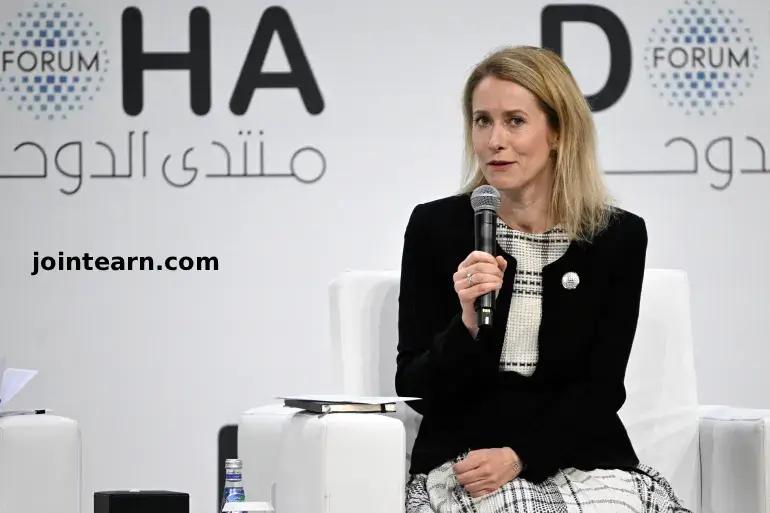
Doha, Qatar, December 6, 2025 – European Union foreign policy chief Kaja Kallas reaffirmed the United States as Europe’s “biggest ally” amid ongoing criticism of the continent in Washington’s latest National Security Strategy. Speaking at the Doha Forum on Saturday, Kallas acknowledged some harsh assessments in the US report but stressed that transatlantic unity remains essential, particularly as ceasefire negotiations over the Russia-Ukraine war continue.
US Criticism of Europe
The US National Security Strategy released earlier this year included pointed critiques of Europe, accusing the continent of lacking “self-confidence” and warning of potential “civilizational erasure”. While these claims were widely dismissed by analysts, Kallas admitted that some points were accurate, particularly regarding the EU’s self-assessment and defense posture.
“I think we haven’t always seen eye to eye on different topics, but I think the overall principle is still there. We are the biggest allies,” Kallas said. She added that Washington’s goal should be to help Europe “correct its current trajectory.”
The strategy echoes earlier criticisms from the Trump administration, which pressured European countries to increase NATO contributions, warning that they had benefited disproportionately from US military support, especially amid the ongoing conflict in Ukraine.
Ongoing Ceasefire Talks
Kallas’ comments come as US and Ukrainian officials engage in a third day of talks on a proposed ceasefire plan. The discussions follow a five-hour negotiation in Moscow, where Ukrainian representatives sought to revise elements of a plan advanced by former US President Donald Trump, which includes Ukraine ceding some territories to Russia in exchange for security guarantees.
US officials emphasized that any “real progress” depends on Russia’s willingness to commit to long-term peace, de-escalation, and cessation of killings. Kallas, however, cautioned against pressuring Ukraine to make concessions that could undermine long-term stability.
“If aggression is rewarded, we will see it happen again, and not only in Ukraine or Gaza, but all around the world,” Kallas said, highlighting the need for principled negotiation that does not incentivize further aggression.
Europe’s Strategic Self-Confidence
In her Doha Forum remarks, Kallas underscored that Europe has been underestimating its own power, particularly in responding to Russia’s actions. She argued that the EU should project greater self-confidence in dealings with Moscow and other geopolitical challenges.
“Towards Russia, for example… we should be more self-confident,” Kallas noted, signaling a desire for Europe to strengthen its strategic autonomy while maintaining its alliance with the US.
Kallas’ statements reflect the EU’s careful balancing act: maintaining a strong transatlantic alliance while asserting its own geopolitical influence and supporting Ukraine amid one of Europe’s largest conflicts since World War II.
Implications for NATO and Transatlantic Relations
The ongoing criticism in the US strategy and Trump’s approach to the Ukraine war highlight continuing tensions in transatlantic relations, particularly regarding defense spending, NATO commitments, and the EU’s role in regional security. Kallas’ comments suggest that the EU is committed to maintaining strong ties with Washington while simultaneously seeking greater European strategic autonomy.
As ceasefire negotiations continue, Kallas’ emphasis on self-confidence, principled diplomacy, and unity with the US serves as a reminder that Europe remains a central actor in the global response to the Russia-Ukraine war.


Leave a Reply