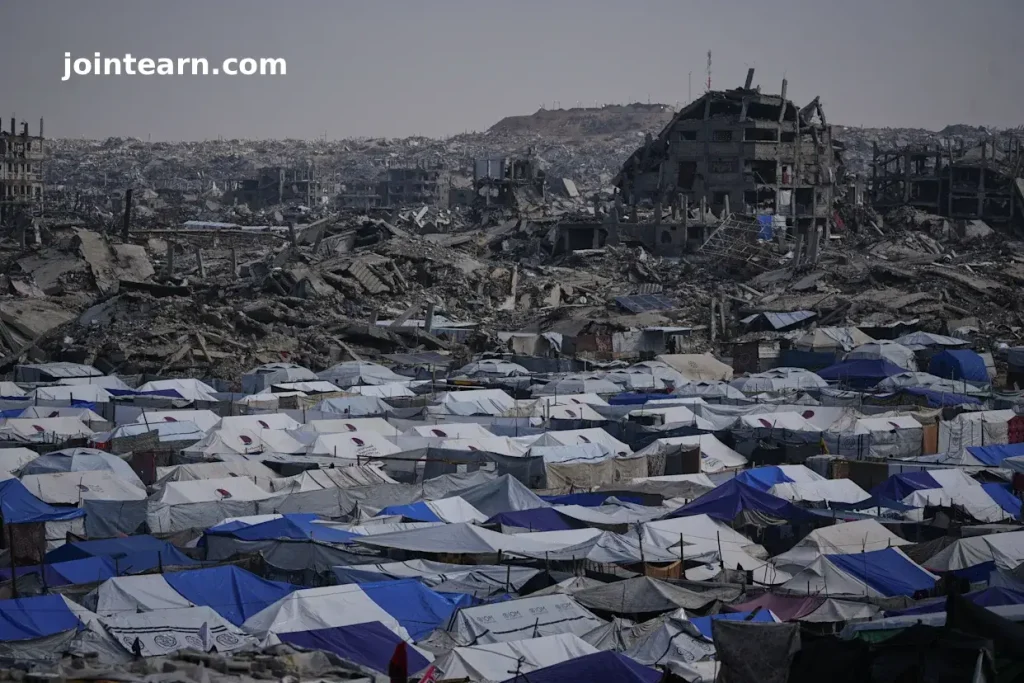
DOHA, Qatar, December 6, 2025 — Qatar’s Prime Minister Sheikh Mohammed bin Abdulrahman Al Thani has warned that the Gaza ceasefire is at a “critical moment” as the initial phase of the truce winds down. While the first stage has temporarily halted heavy fighting, only the remains of one Israeli hostage remain in the hands of militants, and the second phase of the agreement has yet to begin.
Speaking at the Doha Forum, Sheikh Mohammed emphasized that the current situation cannot yet be considered a full ceasefire, as stability in Gaza has not been restored and civilians still face significant restrictions on movement.
First Phase of the Gaza Ceasefire
The first phase of the U.S.-led peace plan took effect on October 10, 2025, bringing a temporary halt to active hostilities that have raged for over two years. As part of this phase, dozens of hostages held in Gaza were exchanged for hundreds of Palestinians detained in Israeli prisons.
Despite this progress, Gaza health authorities report that more than 360 Palestinians have been killed by Israeli fire since the ceasefire began. New violence erupted recently, with two Palestinians killed in an Israeli airstrike northwest of Gaza City, according to Shifa Hospital. Israeli officials claimed they were unaware of an airstrike at that location but noted that Israeli troops had killed three militants who crossed the “yellow line” into northern Gaza, posing an immediate threat.
Challenges in Moving to the Second Phase
The second phase of the ceasefire, a critical step toward long-term peace, remains stalled. This phase includes:
- Deployment of an international security force (ISF) in Gaza
- Formation of a new technocratic government for the territory
- Disarmament of Hamas
- Eventual withdrawal of Israeli forces from Gaza
Arab and Western officials report that the international body overseeing the ceasefire, expected to be led by former U.S. President Donald Trump, may be appointed by the end of the year. The plan also envisions a potential pathway toward Palestinian independence, though the current hard-line Israeli government opposes such a solution.
Sheikh Mohammed stressed that even this next phase should be considered temporary. True peace in the region, he said, requires a comprehensive solution addressing both Gaza and the West Bank, alongside the recognition of Palestinian statehood.
UNRWA’s Role in Gaza
The United Nations Relief and Works Agency (UNRWA) has been sidelined in U.S.-led ceasefire negotiations despite providing essential humanitarian and educational services to Gazans. UNRWA Director Tamara Alrifai noted that the agency functions as Gaza’s de facto public sector, with a workforce of 12,000 employees.
“Excluding UNRWA from talks leaves a significant gap,” Alrifai said. The U.S., previously the largest donor to UNRWA, halted funding in early 2024, and while the U.N. General Assembly recently renewed UNRWA’s mandate through 2029, the agency continues to face a serious cash crisis.
Humanitarian Impact of the Gaza Conflict
The war, which erupted on October 7, 2023, began when Hamas-led militants entered Israel, killing approximately 1,200 people and taking over 250 hostages. Israel responded with an extensive offensive that, according to Gaza’s Health Ministry, has killed more than 70,000 Palestinians. About half of the fatalities were women and children.
Israel has accused Hamas of using civilians as human shields, while Gaza authorities report casualties without differentiating between civilians and combatants. The conflict has created widespread displacement and severe humanitarian needs, intensifying the urgency of a stable ceasefire.
Regional Diplomatic Challenges
Turkey, one of the “guarantors” of the ceasefire, faces challenges in participating in the international security force due to strained relations with Israel. Turkish Foreign Minister Hakan Fidan noted that questions remain regarding the force’s composition, command structure, and initial mission.
Meanwhile, international mediators, led by the U.S., are working to push forward negotiations and ensure that the ceasefire evolves into a more sustainable peace agreement. Sheikh Mohammed expressed hope that cooperation with the U.S. administration will eventually lead to a resolution addressing the broader Israeli-Palestinian conflict.
Conclusion
The Gaza ceasefire remains fragile, with sporadic violence continuing and the second phase of peace efforts still pending. The international community faces complex challenges in stabilizing the region, ensuring humanitarian aid, and paving the way for a lasting Israel-Palestine peace agreement. Sheikh Mohammed emphasized that temporary pauses in fighting cannot be considered permanent peace, and only comprehensive measures, including recognition of Palestinian rights, can resolve the underlying conflict.


Leave a Reply