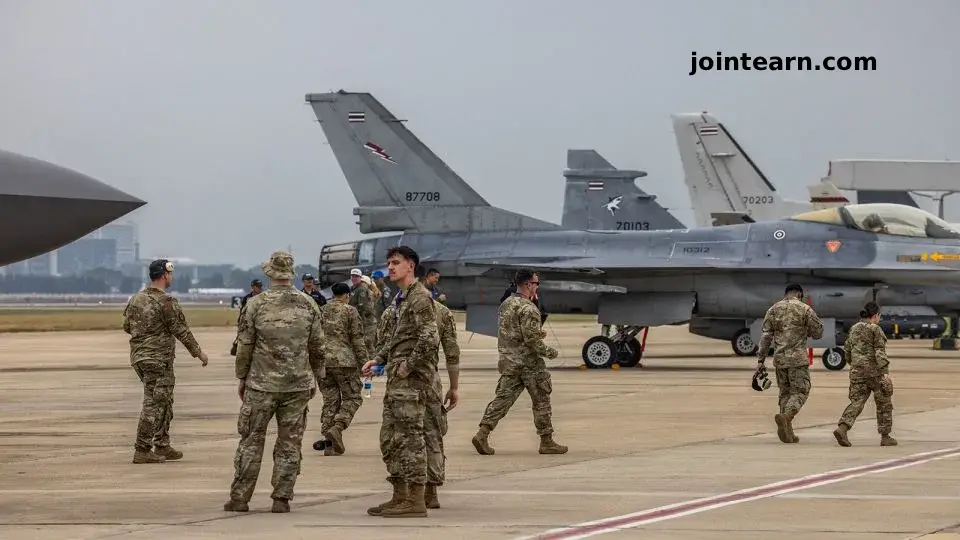
The ongoing conflict along the Thailand-Cambodia border has once again captured global attention, highlighting a sharp imbalance in military capabilities and strategic alliances between the two nations. While Thailand enjoys decades of U.S. support and advanced military hardware, Cambodia relies heavily on China for its defense needs, creating a complex geopolitical scenario in Southeast Asia.
Historical Background of the Thailand-Cambodia Border Dispute
The territorial dispute between Thailand and Cambodia dates back more than a century, to when French colonial powers first demarcated the boundary. Over the decades, clashes along the roughly 500-mile (800-kilometer) border have erupted intermittently, often fueled by historical grievances, nationalist sentiments, and competing claims over resource-rich areas.
The renewed fighting underscores not only historical tensions but also the stark differences in military strength, economic power, and international alliances between the two neighboring countries.
Thailand’s Military Advantage
Thailand possesses a formidable military that far outstrips Cambodia in both personnel and technological capability. According to the International Institute for Strategic Studies (IISS) 2025 Military Balance, Thailand has approximately 361,000 active-duty military personnel across all branches—three times Cambodia’s number. The Thai armed forces also benefit from modern weaponry, advanced air defense systems, and sophisticated artillery.
In regional military rankings, the Lowy Institute 2024 Asia Power Index places Thailand 14th among 27 nations, compared with Cambodia’s 23rd position. This disparity is consistent with Thailand’s population, which is four times larger than Cambodia’s, and a GDP more than ten times greater, giving Bangkok the resources to maintain a highly capable and well-funded military.
Thailand’s Air and Ground Capabilities
The Royal Thai Air Force is among Southeast Asia’s best-equipped, boasting 11 modern Swedish Gripen fighter jets, older US-made F-16s and F-5s, and advanced attack helicopters. Meanwhile, Cambodia has almost no combat-capable air force, highlighting the extreme imbalance in aerial power.
On the ground, Thailand fields dozens of modern battle tanks, including 60 Chinese-made VT-4 tanks, along with hundreds of older US-made models. Cambodian forces, by contrast, possess only about 200 outdated Chinese- and Soviet-made tanks. Artillery strength is similarly lopsided: Thailand has more than 600 artillery pieces, including 155mm and 105mm guns, while Cambodia has a limited arsenal of approximately 400 smaller artillery pieces and just a dozen 155mm guns.
Strategic Alliances: U.S. and China
Thailand’s military enjoys a long-standing alliance with the United States. This partnership, which dates back to the 1954 Southeast Asia Collective Defense Treaty (Manila Pact), has enabled Thailand to access decades of U.S. weapons support, technology, and joint training programs. Thailand co-hosts the Cobra Gold military exercise with the U.S., the longest-running international military drill in the world, and hosts over 900 U.S. aircraft and 40 Navy ships annually.
Despite its U.S. ties, Thailand has maintained a relatively neutral foreign policy in recent years, developing arms procurement relationships with countries including Israel, Italy, Russia, South Korea, Sweden, and China. This diversification reduces dependency on any single supplier while strengthening domestic defense capabilities.
Cambodia, on the other hand, relies heavily on China for military support. The Cambodian armed forces, formally established in 1993, maintain close ties with Beijing. China has supplied advanced weaponry, training, and even constructed the Ream Naval Base on the Gulf of Thailand, capable of hosting Chinese aircraft carriers. The two countries conduct annual Golden Dragon joint military exercises, which in 2024 featured live-fire drills and large-scale troop mobilizations.
This strategic relationship has led to statements from Chinese defense officials emphasizing Cambodia and China as “iron-clad friends,” a bond designed to counterbalance Thailand’s superior military strength and U.S. support.
Cambodia’s Limitations and Strategic Advantages
While Cambodia’s military is considerably weaker in terms of hardware and personnel, it has some advantages in the ongoing border conflict. Analysts note that terrain along the disputed areas favors Cambodian access and defensive positioning. Additionally, Cambodian forces have reportedly deployed landmines and booby traps, which can slow the advance of Thai forces and make direct confrontations more costly.
Former U.S. Pacific Command analyst Carl Schuster notes that Thailand’s superior air power and special forces are likely to dominate the conflict, but Cambodia’s strategic use of terrain and defensive measures may extend the standoff.
What’s Next for the Thailand-Cambodia Conflict
The border clashes highlight the complex interplay of military power, strategic alliances, and historical disputes in Southeast Asia. Thailand’s numerical and technological superiority suggests it can dominate conventional engagements, but Cambodia’s strong ties with China and defensive strategies may prolong the conflict.
As international attention grows, the dispute could have wider geopolitical implications, influencing U.S.-China relations in the region and impacting Southeast Asia’s security landscape. With Cambodia potentially gaining access to U.S. arms supplies following the lifting of a previous embargo, the balance of power may continue to evolve in the coming years.


Leave a Reply