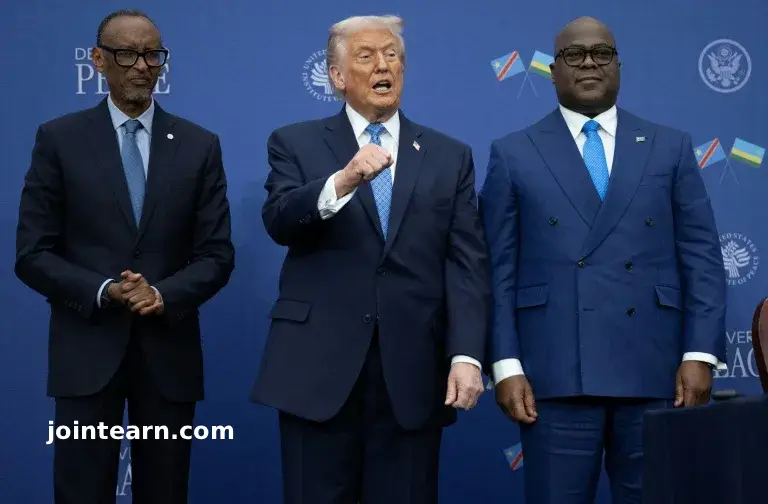
The fragile peace in the Democratic Republic of Congo (DRC) faces a major setback as tensions rise between neighboring countries and the M23 armed group continues its aggressive advances. Just days after a high-profile peace agreement was signed in Washington, DRC President Felix Tshisekedi and Burundi’s government publicly accused Rwanda of violating the accord, raising fears that the region could once again descend into widespread conflict.
Rwanda-Backed M23 Militia Escalates Attacks
The recently signed peace deal, brokered under the guidance of former U.S. President Donald Trump, aimed to bring an end to decades of violence in eastern DRC. However, the M23 militia, widely reported to receive backing from Rwanda, launched a series of attacks near the Congolese border, advancing toward the strategic city of Uvira, located near Burundi.
President Tshisekedi criticized Rwanda for “violating” the peace agreement, noting that the Rwandan Defence Force allegedly conducted attacks using heavy weaponry in several areas of South Kivu province immediately following the signing ceremony. “Despite our good faith and the recently ratified agreement, it is clear that Rwanda is already violating its commitments,” Tshisekedi stated before lawmakers.
Local military sources confirmed that hundreds of Congolese soldiers and allied Burundian forces were forced to flee to Burundi for safety.
Burundi Condemns Rwandan Attacks
Burundi has also voiced strong condemnation against Rwanda. The Burundian Foreign Ministry reported that Rwandan forces carried out bombing operations near Cibitoke, along the border shared with DRC and Rwanda, resulting in casualties, including a 12-year-old child.
With Uvira lying just across Lake Tanganyika from Burundi’s economic capital Bujumbura, the Burundian government views the potential fall of the city to M23 as a direct threat to national security. In response, Burundi has deployed tens of thousands of troops to eastern DRC as part of a military cooperation initiative aimed at stabilizing the region.
Humanitarian Crisis Deepens
The M23 conflict has caused a severe humanitarian crisis in eastern DRC, displacing tens of thousands of civilians since the militia resumed operations in 2021. Key cities, including Goma and Bukavu, fell under the group’s control earlier this year, exacerbating the region’s instability.
UN experts recently reported that Rwanda and M23 forces have been implicated in summary executions and forced mass displacements of civilians. These actions have triggered urgent calls for international intervention to prevent further escalation.
Peace Efforts Face Major Challenges
The Washington-brokered peace deal between Tshisekedi and Rwandan President Paul Kagame included an economic component to secure U.S. access to critical minerals in the region, challenging China’s dominance in the mining sector. Despite the optimism surrounding the agreement, early violations by Rwanda have raised doubts about its durability.
Historically, ceasefire agreements in eastern DRC have been short-lived, with recurring involvement from neighboring countries including Rwanda, Uganda, and Burundi. Conflicts have often reignited as these nations either support armed groups or intervene to stabilize the Congolese government.
Regional Security Concerns
The intensifying violence has broader implications for regional stability in the Great Lakes area. With M23 closing in on Uvira and Burundi increasing its military presence, the risk of a multi-national conflict is growing. The international community continues to monitor the situation closely, urging all parties to respect agreements and protect civilians.
Key Takeaways
- M23 advances toward Uvira: Rwanda-backed militia pushes into strategic towns in eastern DRC.
- Accusations against Rwanda: DRC and Burundi allege Rwanda violated the Washington-brokered peace deal.
- Humanitarian impact: Tens of thousands displaced; civilian casualties reported.
- Regional tension: Burundi reinforces troops; conflict threatens stability in the Great Lakes region.
- Economic stakes: U.S. seeks access to critical minerals as part of the peace agreement’s economic plan.
As fighting continues, the fragile peace in eastern DRC remains uncertain, and the potential for a broader regional conflict grows, highlighting the ongoing challenges of securing lasting stability in this mineral-rich but conflict-prone area.


Leave a Reply