Sudan’s deepening civil war saw another deadly turn on Tuesday when a military transport aircraft crashed while attempting to land at an airbase in the country’s east, killing everyone on board. The incident coincides with major territorial and economic losses for the Sudanese Armed Forces (SAF), increasing pressure on the military as the Rapid Support Forces (RSF) secure new gains across strategic regions.
Deadly Crash at Port Sudan Airbase
Military sources reported that an Ilyushin Il-76 aircraft went down during its landing approach to the Osman Digna airbase in Port Sudan. Initial assessments point to a technical malfunction, though full details have not yet been made public. SAF has not released the exact number of crew members, but sources confirmed that no one survived the crash.
Port Sudan, which now functions as the de facto administrative center for the government-aligned military leadership, has been repeatedly targeted during the conflict. In May, drones struck several locations around the city, including areas near the same airbase.
SAF Faces Expanding Military Losses
The crash comes at a time when SAF troops are withdrawing from important areas in the country’s central belt. On Monday, the RSF captured the Heglig oilfield in West Kordofan — Sudan’s most critical petroleum site — after government forces reportedly retreated from their positions. The facility processes between 80,000 and 100,000 barrels of oil each day for both Sudan and South Sudan, making the loss a major economic blow.
Heglig’s capture was followed by reports that SAF is pulling back from Babnusa, a crucial gateway town in West Kordofan. RSF advances in this region are raising concerns that the paramilitary movement may soon control a continuous corridor stretching from the Chad border deep into Sudan’s heartland.
A Strategic Shift in the War’s Epicentre
The ongoing conflict has shifted significantly since the fall of el-Fasher last month. The United Nations has described the city as a “crime scene” due to widespread atrocities. Now, the front lines in Kordofan carry enormous strategic weight. If RSF expands its hold across the central region, analysts warn that SAF-controlled territory could be split, isolating large population centres and reducing the military’s ability to maneuver.
Ahmed Ibrahim, a former adviser to Sudan’s government, said the takeover of Heglig could pull South Sudan deeper into the war since its fragile political balance depends heavily on oil revenue passing through the region.
International Sanctions and Foreign Involvement
Meanwhile, the United States has imposed sanctions on four Colombian nationals and four companies accused of recruiting military veterans to fight for the RSF. However, the measures did not target Global Security Services Group — a United Arab Emirates-based company previously identified by The Sentry, a U.S. investigative organisation, for allegedly coordinating the deployment of Colombian mercenaries.
The UAE has consistently denied any involvement in providing support to the RSF.
ICC Sentences Janjaweed Leader
In a major development at The Hague, the International Criminal Court sentenced Ali Kushayb — a former Janjaweed commander — to 20 years in prison for war crimes and crimes against humanity committed in Darfur between 2003 and 2004. The conviction marks the ICC’s first prosecution related to atrocities in Darfur. That region is now again engulfed in violence as the RSF, whose origins trace back to the Janjaweed militias, pushes forward in the west and central belt.
Humanitarian Crisis Reaches Frightening Levels
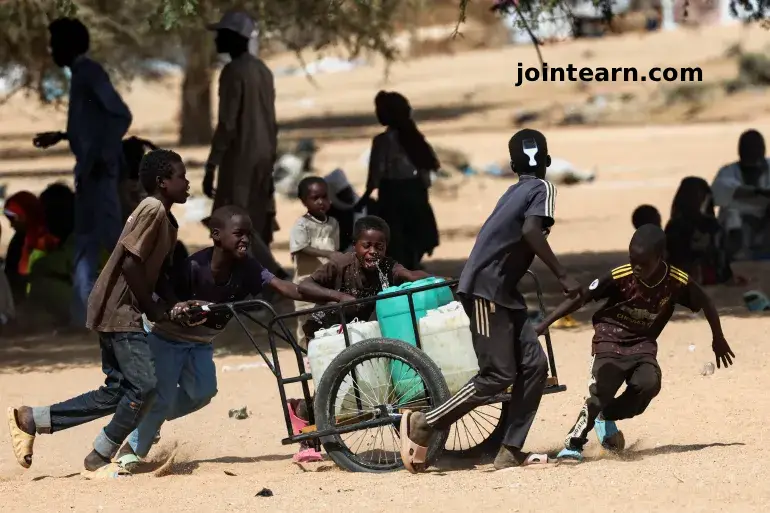
Since the conflict erupted in April 2023, more than 12 million people have been displaced, making Sudan one of the largest displacement crises in the world. Tens of thousands have been killed, and the violence has devastated cities, livelihoods, and essential infrastructure.
The World Food Programme warns that nearly 20 million people face acute food insecurity, including six million who are at risk of famine.
Humanitarian organisations continue to call for global attention. Writing for Al Jazeera, Javid Abdelmoneim, the international president of Doctors Without Borders (MSF), urged the world not to accept Sudan’s suffering as “a new normal” and warned that atrocities in Kordofan could signal even more devastating violence ahead.


Leave a Reply