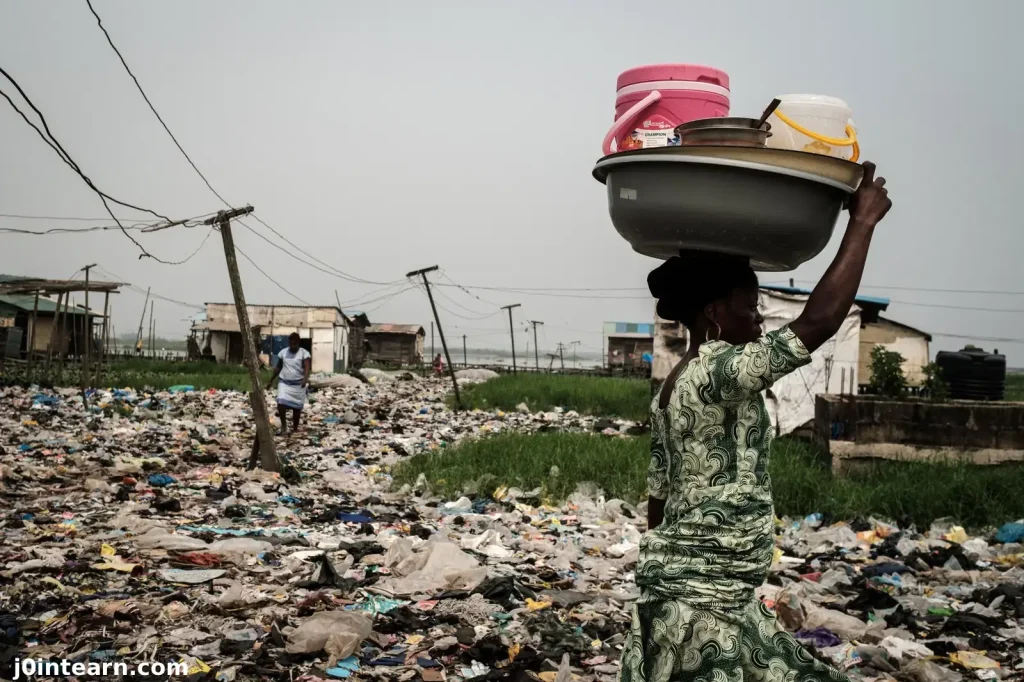
In the last four years, Nigeria has witnessed a significant increase in the allocations to its three tiers of government, with funds doubling over this period. Despite this surge in revenue, however, the economic situation for most Nigerians has worsened, creating a paradox of “more funds, more pains.”
Massive Increase in Allocations
Since June 2023, the allocations from the Federation Account Allocation Committee (FAAC) to federal, state, and local governments have surged dramatically. The monthly figures show the direct impact of fiscal and monetary reforms, including buoyant oil receipts, the floating of the naira, and the stoppage of fuel subsidies.
From N9.18 trillion shared in 2022, the total allocation rose to N10.9 trillion in 2023, then N15.26 trillion in 2024, and reached N18.54 trillion by October 2025. In total, the three tiers of government have shared N44.03 trillion over a span of 34 months, from January 2023 to October 2025.
State governments, in particular, have seen a substantial rise in allocations. In 2023, states received N3.58 trillion, which increased to N5.81 trillion in 2024, and N7.54 trillion by October 2025. The local governments received N4.547 trillion between January and October 2025.
A NEITI FAAC Quarterly Review showed a 62% increase in state allocations in 2024, from N3.58 trillion in 2023, while the Federal Government’s share grew by 24%. Local governments saw a 47% rise in allocations.
But the Poor Keep Getting Poorer
Despite the doubling of allocations, poverty in Nigeria has skyrocketed. In 2023, around 93.8 million Nigerians (43%) were living below the poverty line. This figure has now surged to 139 million (61%) of the population, according to the World Bank. The National Bureau of Statistics (NBS) reported that 133 million Nigerians or 83% of the population are multidimensionally poor, meaning they lack access to basic necessities like education, healthcare, and proper living conditions.
In 2024, the country’s annual inflation rate surged to 34.80% before slightly declining in 2025 to 16.05% by October. However, the rising inflation has contributed to widespread economic hardship, especially among the poorest, who struggle to afford even the most basic items.
The Socio-Economic Impact of Fiscal Reforms
When President Bola Tinubu took office in May 2023, he stopped fuel subsidies and allowed the naira to float, which led to an immediate spike in fuel prices from N197 per litre to N1,000–N1,200 in various regions. The official exchange rate of the naira hit a high of N1,900 to the dollar, which worsened inflation and eroded purchasing power.
Despite these reforms, the promised benefits—such as reducing the burden of fuel subsidies—have yet to translate into meaningful relief for the average Nigerian. Rather, the funds received by the states and local governments have not led to significant improvements in infrastructure, healthcare, or general living conditions. Many Nigerians still feel disconnected from the benefits of these fiscal changes.
President Tinubu’s Call to Action
President Tinubu, aware of the growing public dissatisfaction, recently urged state governors to justify the unprecedented fiscal inflow with tangible development at the grassroots level. Speaking at the National Executive Committee (NEC) meeting of the All Progressives Congress (APC), Tinubu acknowledged the persistent cries of hardship across Nigeria and called on governors to ensure that the benefits of increased federal allocations are felt more directly by citizens.
“We need to do more. Nigerians are still complaining at the grassroots,” he said. “You, the governors, have to wet the ground and give more dividends of democracy at the grassroots. We must not rest. Our people need to feel the impact of the government more directly.”
Revenue and Spending Analysis
Between January and October 2025, the Federal Government’s gross revenue reached N31.265 trillion, but only N18.54 trillion was distributable to the three tiers of government. The breakdown of this distributable revenue showed that the states received N7.54 trillion, the federal government received N6.414 trillion, and the local governments got N4.547 trillion.
Challenges in Fund Allocation
Economists and analysts have pointed out that although revenue growth in nominal terms may appear impressive, it does not necessarily reflect the true financial health of the states. Muda Yusuf, CEO of the Centre for Promotion of Private Enterprises (CPPE), argued that the increase in revenue does not guarantee effective service delivery if funds are not properly managed and transparently allocated.
“States now have more revenue to execute their programmes, such as improving infrastructure, paying salaries, and pensions,” Yusuf said. However, he cautioned that “poor management of resources has resulted in little or no impact on the lives of the people.”
Governor Biodun Oyebanji’s Perspective
Governor Biodun Oyebanji of Ekiti State, who praised the President for allocating more resources to the states, emphasized that his government has not taken any loans for its projects, noting that the increase in federal allocation has allowed his administration to deliver significant infrastructure projects. Oyebanji argued that this fiscal policy has allowed states like Ekiti to execute people-oriented projects without increasing debt.
“For once, in our history, Mr. President has given to us more than our fair share of the federation allocation,” he stated during the commissioning of the Ekiti Revenue House in Ado Ekiti.
Conclusion: More Funds, More Pains?
While the fiscal inflows have surged, Nigeria’s rising poverty rate underscores a critical failure in the distribution and management of these funds. The increases in allocations are clearly not translating into real improvements in the quality of life for Nigerians. Whether the government will heed the President’s call to prioritize development at the grassroots and effectively utilize the available funds remains to be seen.
As Nigerians continue to bear the brunt of economic hardship, the question remains: how long can the nation continue to see rising allocations and rising poverty simultaneously?


Leave a Reply