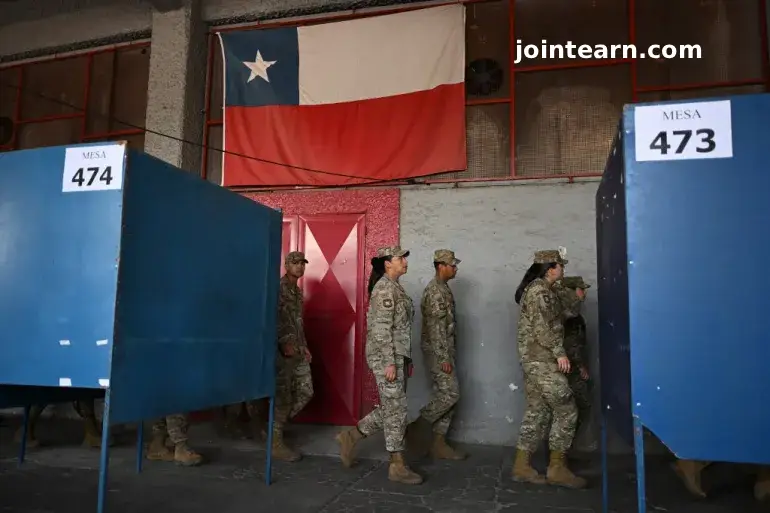
Kast Leads Early in Chile’s Run-Off Election
Early results from Chile’s presidential run-off election indicate that far-right opposition candidate Jose Antonio Kast has taken a commanding lead over his centre-left rival Jeannette Jara. With 25.37% of votes counted, Kast secured 59.83% compared to Jara’s 40.17%.
Kast, leader of the Republican Party, has positioned himself as a hardline candidate, emphasizing crime reduction and strict immigration control. His campaign has drawn inspiration from former U.S. President Donald Trump, with rhetoric aimed at “Making Chile Great Again.”
Election Background and Voter Sentiment
In the first round of elections last month, Jara, a member of Chile’s orthodox Communist Party, narrowly led Kast with 27% of votes, while Kast captured 24%, placing him second. Kast has since consolidated support from right-wing voters, who collectively garnered about 70% of votes in the first round, making him the frontrunner in the run-off.
Analysts warn that Kast’s potential victory could mark a historic political shift in Chile, where far-right politics have been largely kept at bay since the end of the Pinochet military regime. Kast himself was an outspoken supporter of Pinochet in his youth, adding to concerns over his hardline policies.
Key Issues: Crime, Migration, and Social Policy
Kast’s campaign focuses heavily on public safety and immigration, promising to:
- Deport over 300,000 undocumented migrants
- Expand the army’s role in combating organized crime
- Cut $6 billion in public spending within 18 months without affecting social benefits
While his law-and-order agenda resonates with voters concerned about personal safety, many experts question whether Kast can deliver on ambitious pledges, especially given that his party lacks a congressional majority. Compromise with moderate right-wing allies may dilute his platform, while failing to act quickly could alienate core supporters.
Jeannette Jara Faces High Rejection Rates
Jara, former labour minister under President Gabriel Boric, has struggled to broaden her appeal. Despite pledging tougher border controls and stronger policing, her affiliation with the Communist Party has led to high rejection rates among voters.
“Somebody from the Communist Party will be with a 50 percent or above rejection,” said Leonidas Monte, political analyst at the Centre for Political Studies.
Jara has offered to resign from the Communist Party if elected, but this has not alleviated voter concerns. Many Chileans express frustration with both finalists, reflecting deep divisions in the electorate.
Potential Social Impacts of a Kast Presidency
Observers have raised concerns that Kast’s social conservatism could roll back women’s rights. Congresswoman Lorena Fries noted that Kast’s traditionalist views may disadvantage women politically and socially, while emphasizing the “logic of traditional family dynamics.”
Crime and immigration remain the top issues for many voters. Under President Boric, homicide rates peaked in 2022, fueled by organized crime and undocumented migration, although recent statistics show a decline. Kast’s proposals, seen by supporters as decisive action, revive memories of Pinochet-era military rule and have sparked debate about balancing security with civil liberties.
Public Sentiment and Election Outlook
On the ground, many Chileans express mixed feelings. While some fear the consequences of a Kast presidency, others are reluctant to support a communist candidate. Increased talk of blank ballots in protest reflects a growing voter disillusionment with the options available.
Lucia Newman, Al Jazeera’s Latin America editor, noted:
“A vote that, if polls are right, will veer Chile in the same direction as many of its conservative neighbours, reflecting a regional shift toward right-leaning policies.”


Leave a Reply