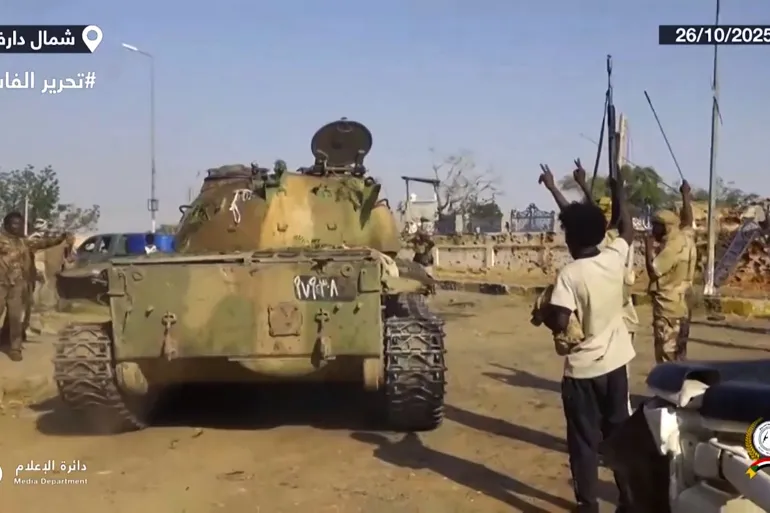
El-Fasher: Beyond a Capital
El-Fasher, the capital of North Darfur in western Sudan, holds a unique place in the national consciousness. For Sudanese people, the city is more than a political center—it is a spiritual, historical, and cultural symbol.
From its origins as a hub for religious education and the production of the Kiswa (the black cloth covering the Kaaba in Mecca) to its role in resistance against colonial powers, El-Fasher has long been a focal point of national identity and pride.
Historical Roots and Symbol of Resistance
During the reign of Sultan Ali Dinar (1898–1916), El-Fasher became a center of knowledge, spirituality, and social cohesion. The city and Ali Dinar symbolized resistance against colonialism, particularly after the British occupied El-Fasher in November 1916, dissolving the Darfur Sultanate and integrating it into modern Sudan.
Over a century later, El-Fasher fell again, this time to the Rapid Support Forces (RSF), a Sudanese paramilitary group. Local reports and government sources suggest that foreign support may have influenced the RSF’s takeover, which followed an 18-month siege of the city.
Human Cost and Displacement
The RSF’s capture of El-Fasher has left a devastating human toll. According to the Sudan Doctors Network, at least 1,500 people were killed within 48 hours of the RSF taking control. Tens of thousands were displaced, and the social fabric of the city—long marked by tribal and cultural diversity—faces deep disruption.
Sociology researcher Hussein Adam notes that forced population shifts and tribal affiliations being used as conflict tools risk reshaping El-Fasher’s identity in unpredictable ways.
“Ignoring the social dimension in any political settlement may lead to future conflicts of greater complexity,” Adam warned.
Resilience and the Spirit of Community
Despite the suffering, residents and displaced individuals emphasize resilience and hope. Sheikh Abdul Rahim Adam, an imam who fled to West Darfur, expressed confidence in the community’s ability to preserve its heritage:
“Despite the suffering, our memory remains alive with our mosques and Quran schools, and we will return to protect our heritage.”
Fatima Abdul Karim, a teacher displaced to the Kurma area, highlighted the city’s enduring role as a symbol of identity and dignity:
“This city is our identity. We saw our schools turn into military barracks, but we will rebuild them soon.”
Economic Paralysis and Need for Recovery
The war has also devastated El-Fasher’s economy. Once-bustling markets have become semi-abandoned, traders have stopped coming from other parts of Sudan, and basic goods have become scarce.
Sudanese history researcher Ibrahim Saeed Abkar emphasized the importance of restoring collective memory and social cohesion in post-conflict recovery, suggesting that Ali Dinar’s legacy of resilience could serve as a model for reconstruction efforts.
Importance of Social Reconstruction
Observers stress that political settlements alone are insufficient. Rebuilding El-Fasher requires addressing both psychological and social wounds, fostering community dialogue, and repairing fractured relationships, which are as vital as physical reconstruction.
The resilience of El-Fasher’s people, combined with recognition of its historical, cultural, and spiritual heritage, provides a foundation for hope, recovery, and sustainable peace in Darfur.


Leave a Reply