European Union leaders are convening in Brussels for a high-stakes summit to decide whether to loan tens of billions of euros from frozen Russian assets to Ukraine, providing critical funding for its military and economic needs amid the ongoing war with Russia. The decision could shape the course of the conflict and determine Ukraine’s financial stability over the next two years.
How Much Russian Money Is at Stake?
Most of Russia’s €210 billion ($245 billion; £185 billion) in frozen EU assets are held by Euroclear, a Belgium-based financial institution. While some EU members support using the funds to aid Ukraine, Belgium and several other countries remain opposed, citing legal and financial concerns.
The European Commission has proposed loaning Ukraine roughly €90 billion (£79 billion) over the next two years, representing about two-thirds of Ukraine’s €137 billion funding needs for 2026 and 2027. Until now, the EU has only passed on the interest generated by these frozen assets, not the principal amounts themselves.
“This is a crunch time for Ukraine to keep fighting for the next year,” a Finnish government official told the BBC. “There are of course peace negotiations but this gives Ukraine leverage to say ‘we’re not desperate and we have the funds to continue fighting.’”
Belgium’s Hesitation and EU Opposition
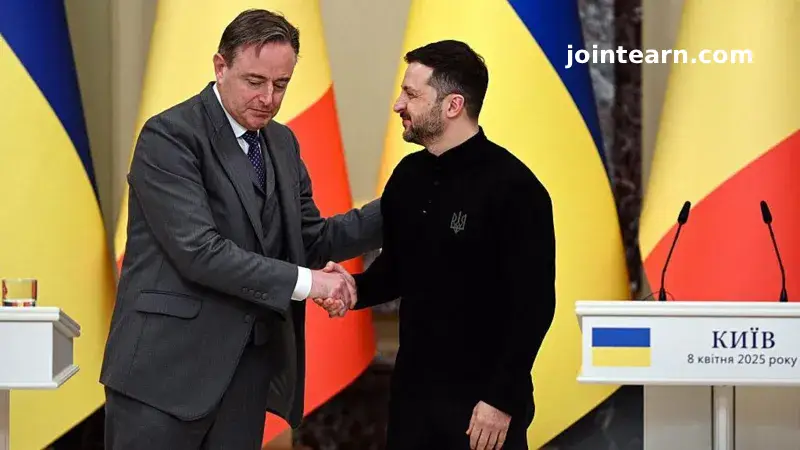
Belgian Prime Minister Bart De Wever has stated he is unconvinced by current proposals:
“I haven’t yet seen any text that would persuade me to change Belgium’s position.”
Belgium’s defense minister, Theo Francken, echoed the concerns, warning that loaning Euroclear’s frozen cash could pose significant legal and financial risks. Other EU countries, including Hungary, Malta, Bulgaria, and the Czech Republic, have expressed reservations, particularly if the funds are used for weapons procurement rather than reconstruction.
European Council President António Costa emphasized that any vote will respect Belgium’s position, stating:
“We’re not going to vote against Belgium… We will find a solution together to make sure all the risks are checked as much as they can be checked.”
Why the Loan Matters for Ukraine
Without additional funding, Ukraine’s finances are projected to run dry within months. The loan would allow Kyiv to maintain military operations, support its economy, and strengthen its position in ongoing peace negotiations.
President Volodymyr Zelensky is attending the summit in Brussels, underscoring the urgency of the situation. The move is also intended to increase the cost of war for Russia, according to European Commission President Ursula von der Leyen.
“We know the urgency. It is acute. We all feel it. We all see it,” von der Leyen told the European Parliament.
Germany’s Chancellor Friedrich Merz has been a leading advocate, describing the move as a clear message to Moscow that continuing the war is futile.
Legal and Financial Challenges
The proposal has a solid legal basis, EU officials insist, but concerns remain over potential court challenges. Russia has already filed a lawsuit in Moscow against Euroclear, attempting to reclaim its frozen assets.
If approved, mechanisms are in place to ensure Russia could only reclaim the funds by paying reparations to Ukraine, after which Ukraine would repay the EU. Other options under discussion include borrowing the funds on international markets, using the EU budget as a guarantee, though this would require unanimous approval.
The Bigger Picture: Geopolitics and Peace Talks
The Brussels summit coincides with ongoing efforts for a US-mediated peace plan, with talks scheduled in Miami involving Russian and US officials. While Russia has yet to formally respond, the Kremlin has rejected proposals for a European-led multinational force in Ukraine.
The stakes for the EU are high: a positive vote would provide Ukraine with the financial backing it needs to continue its defense, while failure to agree could weaken Kyiv’s position and embolden Moscow.
Conclusion
The decision on whether to loan frozen Russian assets to Ukraine represents a pivotal moment for both the EU and the war effort in Ukraine. With billions of euros at stake, mixed support among member states, and ongoing peace negotiations, the coming hours at the Brussels summit will be closely watched by governments, financial markets, and citizens across Europe.


Leave a Reply