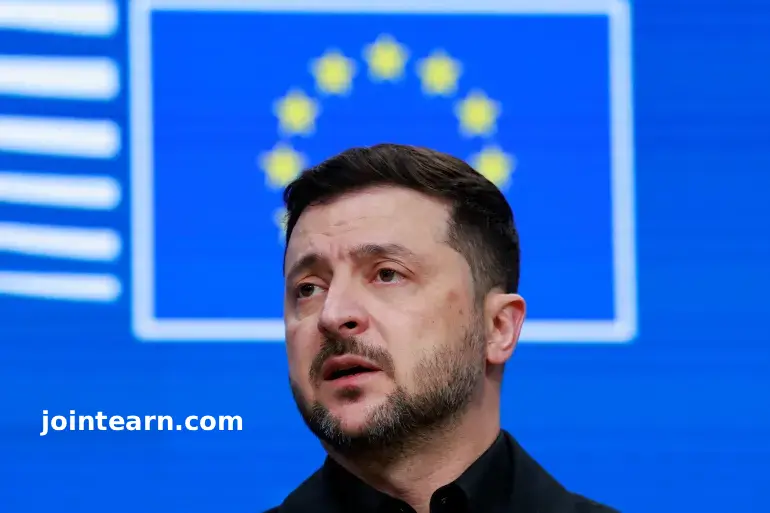
European Union leaders have agreed to provide Ukraine with a $105 billion (90 billion euros) interest-free loan to support its military and economic needs for the next two years, EU Council President Antonio Costa confirmed. This decision comes amid ongoing debates over the controversial plan to use frozen Russian assets to fund Ukraine’s war effort.
EU Leaders Opt to Borrow on Capital Markets
Instead of relying on the frozen Russian assets, EU leaders decided early Friday to raise funds through capital markets, with the loan secured against the EU budget. According to diplomats, this alternative approach was chosen after legal and political concerns over using Russian assets proved too complex to resolve in time.
A draft of the summit conclusions, reviewed by Reuters, notes that discussions on a separate loan backed by Russian central bank assets will continue.
Key Details of the Loan Agreement
- The loan covers Ukraine’s defence and economic requirements for 2026-2027.
- Ukraine will only repay the EU once it receives war reparations from Moscow.
- Russian assets will remain frozen and may be used to repay the loan if needed.
- Countries like Hungary, Slovakia, and the Czech Republic are exempt from contributing to the loan.
An EU diplomat commented:
“It’s good in the sense that Ukraine will secure funding for two years,” highlighting the relief this agreement brings to Kyiv amid ongoing hostilities with Russia.
Challenges Using Frozen Russian Assets
Before the decision, EU leaders debated using approximately 210 billion euros ($246 billion) of frozen Russian assets, of which 185 billion euros ($217 billion) are held in Belgium. Concerns over legal retaliation from Moscow and financial liabilities made this plan highly contentious.
The Kremlin has warned it would initiate legal action and seize foreign assets in Russia if EU countries attempt to use its frozen assets to finance Ukraine. Belgium, in particular, demanded binding guarantees from other EU nations before proceeding.
Germany and the Netherlands expressed readiness to support such a plan, while Italy, Bulgaria, and Belgium were more hesitant, prompting the pivot to borrowing from capital markets.
EU Leaders Emphasize Unity
EU Council President Antonio Costa confirmed the agreement on social media:
“We have a deal. Decision to provide 90 billion euros [$105.5bn] of support to Ukraine for 2026-27 approved. We committed, we delivered.”
Belgium’s Prime Minister Bart De Wever described the shift to capital markets as a way to avoid “chaos and division” among EU members, emphasizing that the bloc “remained united” in supporting Ukraine.
Potential Risks and Russian Retaliation
Experts warn that attempts to directly use Russian assets could trigger a financial conflict with Moscow. Chris Weafer, CEO of Macro-Advisory, stated that Russia is likely to retaliate, and legal proceedings have already been launched against financial institutions in Belgium, France, Austria, and the UK holding frozen Russian funds.
The EU now faces the challenge of ensuring sustained funding for Ukraine while managing geopolitical risks and maintaining internal cohesion among member states.
Conclusion
The EU’s $105 billion loan provides critical support to Ukraine’s defence and economy, sidestepping legal hurdles associated with using frozen Russian assets. While it ensures short-term stability for Kyiv, the broader issue of war reparations and frozen assets remains unresolved, and tensions with Moscow could escalate further.


Leave a Reply