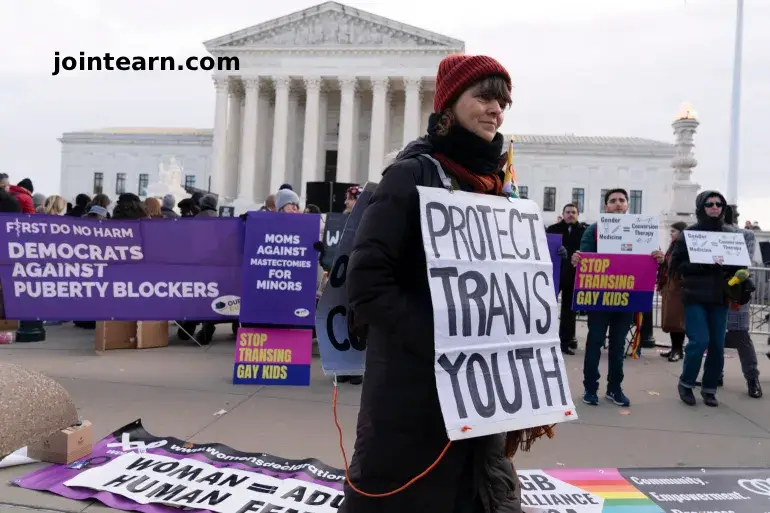
The Trump administration has proposed a series of new federal rules that would effectively bar hospitals and clinics across the United States from providing gender-affirming healthcare to transgender youth under 18.
The Centers for Medicare and Medicaid Services (CMS) announced that hospitals continuing such care could lose access to federal programs. A second proposed rule would also block Medicaid funding for gender-affirming procedures, meaning most young people relying on these government health programs would be affected.
Federal Officials Criticize Gender-Affirming Care
Health and Human Services Secretary Robert F. Kennedy Jr. issued a declaration labeling gender-affirming care as harmful, while CMS Director Mehmet Oz accused healthcare providers of exploiting patients for profit rather than focusing on their well-being. Both officials’ statements diverge sharply from decades of medical research supporting gender-affirming care for transgender youth.
Medical Consensus on Gender-Affirming Care
Medical experts emphasize that gender-affirming care—including puberty blockers, counseling, and in rare cases surgery—can significantly improve mental health outcomes, reducing suicide, anxiety, and depression among transgender youth. A 2024 Harvard study found that surgical interventions among adolescents are extremely rare, with only 2.1 per 100,000 teens aged 15–17 seeking surgery, dropping to virtually zero under age 12.
Dr. Dannie Dai, co-author of the study, stated that restricting gender-affirming care is motivated by bias and stigma rather than public health concerns.
State and Federal Landscape
Currently, 27 states have laws limiting gender-affirming care for minors, affecting nearly 40% of the roughly 300,000 transgender youth in the US. On the federal level, the House of Representatives recently passed a bill criminalizing gender-affirming care for minors, alongside another bill seeking to cut off Medicaid coverage for such procedures. Both measures now face uncertain prospects in the Senate.
Advocates Speak Out
Advocates warn that these restrictions could endanger transgender youth, particularly those who rely on puberty blockers or other reversible treatments to safely navigate adolescence. Representative Sarah McBride, the first openly transgender member of Congress, highlighted the personal toll of denying care:
“One of the things that gets so lost in this conversation is that the transgender adults of today were kids once. I was a kid once. My biggest regret is that I never had a childhood without that pain.”
Human rights organizations, including the Human Rights Campaign, are urging the public to comment during the 60-day rulemaking period, which could influence the final outcome or pave the way for future legal challenges.
Legal Challenges Expected
Officials anticipate that the new rules will face multiple lawsuits from medical organizations and advocacy groups. Kennedy expressed confidence that the administration would prevail in court, dismissing decades of medical research supporting gender-affirming care as “malpractice.”


Leave a Reply