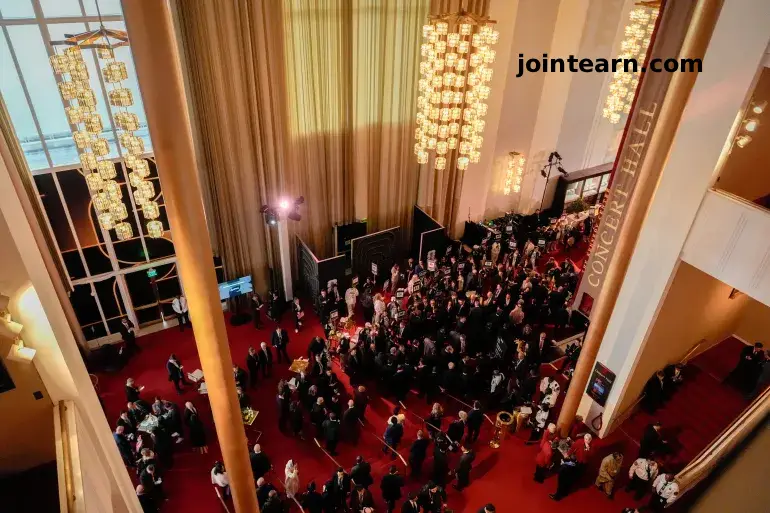
Washington, D.C. – December 18, 2025 – The board of the John F. Kennedy Center for the Performing Arts has voted to rename the iconic arts institution after President Donald Trump, a move that has sparked widespread controversy, legal questions, and outrage from the late president’s family.
White House Press Secretary Karoline Leavitt announced the decision on social media Thursday, claiming that the Trump-appointed board had voted unanimously to rename the facility the Trump-Kennedy Center. Leavitt cited the president’s oversight of the center’s renovation, financial stabilization, and programming as reasons for the renaming.
However, it remains unclear whether the proposed name change can move forward without Congressional approval, given that the center was established as a memorial to President John F. Kennedy by an act of Congress in 1964.
History of the Kennedy Center
The Kennedy Center, located in Washington, D.C., officially opened in 1971. It serves as the nation’s premier performing arts venue, home to the Washington National Opera and the National Symphony Orchestra, among other cultural programs. The complex features seven stages and hosts touring productions, local performances, and nationally recognized arts events.
Although the idea for a national performing arts center predates Kennedy’s presidency, the 35th president was instrumental in supporting fundraising efforts to complete the project. After his assassination in 1963, President Lyndon B. Johnson signed legislation to designate the center as a “living memorial” honoring Kennedy’s commitment to the arts.
The act emphasized that no other memorial would be erected for Kennedy in Washington, D.C., and highlighted his dedication to advancing the performing arts as part of his presidential legacy.
Trump’s Ambitions for the Kennedy Center
President Trump, a reality TV star and real estate mogul before his presidency, has long sought to leave his personal imprint on Washington, D.C., including plans for large-scale renovations, renaming public structures, and overseeing cultural institutions.
Since taking office in January 2025, Trump has:
- Reorganized the Kennedy Center board, pressuring the resignation of President Deborah Rutter
- Purged board members who were viewed as resistant to his vision
- Asserted control over programming, including selecting recipients of the Kennedy Center Honors
- Modified the physical structure, including painting formerly gold columns white
Trump frequently referred to the facility as the “Trump-Kennedy Center” and promoted his influence over its operations as a symbol of his “Golden Age in Arts and Culture” initiative.
Political and Public Reaction
The announcement has ignited fierce opposition from multiple fronts:
- Kennedy Family: Maria Shriver, niece of John F. Kennedy, described the plan as “insane” and expressed shock and disbelief on social media. Grandson Jack Schlossberg questioned the legitimacy of the board vote, noting reports that not all board microphones were active and that the vote was not unanimous.
- Democratic Lawmakers: Representative Steve Cohen (TN) called the initiative “deeply troubling,” stating that renaming the center after a sitting or partisan president undermines its original purpose as a memorial to Kennedy.
- Arts Community: Touring productions and artists have raised concerns, with some canceling planned performances in protest of political interference.
Congressional approval is likely required because the Kennedy Center’s name was established by federal law. Experts note that renaming it could trigger legal challenges and public debate about the separation of national memorials from partisan politics.
Trump’s Cultural Legacy Moves
The renaming effort is part of a broader agenda by Trump to imprint his identity on U.S. institutions. Earlier in 2025, Trump:
- Took control of the US Institute for Peace, renaming it after himself, despite a federal judge ruling the takeover unlawful
- Demolished the White House’s East Wing to create a ballroom
- Proposed a triumphal arch in Washington, D.C., inspired by Paris’s Arc de Triomphe
These initiatives highlight the administration’s focus on legacy-building through high-profile renovations and symbolic branding.
Controversy Surrounding Programming Changes
Since Trump assumed control, the Kennedy Center has undergone programming changes. The president publicly criticized previous events, such as drag performances, and promised that the center would feature only “the brightest stars from across our nation.”
Trump’s intervention has raised concerns among artists, educators, and cultural organizations that the Kennedy Center may be politicized or transformed from its original mission as a public arts institution.


Leave a Reply