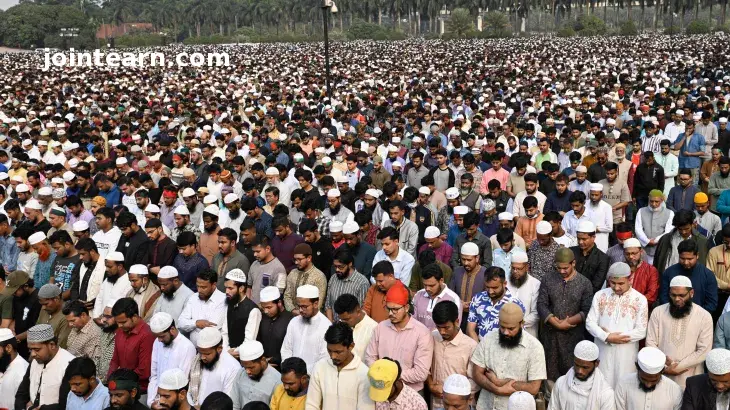
Bangladesh has declared a national day of mourning following the funeral of Sharif Osman Hadi, a prominent figure in the country’s 2024 student-led uprising, whose death has sparked widespread unrest and renewed political tensions. Tens of thousands of mourners gathered in Dhaka as the country paid tribute to a leader many view as a symbol of resistance and reform.
The funeral, held near Bangladesh’s parliament complex before Hadi was laid to rest at Dhaka University’s central mosque, marked a deeply emotional moment for the nation. Authorities imposed heightened security measures across the capital as crowds poured into the streets to honor the slain activist.
Massive Turnout in Dhaka for Funeral Rites
Large numbers of people assembled around the parliament house and Dhaka University to attend funeral prayers for Hadi, reflecting his influence and popularity among students, activists, and political reform supporters. He was buried beside the grave of national poet Kazi Nazrul Islam, a symbolic gesture underscoring his perceived role in Bangladesh’s modern political history.
Interim leader Muhammad Yunus addressed the mourners, stating that Hadi would remain in the nation’s collective memory. Senior academics, political figures, and leaders of the Inqilab Moncho movement, which Hadi represented as spokesperson, were also present.
As part of the national mourning observance, the Bangladeshi flag was flown at half-staff across public and private buildings nationwide.
Heightened Security Amid Lingering Unrest
Police and security forces were deployed in large numbers across Dhaka to manage traffic and prevent further violence. Officers wearing body cameras were stationed near sensitive areas, reflecting authorities’ concerns about renewed protests.
While large-scale demonstrations subsided by Saturday, sporadic unrest and reports of vandalism continued to surface. Media outlets and cultural institutions reported attacks earlier in the week, prompting temporary closures and heightened security alerts.
Bangladesh Shilpakala Academy, the country’s primary state-sponsored cultural institution, announced a suspension of all programming after arson attacks targeted its facilities. Leading newspapers Prothom Alo and The Daily Star also reported attacks on their offices, though both outlets pledged to continue publishing online.
Death of Sharif Osman Hadi Triggers Nationwide Protests
Sharif Osman Hadi, 32, was a key spokesperson for Inqilab Moncho (Platform for Revolution) and was preparing to contest parliamentary elections in Dhaka’s Bijoynagar constituency scheduled for February 2026. His shooting on December 12 sent shockwaves through the country.
After initial treatment in Dhaka, Hadi was transferred to Singapore for advanced medical care, where he later died. His death ignited protests in major cities, including Dhaka, Rajshahi, Chattogram, and Gazipur, with demonstrators demanding justice and accountability.
Authorities confirmed several arrests in connection with the case, while speculation that suspects may have fled abroad intensified public anger.
Political Fallout and Rising Tensions
Hadi’s death has reignited unresolved grievances stemming from the violent crackdown on protests during the 2024 uprising that led to the ousting of former Prime Minister Sheikh Hasina. Demonstrators have renewed calls for extraditions of individuals linked to political violence, including Hasina, who was sentenced in absentia in November to death for crimes against humanity related to the uprising.
Protesters also expressed frustration over perceived foreign interference, particularly regarding India’s role in regional politics and its relationship with Bangladesh’s former leadership. Anti-India sentiment featured prominently in demonstrations, with calls for accountability resonating across protest sites.
Interim Government Condemns Violence
The interim government led by Nobel Peace Prize laureate Muhammad Yunus strongly condemned acts of violence, vandalism, and mob attacks, reiterating its commitment to maintaining order and ensuring justice through legal channels.
Officials emphasized that while peaceful protest is a democratic right, attacks on civilians, religious minorities, media institutions, and cultural centers would not be tolerated.
A Nation at a Crossroads
The killing of Sharif Osman Hadi has become a defining moment in Bangladesh’s turbulent post-uprising period. For many citizens, his death symbolizes unfinished justice and ongoing struggles for accountability, political reform, and national reconciliation.
As Bangladesh navigates this sensitive moment, the government faces mounting pressure to restore stability, investigate political violence transparently, and address the grievances of families who lost loved ones during years of unrest.


Leave a Reply