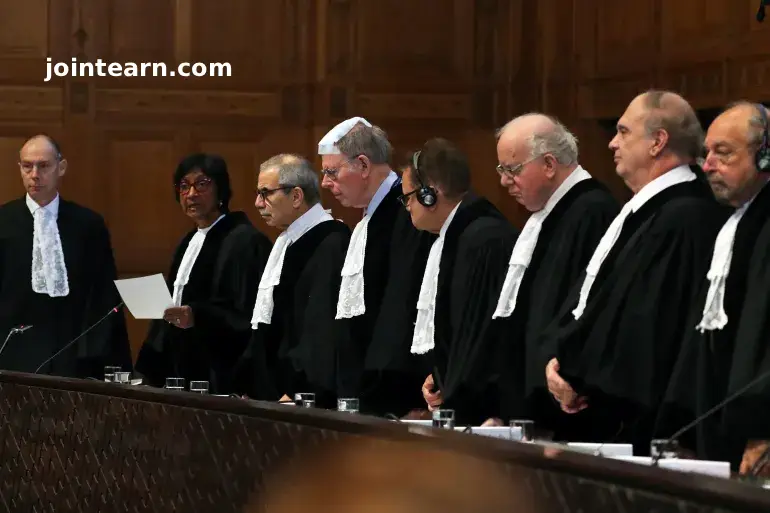
The International Court of Justice (ICJ), the United Nations’ highest judicial body, will hold public hearings in January 2026 in a landmark case accusing Myanmar of committing genocide against its Rohingya minority. The proceedings are being closely watched worldwide, as they mark the first genocide case the ICJ has heard on its merits in over a decade, with potential implications for other international legal disputes, including South Africa’s case against Israel over the war in Gaza.
The Case Against Myanmar
The case was filed by The Gambia, a predominantly Muslim West African nation, in 2019. Backed by the Organisation of Islamic Cooperation (OIC), The Gambia alleges that Myanmar violated the UN Genocide Convention during a brutal military and militia-led crackdown against the Rohingya community in 2017.
The campaign forced more than 742,000 Rohingya to flee to neighboring Bangladesh, with survivors reporting widespread murders, rapes, and villages burned to the ground. Myanmar has consistently denied committing genocide.
In 2020, the ICJ issued an interim ruling ordering Myanmar to take “all measures within its power” to prevent further genocide, a landmark decision that highlighted the court’s authority in addressing crimes against humanity and ethnic cleansing.
Schedule for January 2026 Hearings
The public hearings on the merits are scheduled as follows:
- January 12–15: The Gambia will present its arguments, detailing why Myanmar is responsible for genocide and outlining the reparations it believes are owed to victims.
- January 16–20: Myanmar will present its defense, maintaining that its actions do not constitute genocide.
- Closed-door witness hearings: For three days, the ICJ will hear testimony from Rohingya survivors and expert witnesses in private sessions, a rare procedure in such international cases.
According to the ICJ, the hearings will focus on the “merits of the case” and involve detailed examination of witnesses and experts called by both parties.
Global Support and Humanitarian Context
Wai Wai Nu, executive director of the Women’s Peace Network-Myanmar, emphasized the strong international backing for The Gambia’s case. She noted that coordinated action by supportive countries could help stop ongoing atrocities in Rakhine State, where Rohingya continue to face violence and persecution.
Before the 2017 crackdown, approximately one million Rohingya lived in Myanmar, a small minority in a population of 55 million. Following the military’s campaign of ethnic cleansing, more than one million Rohingya now reside in the world’s largest refugee camp in Cox’s Bazar, Bangladesh, living under extremely challenging conditions and often reliant on humanitarian aid.
The situation has prompted calls for the UN Security Council and other international bodies to take more decisive action, including providing long-term protection and support for Rohingya refugees.
Significance of the ICJ Case
The upcoming hearings represent a pivotal moment in international law:
- First genocide case on merits in a decade: The ICJ has rarely adjudicated genocide claims to this level of detail, making this a historic legal test.
- Potential precedent for future cases: Legal experts say the proceedings could influence other ongoing cases of alleged genocide worldwide.
- Justice for victims: The hearings aim to assess Myanmar’s responsibility and determine what reparations or measures are necessary to protect the Rohingya.
The ICJ’s rulings are binding on states, although enforcement depends on international cooperation. Human rights advocates hope the January hearings will reinforce accountability and serve as a deterrent against future atrocities.


Leave a Reply