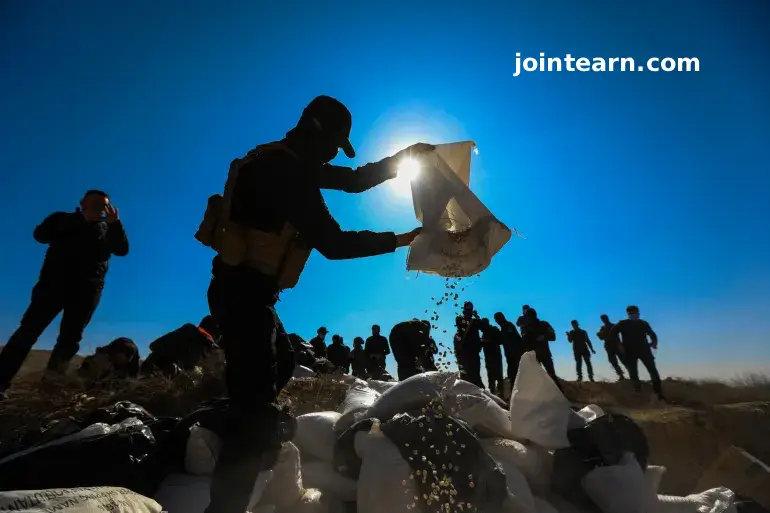
Syria’s new government has launched a major crackdown on the Captagon drug industry, which flourished under former President Bashar al-Assad, according to a recent report by the United Nations Office on Drugs and Crime (UNODC).
Since al-Assad’s ouster in late 2024, Syria’s interim authorities, led by President Ahmed al-Sharaa, have targeted the network of Captagon factories and storage sites, seeking to dismantle the illicit trade and strengthen the legitimacy of the new government in the eyes of the international community.
“Political will and international cooperation … even highly complex drug markets can be destabilised within a relatively short period of time,” the UNODC noted, highlighting the effectiveness of Syria’s crackdown.
The Captagon Industry in Syria
For over a decade, Syria was the world’s largest producer of Captagon, a highly addictive, amphetamine-like stimulant. The drug, popular in Gulf countries as a party drug and for enhancing endurance in extreme heat, generated billions of dollars in revenue for networks tied to the al-Assad regime.
According to the UNODC report:
- 15 industrial-level laboratories have been shut down
- 13 storage sites were dismantled
- These closures have drastically altered the regional Captagon market
Despite these efforts, large stockpiles of Captagon remain in circulation, and smaller-scale production continues both inside Syria and in neighboring countries. Gulf nations remain the primary consumers of the drug.
Key Figures and Networks
Caroline Rose, a Syrian drug trafficking expert at the New Lines Institute, identified former regime insiders and security apparatus members as major beneficiaries of the trade.
- Maher al-Assad, brother of Bashar and former commander of the elite Fourth Division, was a key player in protecting shipments from the Syrian port city of Latakia.
- Profits from Captagon flowed to regime elites, business networks, and al-Assad family members, creating a powerful nexus between governance and organized crime.
Regional and Global Implications
The Captagon crackdown has drawn attention across the Middle East and Gulf states, which were primary markets for Syrian exports. The UNODC warns that while the crackdown is disrupting Syria’s Captagon network, demand remains high, raising the risk that consumers may turn to other synthetic drugs, such as methamphetamine.
“Without addressing the underlying demand for Captagon, trafficking and use are likely to shift toward other substances, with new routes and actors emerging to fill the gap,” the UN agency said.
The UNODC report highlights the importance of international cooperation in tackling complex drug markets, showing that decisive action can quickly disrupt even deeply entrenched criminal networks.
Syria’s Path Forward
The dismantling of Syria’s Captagon industry reflects the new government’s effort to curb illicit economic activities linked to the previous regime, rebuild international trust, and comply with global anti-drug frameworks.
While significant challenges remain, including ongoing smuggling and residual stockpiles, experts suggest that the crackdown could reshape the Middle East drug trade if regional cooperation continues.


Leave a Reply