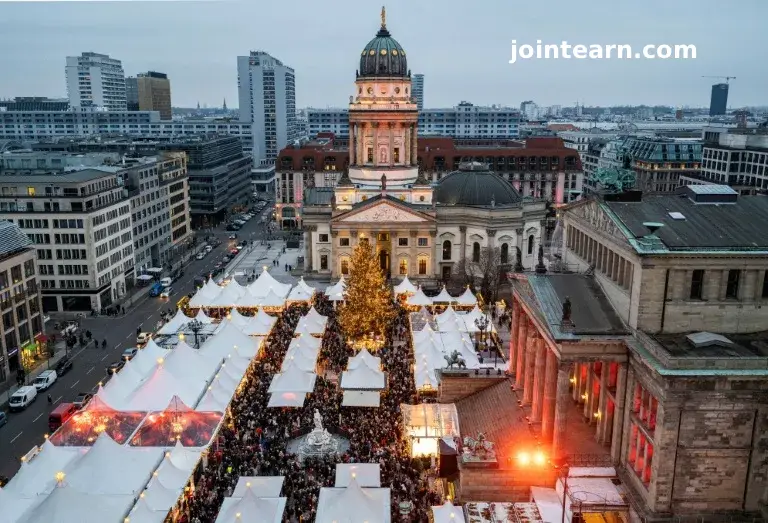
German Christmas markets, celebrated for centuries as festive cultural hubs, have become the latest targets of fake news and online disinformation campaigns. Doctored videos and AI-generated images circulating on social media have falsely depicted the markets as heavily militarized sites, spreading unfounded claims about attacks, Muslim prayer calls, and “Islamist mass gatherings.”
Spread of Disinformation
Social media platforms have seen a surge of posts claiming that Christmas markets in cities such as Hamburg and Stuttgart were stormed by Muslim men or “Islamist immigrants.” AFP Factcheck investigated these claims and found them to be false:
- The footage often originates from October 2024 rallies by the activist group Muslim Interaktiv, which has since been banned.
- Some videos show Syrian celebrations of the fall of Bashar al-Assad, unrelated to Christmas markets.
- AI-generated images exaggerated security, showing barbed wire fences or military vehicles that were never present.
Additionally, a widely circulated video purportedly showing a man delivering the Islamic call to prayer at a Christmas market was actually filmed in November 2023 in Karlstadt, Bavaria, and was unrelated to any Christmas event.
Historical Attacks and Security Concerns
The festive markets, a staple of German culture with stalls selling gifts, food, and mulled wine, have been overshadowed in recent years by terrorist attacks and attempted attacks:
- In Magdeburg last year, a car-ramming attack killed six people and injured over 300. The suspect, a Saudi psychiatrist, was motivated by conspiracy theories and anti-Islam sentiments.
- The 2016 Berlin Christmas market attack by a Tunisian man killed 13 people.
- Authorities also reported a thwarted Islamist plot in Bavaria in December 2025, involving five men planning a vehicle attack.
These events have prompted heightened security at markets, but social media disinformation exaggerates the measures, portraying an exaggeratedly militarized environment.
Political Exploitation
The far-right party Alternative for Germany (AfD) has leveraged these attacks and disinformation campaigns to push for “remigration” policies, particularly targeting Muslim-majority communities. False narratives aim to sow distrust, stoke fear, and deepen societal divisions.
Experts note that Christmas markets are especially vulnerable to disinformation because of their emotional and symbolic significance, representing warmth, community, and security. Misleading content exploits these associations to provoke strong reactions.
Lea Fruehwirth from Germany’s Centre for Monitoring, Analysis and Strategy explained:
“Christmas symbolism stands for joy, a warm feeling of community and security. Narratives that accuse Muslims of wanting to violently destroy this idealised image can therefore trigger a lot of emotion.”
Disinformation Tactics
The disinformation circulating online is part of broader trends, including:
- AI-generated imagery to exaggerate threats or security measures.
- Misattributed videos showing unrelated events as recent attacks or religious interventions.
- Amplification by far-right accounts and networks in multiple languages, including English, Russian, Greek, and Slovak.
- Efforts to exploit emotional symbolism to divide communities and spread fear.
Experts warn that such campaigns can undermine trust in public safety, inflame social tensions, and manipulate public perception around immigration and minority communities.
Looking Ahead
Authorities and fact-checkers continue to monitor social media for false claims targeting public spaces and cultural events. Efforts include public education, verification of video content, and collaboration with social media platforms to limit the spread of disinformation.
German Christmas markets remain widely visited and cherished, but the rise of misinformation campaigns highlights the importance of vigilance, media literacy, and fact-checking to protect community cohesion during festive seasons.


Leave a Reply