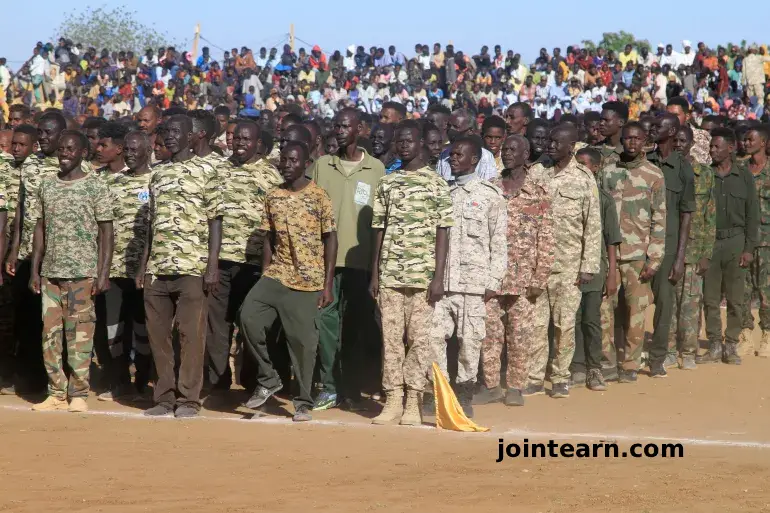
Sudanese Prime Minister Kamil Idris has presented a groundbreaking peace proposal to the United Nations Security Council (UNSC) aimed at ending Sudan’s devastating civil war. The conflict, now in its third year, has created one of the world’s worst humanitarian crises, displacing approximately 14 million people and leaving millions more facing severe hunger and insecurity.
The war in Sudan erupted in April 2023 following a power struggle between Sudanese Armed Forces (SAF) chief Abdel Fattah al-Burhan and the leader of the paramilitary Rapid Support Forces (RSF), Mohamed Hamdan “Hemedti” Dagalo. Since then, clashes between the SAF and RSF have intensified, particularly in the Darfur and Kordofan regions, leading to large-scale killings, kidnappings, and widespread destruction of critical infrastructure.
What Is Prime Minister Idris’s Peace Plan?
Prime Minister Idris’s peace initiative proposes a comprehensive roadmap to end Sudan’s cycle of violence. Key elements of the plan include:
- Immediate Ceasefire: Idris called for a ceasefire across Sudan, to be monitored by the United Nations, African Union, and the League of Arab States.
- RSF Withdrawal: The proposal demands the RSF fully withdraw from territories it currently controls, including most of Darfur and Kordofan. Analysts estimate the RSF controls nearly 40% of Sudan.
- Reintegration of Fighters: RSF members not accused of war crimes would be placed in camps, vetted, and reintegrated into civilian society.
- Transitional Elections: After a period of national dialogue, free elections would be held to foster a civilian-led government and ensure political stability.
“This is not about winning a war,” Idris emphasized, “but about ending a cycle of violence that has plagued Sudan for decades.”
Despite the plan’s ambitious vision, the UNSC has not yet voted, and international discussions remain ongoing.
RSF Rejects the Peace Proposal
The RSF, led by Hemedti, has rejected Idris’s plan, calling it “outdated” and unrealistic. Al-Basha Tibiq, an adviser to Hemedti, said the requirement for RSF forces to withdraw is “closer to fantasy than to politics.”
The RSF currently controls strategic locations including el-Fasher, North Darfur’s capital, and the Heglig oilfield, crucial for Sudan’s economy. Meanwhile, the SAF retains control over Khartoum, eastern Sudan, northern states, and parts of central Sudan, maintaining key military advantages such as air power.
Regional and International Responses
The Sudanese conflict has drawn intense international attention, with various regional actors advocating for peace.
- The Quad Group – comprising the United States, Saudi Arabia, Egypt, and the UAE – has proposed its own truce initiative, urging both SAF and RSF to accept a temporary humanitarian ceasefire.
- US Ambassador to the UN Jeffrey Bartos emphasized the need for both sides to accept the truce without preconditions.
- Arab League Secretary-General Ahmed Aboul Gheit praised Idris’s peace plan, highlighting its political, humanitarian, and security significance.
However, accusations continue regarding the UAE allegedly arming the RSF, which the UAE has denied.
Expert Opinions on the Peace Plan
Political analysts and Sudan experts have weighed in on the feasibility of Idris’s proposal:
- Al-Rashid Muhammad Ibrahim, of the Centre for International Political Relations Studies, noted the plan’s clear vision and framing of the RSF’s actions as aggression.
- Faisal Abdel Karim, political analyst, stated that the initiative’s success depends on acceptance by the RSF and support from international powers.
- Al-Wathiq Kameir highlighted the timing challenges, noting that Idris addressed the UNSC during the holiday season when many missions were inactive.
The Ongoing Humanitarian Crisis
Despite peace efforts, fighting continues to escalate around el-Fasher and Kordofan, forcing thousands to flee. As of December 2025:
- 1,700 people fled to White Nile state, joining millions of internally displaced persons.
- Kosti city now hosts around 2 million displaced people, straining resources and basic facilities.
- Sudan faces acute hunger for 21 million citizens, marking the largest humanitarian crisis globally, according to the UN.
The war’s root causes trace back to 2021, when SAF and RSF jointly overthrew Sudan’s civilian government. Disputes over RSF integration into the military and transition leadership escalated into the ongoing power struggle.
The Road Ahead for Sudan
While Idris’s peace plan represents a homegrown approach to conflict resolution, its success depends on both RSF compliance and international support. Analysts suggest that without these crucial elements, fighting will likely continue, further exacerbating the humanitarian crisis.
Sudan now faces a critical crossroads: embrace dialogue and reconciliation or witness continued bloodshed and displacement.


Leave a Reply