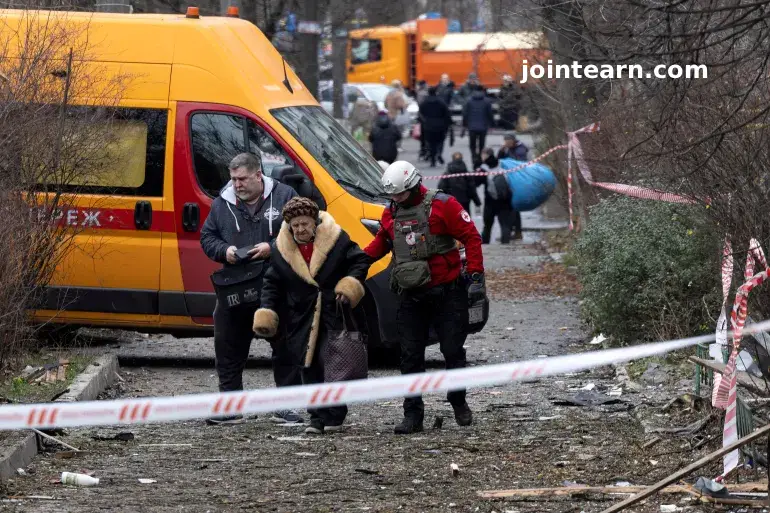
Kyiv, Ukraine – Russia has intensified its claims of territorial gains in Ukraine in 2025, asserting that Moscow’s forces have captured key towns and regions. Analysts and Ukrainian officials remain skeptical, citing satellite evidence and field reports that contradict Moscow’s statements. The announcements come amid stalled US-Ukraine peace negotiations and continued military exchanges on the ground.
Russian Claims of Territorial Advances
Russian President Vladimir Putin announced in a year-end press conference that Russian forces had seized:
- Siversk in Donetsk
- Vovchansk in Kharkiv
- At least half of Lyman and Kostiantynivka in Donetsk
- Hulyaipole in Zaporizhia
The Kremlin also claimed control over Kupiansk in Kharkiv and Pokrovsk in Donetsk.
However, the Institute for the Study of War (ISW) in Washington reported that Russian control is far more limited:
- Hulyaipole: 7.3% controlled by Russia
- Lyman: 2.9% controlled
- Kostiantynivka: 5% controlled
- Pokrovsk: Ukrainian forces reclaimed 16 km²
ISW noted that Russian military bloggers’ reports only partially support Moscow’s claims. Overall, analysts estimate Russia has captured no more than 4,984 km² containing 196 settlements, rather than the 6,300 km² and 300 settlements officially claimed by Russian authorities.
Ukrainian Response and Peace Negotiations
Ukrainian President Volodymyr Zelenskyy emphasized cooperation with the United States despite disagreements over territorial concessions. The 20-point peace plan discussed in December revealed that no agreement had been reached regarding Russian demands to annex Donetsk, Luhansk, Zaporizhia, Kherson, and Crimea.
Zelenskyy has called for a summit with US President Donald Trump to finalize Ukraine’s position on territorial adjustments. Key points of the plan include:
- Retention of Ukraine’s military strength
- No recognition of Russian-occupied territories as de facto Russian
- NATO-level security guarantees for Ukraine
- European Union support, including plans for full membership and mutual defence
Ongoing Military Operations
The conflict continues to see long-range strikes and drone attacks:
- Russia launched 1,227 drones and 41 missiles from December 18-24, with Ukraine intercepting 80-83%
- Russian strikes killed at least four civilians, including a child
- Ukraine targeted Russian Su-27 jets, MiG-31 interceptors, oil rigs, and refineries in Crimea and the Caspian Sea
- Ukraine also struck Russian tankers in the Mediterranean, marking a significant expansion of its operations
Additionally, Ukrainian intelligence used a car bomb to assassinate Lieutenant General Fanil Sarvarov, head of Russian operational training.
European Support and Reconstruction Plans
While the US has limited direct military assistance, European nations—including Germany, France, and Italy—along with Canada, Australia, and Japan, are funding Ukraine’s defense. On December 20, the European Council approved a €90 billion ($106 billion) loan over two years to Ukraine, aiming to support reconstruction and recovery.
Zelenskyy confirmed that Ukraine will receive at least €45 billion ($53 billion) annually, with repayments intended from Russian assets, though European nations have distanced the loan from confiscated Russian funds. The US-Ukrainian 20-point plan also pledges $800 billion for Ukraine’s rebuilding efforts.
Implications
Russia’s inflated territorial claims appear intended to strengthen its negotiating position while signaling domestic military success. Analysts warn that continued military escalation, despite ongoing diplomacy, could prolong the war and complicate peace negotiations. Ukraine, backed by international allies, is maintaining defensive and offensive operations while preparing for post-war reconstruction.


Leave a Reply