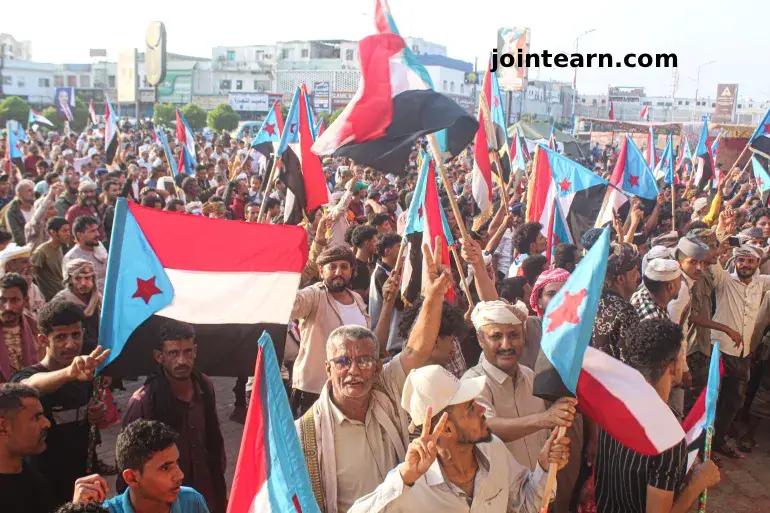
Riyadh, Saudi Arabia – Saudi Arabia has publicly demanded that Yemen’s main southern separatist group, the Southern Transitional Council (STC), withdraw from two eastern provinces it recently seized. The move highlights growing tensions within Yemen’s fragile anti-Houthi coalition and raises concerns about further destabilization in the country.
Saudi Arabia Labels STC Actions an “Unjustified Escalation”
On Thursday, Saudi Arabia’s Ministry of Foreign Affairs issued a formal statement describing the STC’s military operations in Hadramout and al-Mahra governorates as an “unjustified escalation.” The statement emphasized the importance of restraint and cooperation among Yemen’s factions to avoid actions that could undermine regional security and stability.
Riyadh also noted that mediation efforts are underway to ensure STC forces return to their previous positions and hand over the seized areas to the National Shield Forces, a key component of Yemen’s internationally recognized government.
“The kingdom remains hopeful that the separatists will pull back in an urgent and orderly manner to restore stability,” the Foreign Ministry said.
STC Expands Control Despite Gulf Diplomacy
The STC, which receives military and financial backing from the United Arab Emirates (UAE), moved into Hadramout and al-Mahra in early December, quickly seizing oil facilities, government buildings, and border crossings. The group also occupied the presidential palace in Aden, Yemen’s temporary government seat.
Saudi Arabia and the UAE have historically supported the anti-Houthi government since Yemen’s civil war began in 2015. Despite joint diplomatic efforts, including a Gulf delegation sent to Aden on December 12, negotiations have yet to yield a resolution.
Strategic Importance of Hadramout and al-Mahra
Saudi Arabia views Hadramout as critical to its national security, given its proximity to the kingdom’s southern border, while Oman has expressed concerns about al-Mahra. Both provinces contain key trade routes and energy resources, which the STC considers essential for building an independent southern state.
Formed in 2017, the STC aims to restore South Yemen, an independent country from 1967 to 1990. Its leader, Aidarous al-Zubaidi, holds a seat on Yemen’s Presidential Leadership Council but increasingly operates independently of the government he nominally serves.
Escalation Risks Undermining Yemen’s Truce
Rather than withdrawing, the STC has expanded into Abyan province, with al-Zubaidi declaring ambitions to eventually capture Sanaa, Yemen’s Houthi-controlled capital. He has told supporters that the south faces a “critical and existential juncture” that requires establishing the institutions of a future South Arabian state.
Analysts warn that the STC’s expansion could weaken the fragile truce and inadvertently strengthen the Houthis, who have maintained control of northern Yemen, including Sanaa, since 2014.
Implications for Regional Security
Saudi Arabia’s demand highlights the kingdom’s ongoing role in Yemen’s conflict and its strategic interest in curbing STC unilateral actions. The escalation underscores the complexity of Yemen’s civil war, where alliances are fluid, Gulf powers wield significant influence, and the conflict remains a major threat to regional stability.


Leave a Reply