Myanmar is holding a highly controversial election this week, orchestrated by the military junta that seized power nearly five years ago. With the National League for Democracy (NLD) dissolved and its leader Aung San Suu Kyi imprisoned, the vote is widely regarded as a sham, marred by intimidation, civil conflict, and restricted access in many parts of the country.
Military-Backed Campaigns in Mandalay
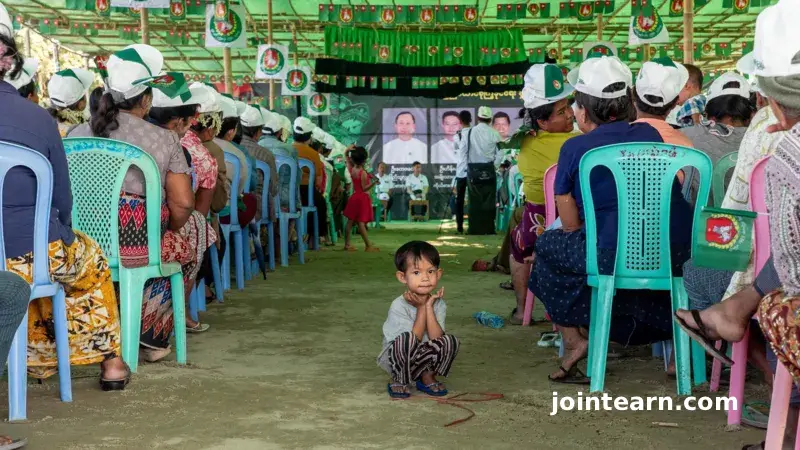
In Mandalay, retired Lieutenant-General Tayza Kyaw, candidate for the military-backed Union Solidarity and Development Party (USDP), held a campaign rally in the Aungmyaythazan constituency. Despite distributing branded hats and flags to a crowd of 300–400, many attendees dozed off in the heat, while children played amid families affected by the March earthquake.
The atmosphere reflects widespread apathy and fear, with party officials instructing attendees not to speak to journalists. Plain-clothes military intelligence officers were present, ensuring strict control over public expression.
Widespread Fear and Repression
Citizens expressed reluctance to discuss the election openly. At a local market, one customer remarked, “We have no choice, so we have to vote.” A woman, speaking anonymously, said: “This election is a lie. Everyone is afraid. Everyone has lost their humanity and their freedom. So many people have died, been tortured, or fled. If the military keeps running the country, how can things change?”
Myanmar’s junta has introduced harsh laws criminalising dissent, including distributing leaflets or speaking against the election. Activists such as Tayzar San, who organized boycotts, face severe penalties, while others have received decades-long sentences for minor acts of protest.
Election Amid Ongoing Civil War
The election will be held in three stages, with nearly half the country unable to vote due to ongoing civil conflict. Armed groups, including People’s Defence Forces (PDFs) and the Unicorn Guerrilla Force, control villages and maintain ambushes along key routes. In these contested areas, election access is impossible, highlighting the limited reach and legitimacy of the process.
The military, led by Min Aung Hlaing, aims to regain legitimacy after five years of conflict that has killed tens of thousands. His forces, equipped with Chinese and Russian weapons, are attempting to incorporate recently reconquered territories into the final stage of the vote.
China’s Support and Regional Diplomacy
China has provided technical and financial support for the election, framing it as a quasi-democratic exercise to stabilize Myanmar after years of unrest. Regional observers anticipate reluctant acceptance from other Asian countries, despite international criticism.
Limited Competition and Expected Outcome
With the USDP guaranteed a victory due to the absence of the NLD and restricted participation of other parties, voter turnout is expected to be low. Many Burmese citizens will still vote, driven by fear or exhaustion from the civil war, but their participation is often described as compelled rather than voluntary.
A Mandalay resident summed up the public sentiment: “We will vote, but not with our hearts.”
Humanitarian Consequences
The civil war has left deep scars: schools and hospitals have been hit by air strikes, civilians have been killed or displaced, and large areas remain under armed group control. The election, while portrayed by the junta as a return to democracy, is seen by analysts as a veneer of legitimacy masking ongoing repression.


Leave a Reply