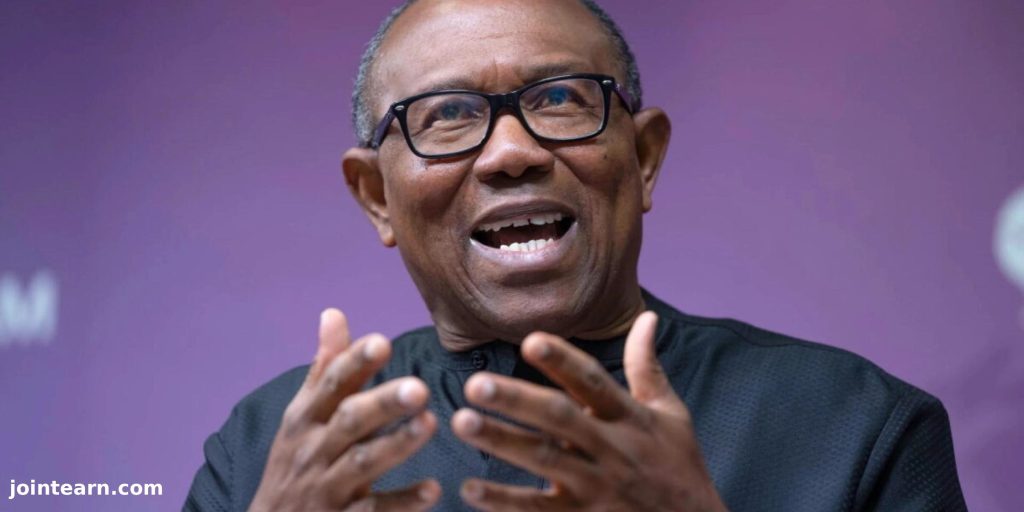
Former Labour Party presidential candidate, Peter Obi, has faulted Nigeria’s current tax regime, warning that national prosperity cannot be achieved by imposing heavier financial burdens on an already struggling population.
In a personally signed statement released on Friday and titled “Prosperity Cannot Come by Taxing Poverty,” Obi argued that genuine economic development depends on honest leadership, transparency, and policies that prioritise citizens’ wellbeing over aggressive revenue generation.
According to him, nations that succeed economically are led by leaders who unite their people around a common vision anchored on integrity.
“Transformational leadership is built on honesty,” Obi said, stressing that governments owe citizens transparency and truthfulness. “People deserve nothing less from those entrusted with leadership.”
He cautioned that leadership loses moral authority when it exploits citizens for the benefit of a privileged few, noting that sustainable progress is rooted in trust, unity, and shared purpose.
Obi maintained that Nigeria’s taxation strategy must be assessed through the lens of fairness and accountability, describing taxation as a social contract that should protect citizens rather than impoverish them.
“If taxation is to work as a genuine social contract, it must be fair, sincere, and focused on the welfare of the people,” he said, adding that Nigerians deserve clear explanations of tax policies and visible benefits from them.
He warned that without transparency, taxation becomes a source of hardship rather than growth, insisting that Nigeria must rethink its approach if it hopes to achieve economic recovery, national cohesion, and shared prosperity.
The former Anambra State governor criticised what he described as a revenue-first fiscal mindset that ignores the living conditions of citizens.
“The goal of fiscal policy is not just to raise money, but to make the people wealthier so the nation becomes stronger,” he said, lamenting that Nigerians are being asked to pay more taxes without clarity or corresponding improvements in their lives.
Obi argued that sustainable economic recovery lies in boosting production rather than increasing taxes, emphasising the need to empower small and medium-sized enterprises.
“You cannot tax your way out of poverty; you must produce your way out of it,” he stated, noting that thriving small businesses naturally expand the tax base through job creation and rising incomes.
He also expressed concern over what he described as an alarming tax fraud controversy, claiming that a tax law was allegedly forged for the first time in Nigeria’s history.
“The National Assembly itself has reportedly admitted that the version gazetted is not what was passed,” Obi said, questioning why Nigerians are being compelled to pay higher taxes under what he described as a manipulated framework.
He cautioned against celebrating increased government revenue while citizens grow poorer, stressing that such an approach contradicts the principles of good governance.
“Taxing poverty does not create wealth; it only deepens hardship,” Obi warned.
He concluded by calling for a comprehensive overhaul of Nigeria’s tax system, advocating for a fair, lawful, and people-focused framework that supports production, rewards enterprise, protects vulnerable citizens, and restores trust between government and the people.


Leave a Reply