Nigeria’s shrimp industry is showing strong growth potential as early-stage aquaculture investments complement traditional industrial trawling, positioning the sector as one of the country’s most promising non-oil agricultural exports.
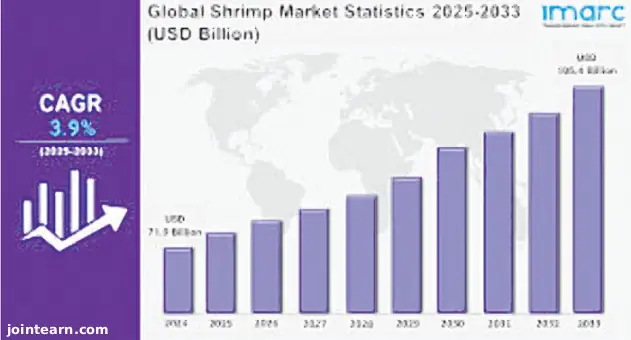
Research by Deep Market Insights indicates that the Nigerian shrimp market, valued at $682.35 million in 2024, is projected to reach $1.12 billion by 2033. The country accounted for roughly 0.89% of the global shrimp market in 2024, with expected annual growth of 5.61% between 2026 and 2033.
Total shrimp supply from both wild-caught and farmed sources is estimated to exceed 12,000 metric tons annually as of 2024/2025. However, domestic demand continues to outpace production, highlighting a significant supply gap.
Official data from the Federal Department of Fisheries and Aquaculture shows industrial shrimp output has remained stable between 2015 and 2020, averaging 4,400–6,000 metric tons annually. Industrial trawling primarily focuses on four species—white shrimp, tiger shrimp, flower tiger shrimp, and brown shrimp—harvested along Nigeria’s Atlantic coastline.
While capture fisheries dominate production volumes, aquaculture is increasingly promoted as a way to close the supply deficit. Analysts note that limited data from artisanal fishers obscures the true scale of domestic production, leaving official figures heavily weighted toward industrial and emerging farm output.
Prof. Ochang Stephen, Professor of Aquaculture at Cross River State University of Technology, Calabar, said Nigeria has the essential resources to become a major hub for shrimp production and export in Africa but stressed that industry challenges must be addressed.
“Currently, Nigeria produces about 12,000 metric tons of shrimp annually, valued at roughly $84 million. This is far below domestic needs and export opportunities. With an estimated annual deficit of 226,000 metric tons, our production capacity must expand significantly,” he explained.
Despite the gap, Prof. Stephen highlighted shrimp exports’ contribution to the economy. “In the first nine months of 2024 alone, Nigeria earned N53 billion from exporting frozen shrimps, prawns, crabs, rock lobster, and other sea crayfish. The average export unit value of our shrimp in 2020 was $8.9 per kilogram, significantly higher than the import value, highlighting strong global demand and profitability.”
Nigeria’s extensive coastline, rich marine biodiversity, and warm tropical climate offer ideal conditions for year-round shrimp farming, particularly for species like black tiger shrimp and whiteleg shrimp. Combined with a growing domestic market, ECOWAS membership, and untapped inland water bodies, these factors present major growth opportunities.
However, Prof. Stephen cautioned that challenges remain. High startup costs for shrimp farms, inadequate feed and seed supply, limited access to credit and insurance, and insufficient technical expertise and market infrastructure are key hurdles that must be overcome.
At the state level, Lagos is actively supporting aquaculture initiatives to meet rising seafood demand. Commissioner for Agriculture and Food Systems, Ms. Abisola Olusanya, said the state is investing in farmer training, risk management, and value chain development to drive sustainable industry growth.
On the private sector front, Indian-owned Atlantic Shrimpers is Nigeria’s largest seafood exporter with over $100 million in investments, while several local companies are also expanding their operations.
Locally, shrimp prices have risen sharply, with medium-sized prawns now selling at around N16,000 per bucket and jumbo prawns reaching N38,000 per bucket, reflecting broader economic pressures and market dynamics. Globally, shrimp prices have rebounded to near pre-pandemic levels, which may further influence West African markets.


Leave a Reply