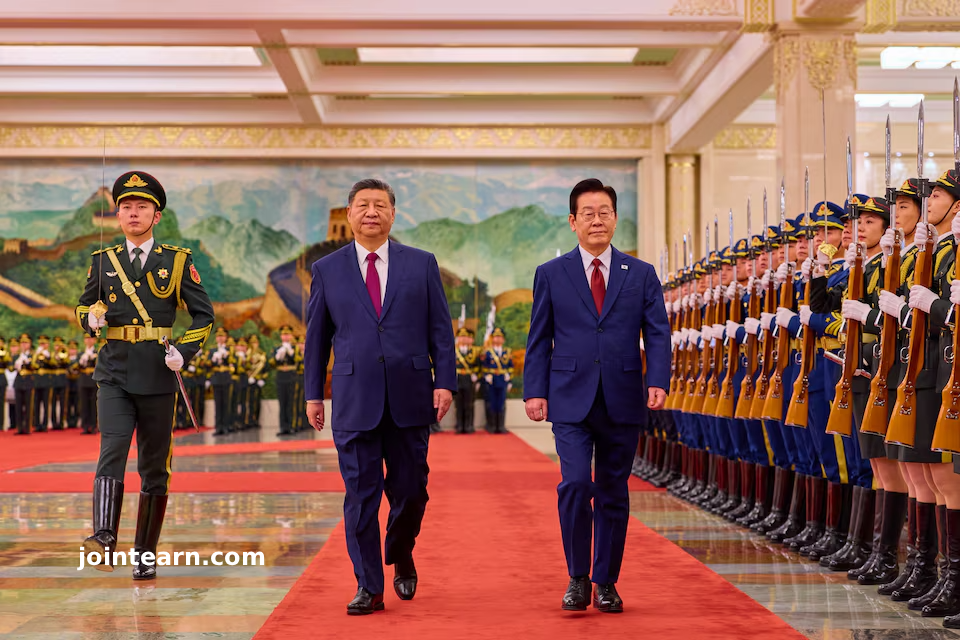
South Korean President Lee Jae Myung emphasized the importance of strengthening bilateral ties with China during a high-level summit with President Xi Jinping in Beijing on Monday. The meeting was described as a pivotal opportunity to fully restore South Korea-China relations and lay the groundwork for a durable strategic partnership.
Summit Focuses on Irreversible Strategic Cooperation
In his opening remarks, President Lee highlighted the summit as a chance to transform the relationship between South Korea and China into an irreversible trend of strategic cooperation. The two leaders discussed ways to enhance collaboration across political, economic, and cultural spheres, signaling a renewed commitment to fostering long-term stability and mutual benefit.
Analysts note that the summit reflects Seoul’s intention to balance regional diplomacy amid evolving geopolitical dynamics in East Asia, particularly as China seeks to strengthen ties with neighboring countries while the United States and other global powers remain influential in the region.
Context: South Korea-China Relations
Relations between South Korea and China have historically fluctuated due to political tensions, trade disputes, and regional security concerns. Recent years saw disruptions in diplomatic and cultural exchanges, yet both nations recognize the strategic importance of maintaining strong bilateral relations.
President Lee’s approach underscores a long-term vision for South Korea-China ties, prioritizing dialogue, economic collaboration, and regional stability. The summit also emphasized that strategic cooperation should extend beyond temporary agreements and focus on creating a sustainable partnership framework for the future.
Key Areas of Cooperation
While official details of the discussions were limited, experts suggest that potential areas for deeper cooperation include:
- Trade and economic collaboration, including technology, energy, and manufacturing sectors
- Cultural exchanges, aimed at restoring mutual trust and understanding
- Regional security coordination, to address shared concerns in East Asia
- Diplomatic dialogue to reduce tensions and enhance multilateral cooperation
By emphasizing an irreversible trend of strategic partnership, both leaders signal that future interactions will focus on long-term, institutionalized cooperation rather than short-term, transactional arrangements.
Implications for Regional Diplomacy
The summit marks a key milestone in East Asian diplomacy, demonstrating that South Korea is committed to maintaining robust engagement with China even amid broader geopolitical pressures. Analysts view this development as a potential model for resolving regional disputes and enhancing economic integration.
As Seoul and Beijing move forward with their strategic partnership, the summit is likely to expand trade ties, encourage joint projects, and strengthen cultural and political exchanges, reinforcing the importance of diplomacy in a rapidly evolving regional landscape.


Leave a Reply