Shares of U.S. oil companies climbed on Monday amid investor optimism over potential access to Venezuela’s vast oil reserves following comments from President Donald Trump about taking control of the South American nation after the arrest of its president, Nicolas Maduro.
Venezuela holds the world’s largest proven oil reserves, but decades of mismanagement, sanctions, and limited foreign investment after the nationalization of its oil industry have caused production to plummet. In the 1970s, Venezuela produced up to 3.5 million barrels per day (bpd), more than 7% of global output. By last year, production had fallen to about 1.1 million bpd, roughly 1% of worldwide supply.
Trump Administration Plans Meetings With U.S. Oil Executives
The Trump administration is scheduled to meet with executives from major U.S. oil companies this week to discuss ways to revive Venezuelan oil production. These talks aim to entice companies to reinvest in the country and potentially reclaim assets seized during the nationalization of U.S.-led operations nearly two decades ago.
U.S. officials reportedly told oil executives that companies would need to return quickly to Venezuela and commit significant capital to modernize infrastructure if they wanted to recover compensation for previously expropriated assets.
Shares of U.S. Oil Companies Jump
Investor optimism was reflected in stock prices:
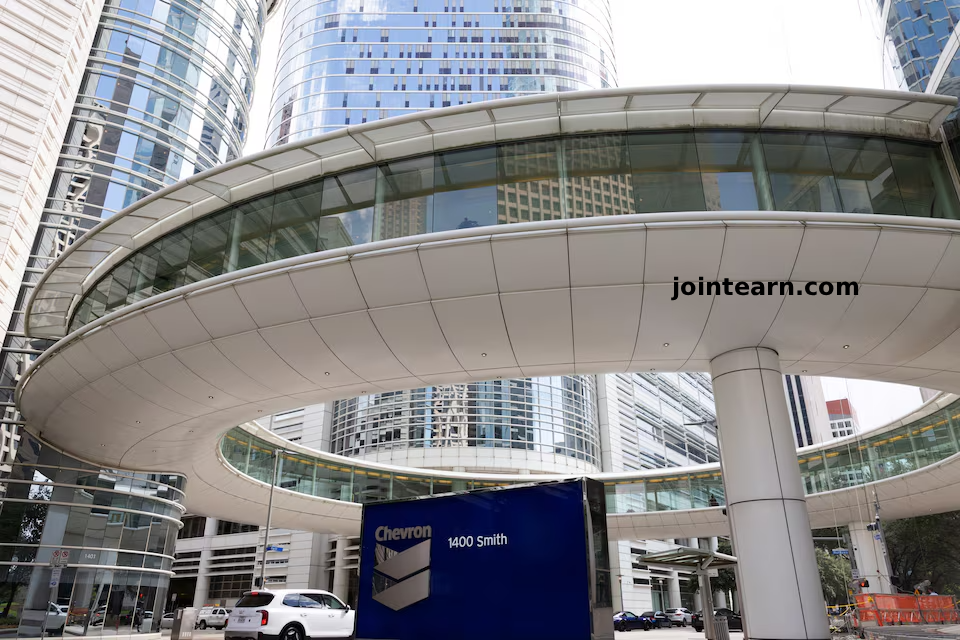
- Chevron (CVX.N), the only major U.S. operator still active in Venezuela under a waiver, rose 5%.
- Marathon Petroleum (MPC.N), Phillips 66 (PSX.N), PBF Energy (PBF.N), and Valero Energy (VLO.N) gained 3.4%–9.3%.
- ConocoPhillips (COP.N) and ExxonMobil (XOM.N) shares increased by over 2%, fueled by hopes of recovering arbitration claims against Venezuela for past expropriations.
Analysts at J.P. Morgan noted that ConocoPhillips has outstanding claims approaching $10 billion, while ExxonMobil has damages of about $2 billion against former claims exceeding $15 billion.
Impact on Oil Markets and Refineries
Venezuelan crude is heavy and sour, with high sulfur content, making it particularly suitable for diesel and heavier fuels. It aligns well with U.S. Gulf Coast refinery configurations, though margins are lower compared with lighter Middle Eastern crude, according to Ahmad Assiri, research strategist at Pepperstone.
While oil prices rose $1 per barrel, analysts warned that, in a globally well-supplied market, any disruption in Venezuela would have limited immediate impact on crude prices. The current embargo on Venezuelan oil exports remains in effect, according to Trump.
Oilfield Services Stand to Gain
Shares of oilfield services companies, which would play a key role in restoring Venezuelan production, also advanced. Baker Hughes (BKR.O), Halliburton (HAL.N), and SLB (SLB.N) rose between 4% and 9%, reflecting investor confidence in a potential expansion of Venezuelan output.
Long-Term Outlook
Despite the short-term optimism, analysts cautioned that meaningful recovery in Venezuela’s oil sector would take years due to political instability, dilapidated infrastructure, and prolonged underinvestment. Rebuilding production capacity to previous levels would require substantial capital and careful management, but U.S. companies are positioned to benefit significantly if access is granted.
The Trump administration’s efforts highlight a renewed focus on energy security and U.S. involvement in global oil reserves, while providing potential opportunities for American refiners and oilfield services firms.


Leave a Reply