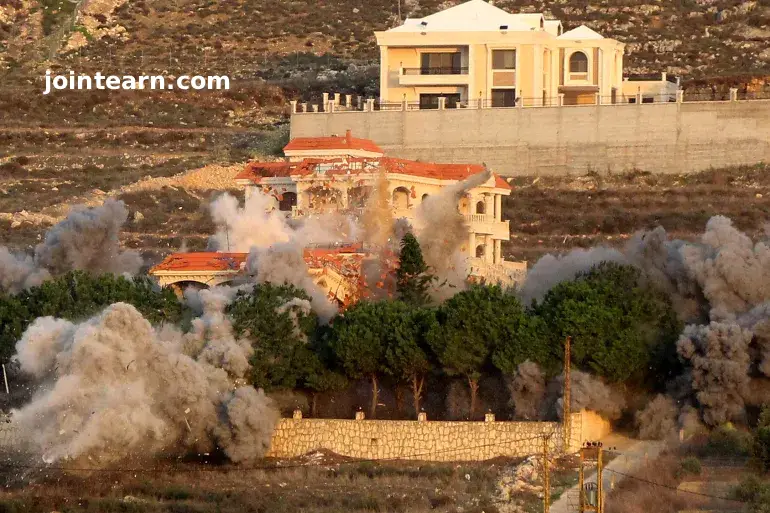
Israel’s military has conducted airstrikes on multiple locations in Lebanon, targeting what it described as Hezbollah and Hamas military infrastructure, prompting civilians to flee several villages in the country’s south and east. The strikes follow ongoing tensions despite a United States-brokered ceasefire in 2024 that had temporarily ended over a year of heavy fighting between Israeli forces and Hezbollah.
Villages Targeted and Evacuations
The Israeli army announced planned strikes in the Bekaa Valley and southern Lebanon, specifically targeting:
- Hammara and Ain el-Tineh in eastern Lebanon’s Bekaa Valley
- Kfar Hatta and Annan in southern Lebanon
AFP correspondents in Kfar Hatta reported dozens of families evacuating their homes after Israeli warnings, with drones observed over the area. Emergency services, including ambulances and fire trucks, were on standby amid heightened security alerts.
Casualties and Military Claims
Lebanon’s Health Ministry reported that a drone strike in the southern village of Braikeh wounded two civilians. Israel stated the strike targeted two Hezbollah members.
The attacks come after a deadly Israeli strike on a vehicle near Bint Jbeil, southern Lebanon, on Sunday, which killed two people and reportedly targeted a Hezbollah member. The strikes occurred roughly 10 kilometers (6 miles) from the Israeli border.
Ceasefire Violations and Ongoing Occupation
Despite the ceasefire, Israel has continued military operations in Lebanon and occupies five areas within the country. UN monitoring has criticized these violations, noting that at least 127 civilians, including children, have been killed in Lebanon since the ceasefire took effect in late 2024, with some officials labeling the attacks as potential war crimes.
Regional and International Pressure
Lebanon has been under growing pressure from the United States and Israel to disarm Hezbollah. The Lebanese army had aimed to complete disarmament south of the Litani River by the end of 2025, but Israeli officials, including Foreign Minister Gideon Saar, have stated that these efforts remain “far from sufficient.”
Security analyst Ali Rizk, based in Beirut, emphasized that Israel’s targeting of Hamas as well as Hezbollah increases pressure on Lebanon to act against all anti-Israel groups present on its territory. The attacks follow a meeting between U.S. President Donald Trump and Israeli Prime Minister Benjamin Netanyahu, after which reports suggested Israel received a “green light” to escalate operations against Hezbollah.
Upcoming Meetings and Ceasefire Monitoring
The Lebanese government is expected to meet to review the army’s progress in Hezbollah disarmament. Additionally, a ceasefire monitoring committee, comprising peacekeepers and representatives from Lebanon, Israel, France, the U.S., and the United Nations, will convene in the coming days to assess compliance and civilian safety.
The latest escalation underscores the fragility of peace in southern Lebanon, with civilians bearing the brunt of ongoing hostilities. UN officials have repeatedly warned that continued bombardment risks further civilian casualties and may constitute serious violations of international humanitarian law.


Leave a Reply