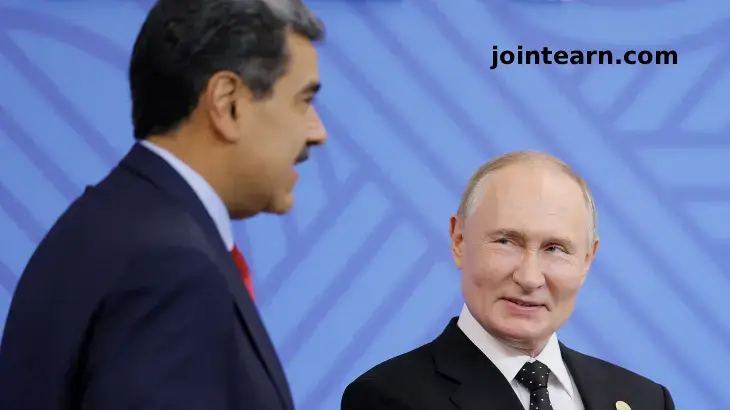
Russian President Vladimir Putin has remained notably quiet after the US abduction of Venezuelan President Nicolas Maduro, sparking debate among analysts about Moscow’s response, its strategic calculations, and the implications for international geopolitics.
Maduro’s Abduction and US Military Action
On Saturday, US Delta Force commandos captured Maduro in his Caracas residence following US airstrikes on Venezuelan Buk-2MA air defense systems and radars supplied by Russia. Maduro is now awaiting trial in New York on drug trafficking charges.
While Russia’s Ministry of Foreign Affairs condemned the action as an “unacceptable act of armed aggression”, Putin himself has remained silent, avoiding any military response despite existing defense cooperation agreements with Caracas. Analysts say the Kremlin is weighing both the risks and opportunities in the rapidly evolving situation.
Immediate Impact on Russia’s Prestige
Observers note a dual consequence for Moscow:
- Short-term reputational damage: Putin’s silence damages his prestige, as Maduro was one of Russia’s most loyal allies in Latin America. The abduction echoes Moscow’s inaction when Syrian President Bashar al-Assad fled to Russia in 2024, reinforcing doubts about the Kremlin’s ability to defend its allies.
- Long-term strategic gains: Analysts suggest Moscow may indirectly benefit from a US-dominated new world order in which the priority is the use of force over international law. This dynamic could allow Russia more freedom in Ukraine, Central Asia, and the Arctic, where energy resources are at stake.
Alisher Ilkhamov, head of the London-based Central Asia Due Diligence think tank, told Al Jazeera:
“Far more important to Putin is that with these actions, Trump is establishing a new world order based on power, not international law. The loss of Maduro, while damaging to Russia’s prestige, does not outweigh strategic interests elsewhere.”
Strategic Calculations: Anchorage Summit and Energy Interests
Some analysts theorize that during the August 2025 Anchorage summit, Trump and Putin may have informally delineated spheres of influence. Potential deals could involve:
- Concessions on Ukraine to Russia
- Joint development of Arctic hydrocarbons by Russia and the US
- US access to the Bazhenovska Svita shale oil deposits in Western Siberia, ensuring China does not gain energy independence
Nikolay Mitrokhin of Bremen University said:
“Control over Bazhenovska Svita could allow Washington to strengthen its global leverage while Russia benefits from Arctic oil projects. The abduction of Maduro fits into a broader strategic chessboard.”
Domestic Russian Narrative
Within Russia, pro-Kremlin media frames Maduro’s fall as part of a Western anti-Moscow plan, portraying it as audacious but ultimately futile. Analysts note that Russian media emphasizes US imperialism to deflect domestic criticism of Moscow’s inaction.
Security Concerns for Putin
Experts suggest Putin’s primary concern is his own personal security and intelligence leaks. Galiya Ibragimova of the Carnegie Endowment explained:
“Putin is most frightened by leaks within Maduro’s circle. His paranoid conviction that everyone is after him will push him to boost his own security immediately. The event may even inspire plans against Ukraine’s President Zelenskyy.”
Historical Ties Between Russia and Venezuela
Russia developed close ties with Venezuela during Hugo Chavez’s presidency, supplying:
- Tanks, helicopters, fighter jets, and missiles
- A factory for AK-47 production
- Expertise in heavy crude processing
Despite these efforts, Venezuela’s oil output declined due to outdated Russian technologies, causing hyperinflation and brain drain in the energy sector. Maduro maintained a high-profile diplomatic relationship with Russia, visiting Moscow multiple times between 2013 and 2025.
Limited Military Support
Despite repeated requests from Maduro for S-300 missile systems, fighter jet repairs, and logistical support, Moscow’s response remained limited. Analysts suggest that the Kremlin’s inaction is partly due to Russia’s military limitations abroad and the risk of direct confrontation with the US.
Conclusion: Calculated Silence
Putin’s quiet response is a calculated choice balancing:
- Domestic propaganda needs
- Strategic energy and geopolitical interests
- Avoiding direct confrontation with the US
While Maduro’s capture may seem a blow to Russia’s influence in Latin America, analysts argue it may ultimately benefit Moscow’s broader global strategy, while reinforcing Putin’s cautious approach to protecting allies outside Russia’s immediate sphere of control.


Leave a Reply