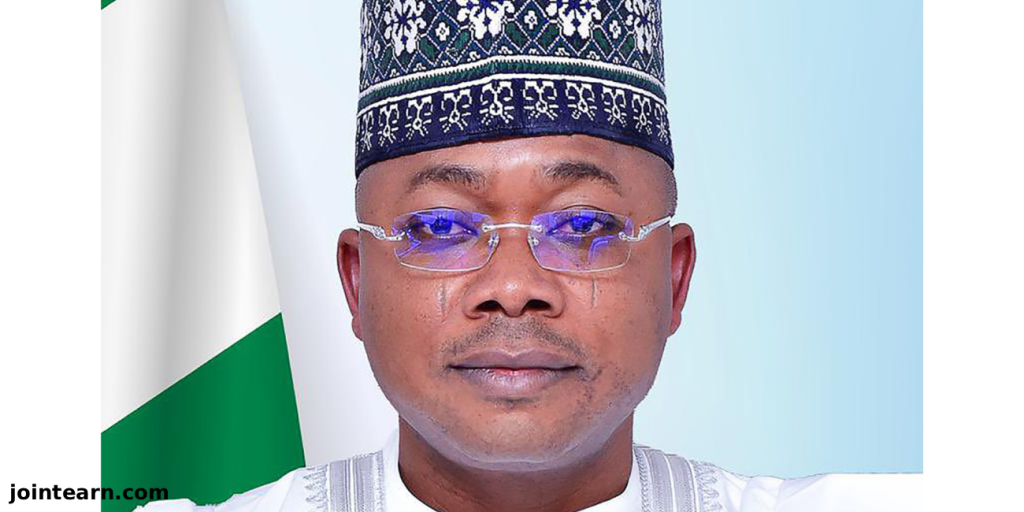
Kogi State Governor Usman Ododo has committed over N1 billion in the state’s 2026 budget to the remodelling of the Government House, even as another N1 billion has been earmarked for minor capital works in the same complex, to be executed through direct labour.
This comes amidst growing concerns about the state’s escalating debt and its ability to meet financial obligations. A detailed review of Kogi’s draft budget for 2026, conducted by SaharaReporters, revealed that the state plans to spend N1.015 billion on upgrading the Government House structure alone, alongside an additional N1 billion for smaller, direct labour-driven projects.
N500 Million Set Aside for Legislators’ Housing
The budget also includes N500 million for the construction of residential apartments for the state’s lawmakers and the head of legislative services on an “owner-occupier basis”. This suggests that the newly built houses will be transferred to the lawmakers, allowing them to own the properties funded by taxpayers’ money.
These luxurious expenditures raise serious questions, especially as the state is facing financial strain and concerns about its growing debt.
Kogi’s Debt Crisis: A Looming Concern
A SaharaReporters review of the Kogi State Medium-Term Expenditure Framework (MTEF) document, covering the years 2025 to 2027, highlights the extent to which the state’s finances are being stretched by debt. According to the MTEF, the state is expected to generate N35.1 billion in Internally Generated Revenue (IGR) in 2025, yet N27.9 billion (about 79.4% of the IGR) will be allocated to debt servicing.
In 2026, the state expects another N35.1 billion in IGR, but N28.2 billion will be used for debt repayment, representing 80.4% of the state’s anticipated revenue. Similarly, in 2027, it’s projected that 81.1% of Kogi’s revenue will go towards servicing public debt.
Debt-Servicing Pressure
Despite the expected revenue, Kogi’s debt profile has become a source of concern. The MTEF highlights that the state’s vulnerability to unexpected economic shifts, such as lower-than-expected revenue, higher-than-expected expenditure, or an unexpected rise in liabilities, poses a significant risk to its debt servicing capacity. The document also flagged Kogi’s weak revenue robustness, noting that the state is highly dependent on federal transfers, such as VAT and statutory allocations, which constitute 80% of its total revenue. This is significantly above the average for Nigerian states, which typically generate a larger share of revenue locally.
Budget Prioritization: Debt Over Development
Worryingly, the amount spent on debt servicing in the first half of 2025 outweighed allocations to key sectors such as health, education, and infrastructure. According to the Kogi budget performance document for the first half of 2025:
- Debt servicing took up N28.1 billion.
- The Ministry of Works and Planning, which includes the Road Maintenance Agency and the state fire agency, received only N17.2 billion.
- Water Resources was allocated N1.4 billion, while Education received N20.3 billion.
- Health was allocated N12.3 billion.
Worrisome Expenditures Amid Debt Crisis
Despite these financial constraints, the state budgeted a significant amount for luxury purchases, including N7 billion for 60 new vehicles for ministries and departments in 2025. These extravagant expenses raise further concerns about the prioritization of public funds, especially at a time when Kogi’s debt servicing continues to dominate the state’s financial landscape.
Calls for Prudence in Public Resource Management
As Kogi State navigates this fiscal dilemma, critics are questioning whether the government’s emphasis on luxurious projects, such as the Government House remodelling and residential buildings for lawmakers, is in line with responsible fiscal management. The Kogi State Government has faced growing scrutiny over its ability to balance its financial commitments with the urgent need for social development and infrastructural growth.
Conclusion
Kogi State’s spending choices for 2026, including the allocation of over N1 billion for Government House remodelling and additional funds for lawmakers’ housing, come at a time when the state’s debt crisis is deepening. The state’s financial outlook remains precarious, with a growing proportion of its revenue being directed towards servicing its debt rather than investing in essential public services and infrastructure. As such, the focus on luxury projects and vehicles raises serious questions about the government’s priorities in managing state funds responsibly.


Leave a Reply