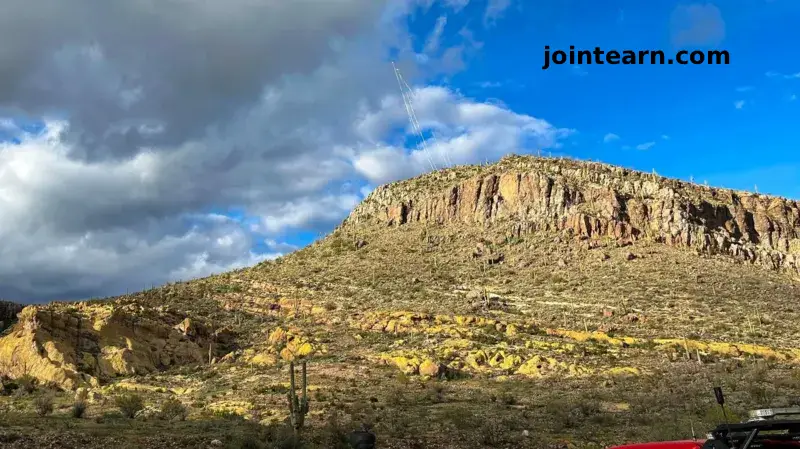
Tragedy struck in Arizona’s Telegraph Canyon on Monday when a helicopter reportedly collided with a slackline, resulting in the deaths of all four passengers. The incident has shocked both the aviation and extreme sports communities, as investigators work to determine exactly how the crash occurred.
What Happened
The Pinal County Sheriff’s Office confirmed that the helicopter struck a slackline spanning more than one kilometer across a remote section of the canyon, before plummeting to the canyon floor.
“An eyewitness who called 911 reported seeing the helicopter strike a portion of the line before falling to the bottom of the canyon,” the sheriff’s statement said.
Officials say that no one was on the slackline at the time, and the line itself had been legally registered with the Federal Aviation Administration (FAA) through a Notam (Notice to Air Missions) alerting pilots of potential hazards in the area.
The cause of the crash has not yet been conclusively determined, and the National Transportation Safety Board (NTSB) is leading the investigation. An official report is expected within 30 days.
Victims Identified
Authorities have confirmed the victims were family members from Oregon:
- David McCarty, 59, pilot
- Rachel McCarty, 23, niece
- Faith McCarty, 21, niece
- Katelyn Heideman, 21, niece
The wreckage has been removed to a secure facility for further examination by the NTSB.
What Is a Slackline?
Slacklining involves walking across a strong, narrow piece of fabric stretched between two points. Unlike a tightrope, a slackline has less tension, allowing the athlete to bounce and sway as they move.
- Highlining is when slacklines are strung high above the ground, often in remote or mountainous locations.
- In this case, the line extended over one kilometer across the canyon.
The International Slackline Association confirmed that the slackliners had followed all safety protocols, including marking the line for aviation visibility.
Aviation Safety and Notams
A Notam is a formal notification that warns pilots of potential hazards along their route. These can include:
- Construction near airports
- Obstacles like cranes or wires
- Airspace restrictions
Experts note that the Notam system is outdated and cumbersome, requiring pilots to manually sift through long lists of notices, some of which may be irrelevant.
“Some of them will be pertinent, some of them will not be. Pilots have to go through these and find what applies to them,” said Tim Kiefer, professor of air traffic management at Embry-Riddle Aeronautical University.
The US Department of Transportation announced in September that the legacy Notam system would be fully replaced by February 2026, aiming to modernize the alert process.
Investigation Underway
The NTSB has experience with accidents involving aircraft striking wires or obstacles, which are notoriously difficult to see, especially in remote areas. Investigators are reviewing:
- Flight path and altitude
- Visibility of the slackline markers
- Pilot awareness of the Notam
- Helicopter mechanical status
It is currently unclear if slacklines have ever caused a previous aviation accident, making this event a rare and tragic case.


Leave a Reply