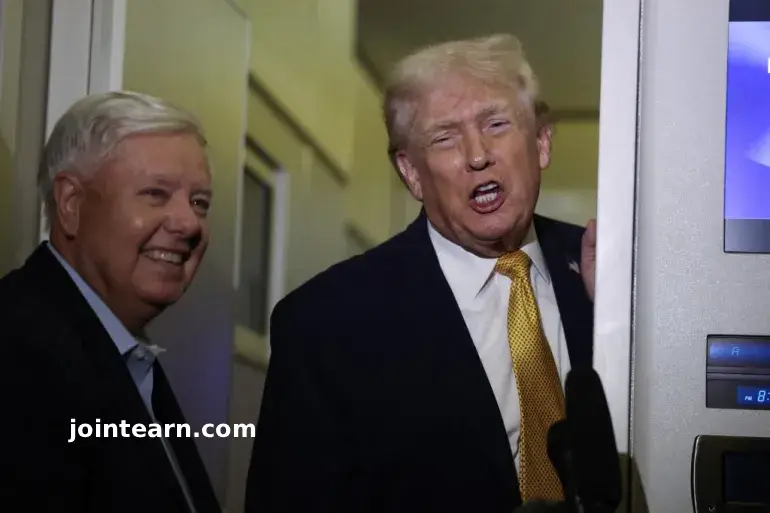
United States President Donald Trump has thrown his support behind a bipartisan sanctions bill that would allow the US to punish countries that continue to buy Russian oil, including China and India, according to influential Republican Senator Lindsey Graham. The legislation is aimed at tightening economic pressure on Moscow amid its ongoing war in Ukraine and cutting off key revenue streams for the Russian government.
What the Russia Sanctions Bill Would Do
The bill, known as the “Sanctioning Russia Act of 2025,” was drafted by Senators Lindsey Graham (R‑SC) and Richard Blumenthal (D‑Conn.) with broad bipartisan support in Congress. Trump has now “greenlit” the legislation, signaling that he will allow it to move forward in the Senate and House after a productive White House meeting.
Under the bill’s provisions, the US could:
- Impose tariffs of up to 500% on imports from countries that knowingly purchase Russian‑origin oil, gas, or energy products.
- Levy additional secondary sanctions on foreign entities engaging with Russia’s energy sector.
- Retain presidential authority to waive tariffs in specific national security cases.
Graham said the legislation would give the President “tremendous leverage against countries like China, India and Brazil to incentivize them to stop buying the cheap Russian oil that provides the financing for Putin’s war machine.”
Targeted Countries and Global Impact
China and India have remained among the largest buyers of Russian crude oil despite existing Western sanctions. In recent months:
- China reportedly accounted for nearly half of Russia’s crude exports.
- India has imported around 38% of Russia’s crude, making both countries central to Russia’s energy revenue.
The proposed tariffs could have significant repercussions for global trade and diplomatic relations, especially if adopted as law. Analysts warn that a 500% tariff could effectively shut off US imports from affected countries, potentially straining ties with major trading partners.
Bipartisan Support and Legislative Outlook
The sanctions bill has garnered a large coalition of senators from both parties. A vote is expected as soon as next week, though leaders have postponed it pending broader congressional scheduling and negotiation with House members.
Senate and House leaders are weighing the timing of the vote alongside other priorities, including government funding packages and foreign policy initiatives related to Ukraine.
Strategic Context: Ukraine and Energy Security
The push for tougher measures against Russia comes as diplomatic negotiations continue to try to end the war in Ukraine, now in its fourth year. Washington has recently signaled conditional support for European proposals to provide binding security guarantees for Kyiv, even as Russia has rejected certain peace plan elements.
Graham described the sanctions bill as “well‑timed,” stating that while Ukraine is making concessions toward peace, Russian forces continue “to kill the innocent.”
Expert and International Reaction
Trade experts have called the use of tariffs as sanctions an untested tool in this context. Critics argue that raising tariffs to such high levels could backfire if major economies choose to continue importing Russian energy despite the penalties, potentially disrupting global markets and diplomatic ties.
Some analysts have also noted that key US allies could be caught in the crossfire if punitive measures are applied too broadly. However, supporters of the bill argue that significant economic leverage is necessary to deprive Russia of revenue that fuels its military campaign in Ukraine.


Leave a Reply