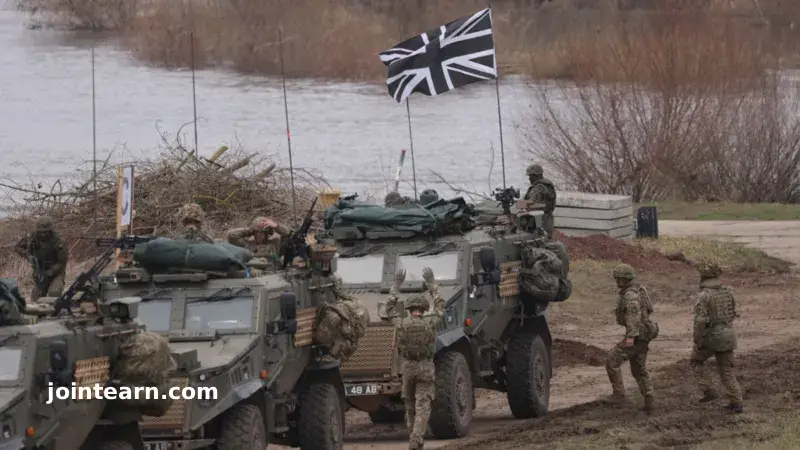
UK Prime Minister Sir Keir Starmer has pledged that Members of Parliament (MPs) will have a vote on any deployment of British troops to Ukraine to help enforce a potential peace agreement with Russia. The announcement follows a joint UK-France declaration of intent to deploy forces to Ukraine if a deal is reached to end the ongoing conflict.
Parliamentary Oversight on Military Deployments
During Prime Minister’s Questions, Sir Keir told MPs that British forces could be sent to Ukraine to conduct deterrence operations and protect newly planned military hubs for allied forces. While the prime minister did not specify the exact number of troops, he stated that deployments would be “in accordance with our military plans.”
A government press secretary later confirmed that Parliament would have a say before any long-term deployment, although it remains unclear whether a Commons vote would legally bind the government if MPs were to reject the proposals.
Traditionally, Parliament does not have a legal role in approving military action, which is formally authorized by the prime minister on behalf of the monarch. However, a convention has developed over recent decades that allows MPs to debate and vote on overseas operations, though it has been applied inconsistently.
- In 2013, MPs voted against UK action in Syria, marking the first time a British leader lost a military vote since the 18th century.
- In 2014 and 2015, Parliament debated operations against the Islamic State group in Iraq and Syria.
- More recently, RAF air strikes in Yemen were authorized by Prime Ministers Rishi Sunak and Keir Starmer without a parliamentary vote.
UK and France Plan Joint Deployment
On Tuesday, the UK and France signed a declaration of intent to deploy troops to Ukraine by air, land, and sea in the event of a peace agreement. The statement indicated that Ukraine would authorize the allies to use “necessary means, including the use of force” within its territory.
Allies also proposed that the United States would take the lead in monitoring a potential truce. However, full security guarantees have not yet been agreed, and the US reportedly did not sign the pledge during the talks.
Reactions from Parliament and Political Leaders
The Commons Defence Committee chairman, Tan Dhesi, welcomed the announcement but warned that it could overstretch UK armed forces and complicate existing commitments to NATO allies.
Other parties, including the Conservatives and Liberal Democrats, supported the announcement but stressed the need for increased defence spending to sustain operations.
Reform UK leader Nigel Farage criticized the plan, stating that under current conditions, the British Army lacks the manpower and equipment for a potentially open-ended mission. He suggested he might reconsider if more countries joined the operation, but warned that the UK and France would otherwise be “completely exposed.”
Context of the Ukraine Conflict
The discussions over deploying troops come after nine months of planning by a coalition of countries, dubbed the Coalition of the Willing, to provide security guarantees to Ukraine should a peace deal be reached.
Russian President Vladimir Putin has repeatedly warned that any foreign troops entering Ukraine would be considered a “legitimate target.” Moscow currently controls approximately 20% of Ukrainian territory, following the full-scale invasion launched in February 2022.
Starmer emphasized that a lasting peace “will not happen” without international security guarantees, particularly those backed by the United States, highlighting the critical role of Western allies in Ukraine’s defence and post-conflict stability.


Leave a Reply