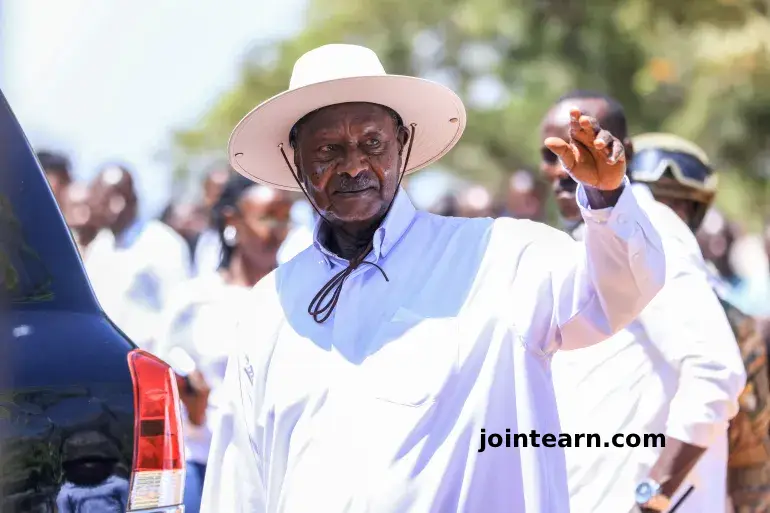
Uganda’s longstanding President Yoweri Museveni is reported to hold a commanding lead in the 2026 presidential election, according to early results from the Electoral Commission. The vote count comes amid reports of violence, allegations of fraud, and the house arrest of his main challenger, pop star-turned-politician Bobi Wine.
Museveni Takes Early Lead
Based on tallies from nearly half of the polling stations, the Electoral Commission reported that Museveni had secured 76.25 percent of the vote, with Wine, whose legal name is Robert Kyagulanyi, trailing at 19.85 percent. The remaining votes were split among six other candidates.
After casting his ballot on Thursday, Museveni said he expected to win with 80 percent of the vote “if there’s no cheating”, which would secure him a seventh term in office. The veteran leader has held power since 1986, making him the holder of the third-longest presidential term in Africa.
Opposition and Allegations of Fraud
Bobi Wine’s National Unity Platform (NUP) has raised concerns about massive electoral fraud, citing an internet blackout during the vote as a major obstacle to transparency. On Thursday, the NUP reported on its X account that military and police forces had surrounded Wine’s home in Kampala, effectively placing him under house arrest.
Police spokesperson Kituuma Rusoke denied knowledge of any house arrest, highlighting the conflicting accounts surrounding the opposition leader’s situation.
During the campaign, Wine’s rallies were repeatedly disrupted by security forces, with tear gas and live rounds fired, resulting in at least one death and hundreds of arrests. International observers, including the United Nations human rights office, have expressed concern over an environment of “widespread repression and intimidation” in which the election took place.
Reports of Violence
Although no major protests were observed during voting hours, overnight clashes were reported in the town of Butambala, approximately 55 km southwest of Kampala. Human rights activist Agather Atuhaire claimed that at least 10 opposition supporters were killed after gathering at the home of parliamentarian Muwanga Kivumbi to follow early results.
A local police spokesperson disputed these claims, stating that opposition supporters armed with machetes, axes, and other weapons had attacked a police station, prompting a defensive response. The incident underscores tensions and the potential for unrest in Uganda during the vote-counting period.
Election Delays and Administrative Challenges
The vote itself was plagued by delays, with some polling stations opening up to four hours late due to technical issues. These administrative challenges, coupled with the internet blackout and reports of campaign violence, have raised concerns about the integrity and fairness of the 2026 election.
Regional instability in Tanzania and Kenya has heightened fears of unrest in Uganda, which has never witnessed a peaceful transfer of presidential power since gaining independence from British colonial rule six decades ago.
What’s Next
With Museveni holding a significant lead, Uganda faces a period of uncertainty, as the opposition continues to challenge the electoral process. The international community and human rights organizations are closely monitoring the situation, particularly regarding reports of post-election violence and political repression.
The unfolding events will shape the country’s political landscape in the coming weeks and may have long-term implications for democratic governance in Uganda.


Leave a Reply