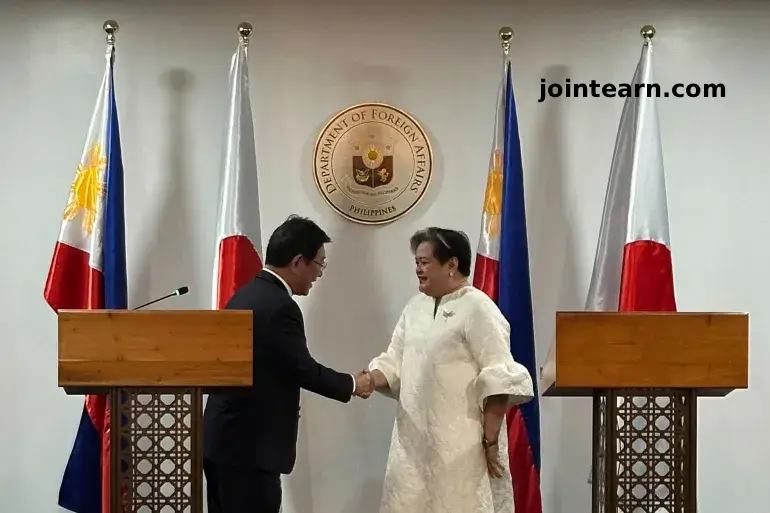
Japan and the Philippines have signed two significant defence agreements, marking a deepening of military cooperation amid increasing regional tensions with China. The agreements, announced on January 15, 2026, in Manila, include a pact allowing the two countries to exchange supplies and services, as well as a security assistance package from Japan aimed at boosting the Philippines’ naval capabilities.
New Defence Pacts Enhance Military Interoperability
At a formal signing ceremony, Japanese Foreign Minister Toshimitsu Motegi and Philippine Foreign Secretary Theresa Lazaro finalized the Acquisition and Cross-Servicing Agreement (ACSA). The deal allows the tax-free provision of ammunition, fuel, food, and other essential supplies when Japanese and Philippine forces conduct joint training exercises.
Foreign Secretary Lazaro emphasized the agreement’s importance for military readiness and interoperability, stating that it builds on previous cooperation under the Visiting Forces Agreement. “This pact strengthens our mutual capacity to respond to regional threats while promoting the rule of law, including freedom of navigation and overflight,” she said.
The new agreements also include a $6 million Official Security Assistance package from Japan, funding the construction of facilities to house rigid-hulled inflatable boats donated to the Philippines. These boats are intended to enhance Manila’s maritime patrol and coastal security capabilities amid increasing tensions in the South China Sea.
Strategic Context: Rising China Assertiveness
The timing of these agreements comes against the backdrop of repeated confrontations between the Philippines and China in the contested South China Sea. Beijing claims almost the entire sea, despite an international court ruling that its claims have no legal basis.
Japanese officials highlighted that the agreements signal a shared commitment to opposing unilateral attempts to change the status quo by force or coercion in the East and South China Seas. While China was not explicitly named, both governments are clearly responding to its growing military assertiveness in the region.
Building on Previous Agreements
This latest deal follows the Reciprocal Access Agreement signed in mid-2024, which allows Japanese and Philippine forces to deploy to each other’s territories for joint exercises, including live-fire drills. That agreement, which came into effect in September 2024, has paved the way for more advanced joint training, improving both nations’ preparedness and operational coordination.
Tokyo has also provided patrol boats, communication systems, and other equipment to Manila in recent years, reflecting a broader strategy to enhance regional security in partnership with the United States.
Japan-China Tensions and Regional Security
Relations between Japan and China have long been strained over historical grievances and territorial disputes. Tensions escalated after Japanese Prime Minister Sanae Takaichi suggested in late 2025 that Japan could intervene militarily if China attacked Taiwan. Beijing responded angrily, reiterating its commitment to Taiwan’s “reunification” and conducting live-fire drills simulating a blockade of the island.
Chinese President Xi Jinping, in his New Year’s address, described reunification with Taiwan as “unstoppable,” highlighting the heightened regional security risks. Japan and the Philippines’ defence agreements can be seen as part of broader efforts to strengthen deterrence in the face of China’s growing military ambitions.
Regional Implications and Strategic Outlook
The new pacts are expected to increase Japan’s strategic footprint in Southeast Asia while reinforcing the Philippines’ ability to secure its territorial waters. Analysts say the agreements also send a signal to other Southeast Asian nations about the importance of multilateral security partnerships amid rising Chinese assertiveness.
By formalizing supply-sharing, joint training, and infrastructure support, the agreements enhance the operational readiness of both militaries. They also demonstrate Tokyo’s willingness to invest in regional allies and assert its role in safeguarding freedom of navigation in key maritime areas.
Conclusion
Japan and the Philippines’ new defence agreements reflect a strategic shift in regional security amid rising tensions with China. By improving military interoperability, resupply capabilities, and naval infrastructure, the two countries aim to strengthen their deterrence posture and protect maritime rights.
As China continues its assertive actions in the South China Sea and around Taiwan, these partnerships signal a growing network of regional cooperation focused on stability, rule of law, and collective security


Leave a Reply