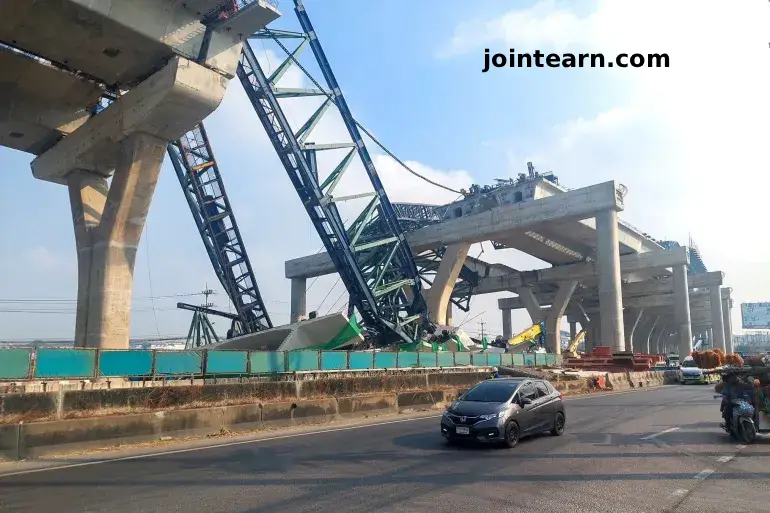
Thailand is reeling after a second crane collapse in just two days, highlighting persistent safety concerns in the country’s construction industry. On January 15, 2026, a crane fell on the outskirts of Bangkok in Samut Sakhon province, killing two people and injuring five others, one day after a massive crane collapse in the northeast killed 32.
Details of the Latest Accident
The latest incident occurred at a construction site on the Rama II Expressway, where a crane was being used to build an elevated highway. Police Colonel Sitthiporn Kasi, superintendent of the local district police station, confirmed that the crane toppled onto the roadway, crushing vehicles and debris scattering across the site.
According to reports, the accident took place in front of the Paris Inn Garden Hotel, and footage from the scene showed clouds of dust and rubble covering the area. The local authorities are currently investigating the circumstances surrounding the collapse.
Same Company Linked to Both Incidents
Transport Minister Phiphat Ratchakitprakarn confirmed that the same construction firm, Italian-Thai Development, was involved in both crane collapses. The company had been contracted to build sections of large-scale infrastructure projects, including a China-backed high-speed rail project in Nakhon Ratchasima province, where Wednesday’s accident killed 32 people when a crane fell onto a moving train, causing it to derail and catch fire briefly.
Minister Ratchakitprakarn stated that 195 passengers were aboard the train during the derailment and has ordered a full investigation into the incident.
Safety Concerns on Thailand’s Construction Sites
Thailand has long struggled with industrial and construction site safety. The Rama II Expressway, the location of Thursday’s collapse, is home to multiple major infrastructure projects, including tollway construction, and has earned the nickname “Death Road” due to a history of deadly accidents.
The northeast high-speed rail route, where Wednesday’s crane accident occurred, has been under construction for nearly a decade as part of a joint Thai-Chinese project. The elevated rail line is being built above existing tracks to reduce travel times between Bangkok and the northeast. According to Al Jazeera correspondent Tony Cheng, the route serves heavily populated areas and is a critical artery for regional transportation.
Industrial safety experts note that crane collapses and other construction accidents in Thailand often result from inadequate safety standards, lack of proper inspections, and the use of outdated equipment. The recent back-to-back disasters have intensified scrutiny of construction practices and regulatory oversight in the country.
Ongoing Investigations
Authorities in both Samut Sakhon and Nakhon Ratchasima provinces are conducting separate investigations. Transport Minister Ratchakitprakarn has emphasized the need for accountability and stricter enforcement of safety measures to prevent further tragedies.
The dual incidents have reignited public debate over the oversight of large-scale infrastructure projects, particularly foreign-backed ventures, and the responsibility of construction companies to adhere to international safety standards.
Conclusion
Thailand’s construction sector faces renewed pressure following two fatal crane collapses in as many days, underscoring systemic safety issues in the country’s industrial and infrastructure projects. As investigations proceed, authorities are expected to evaluate both regulatory enforcement and the practices of the Italian-Thai Development company to prevent future accidents.
The incidents serve as a stark reminder of the human cost of construction accidents and the urgent need for improved safety measures, worker training, and regulatory compliance on projects across Thailand.


Leave a Reply