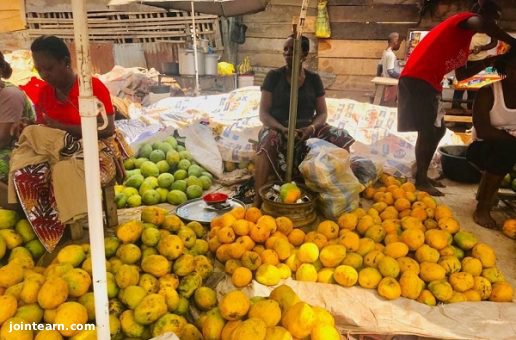
Nigeria’s mango farmers are set to benefit from rising demand in Europe’s multi-billion-naira mango market, as domestic production capacity expands and the global appetite for high-quality tropical fruits increases. Projections indicate that Nigeria could produce up to one million metric tons of mangoes in the coming years, cementing its position as Africa’s third-largest producer and the world’s 11th largest, with steady annual growth of around 0.9%.
Despite rising production, Nigerian mangoes face a “valuation gap” in global markets. While exporters from Egypt and Côte d’Ivoire earn premium prices in Europe, Nigerian mangoes are often sold for just $1.10–$1.45 per kilogram, largely due to limited export infrastructure and challenges in meeting EU and US phytosanitary standards.
Europe, the world’s second-largest mango importer, received nearly 447,000 tons in 2024. Fiber-free varieties like Kent and Keitt dominate the market, but climate-related yield reductions in South America are opening opportunities for West African suppliers. France and the United Kingdom are key entry points, importing 57,000 and 87,000 tons respectively in 2024, with strong demand for West African mangoes due to lower shipping costs and diverse consumer preferences.
Prof. Mohammed Atanda, Executive Director of the National Horticultural Research Institute (NIHORT), said Nigeria has a competitive advantage thanks to its fertile ecology and skilled workforce. He highlighted the Ogbomoso mango, a uniquely juicy and non-fibrous local variety, as a potential star in export markets.
However, challenges remain. Post-harvest losses are significant in producing states like Edo due to limited energy supply and processing technology. NIHORT is addressing these gaps with a pilot mango juice production plant, technical training under the World Bank’s TVET program, and distribution of improved seedlings through outstations in Gombe, Kano, and Ibadan, supporting year-round production.
Aiyeola Adetiloye, CEO of the Produce Export Development Alliance (PEDA), noted that Nigeria currently exports less than one percent of its mango output, largely due to pest infestations, particularly fruit flies. He emphasized that controlling pests and meeting international safety standards are crucial for Nigeria to expand its presence in high-value markets.
Stakeholders agree that investing in pest management, infrastructure, and regulatory compliance will be key to turning Nigeria’s mango production strength into tangible export earnings and fully tapping Europe’s growing demand for tropical fruits.


Leave a Reply