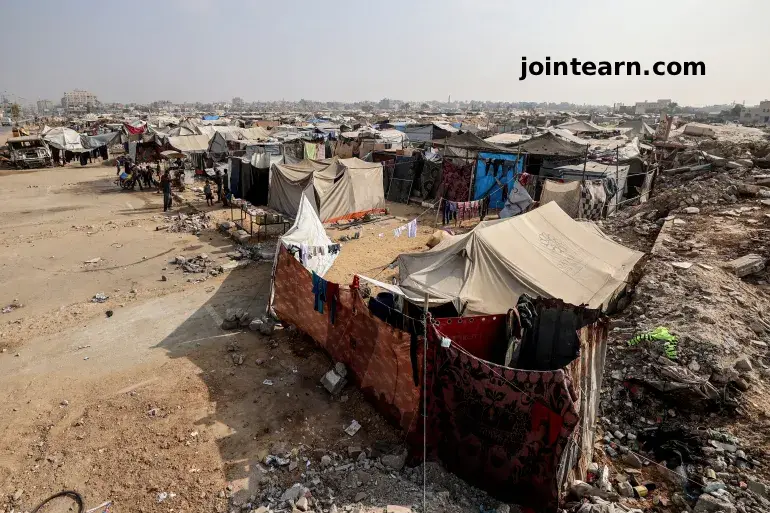
Gaza City, Gaza Strip – While the United States hails the next stage of the Gaza ceasefire as “phase two,” residents on the ground say the promises of reconstruction and stability feel far removed from the harsh reality they live every day.
The White House recently announced a new Board of Peace, led by Dr. Ali Shaath, tasked with overseeing a technocratic committee to manage Gaza’s post-war governance. On paper, the initiative signals planning for a future beyond conflict.
But for Gazans, the announcement is largely symbolic. Buildings remain in ruins, families are grieving, and entire neighborhoods have been destroyed. Many question how a board meant to rebuild Gaza can include members who have previously supported Israel, while no one has been held accountable for the devastation.
“For families who have lost their homes, their loved ones, and their sense of safety, the contradiction is hard to ignore,” reports Hani Mahmoud.
Daily life in Gaza remains dangerous. Parents worry about where their children will sleep, aid workers navigate roads unsafe due to drones and air attacks, and families brace themselves for sudden violence. In this environment, ceasefire announcements and government plans feel disconnected from lived experience.
Experts and residents note that real peace isn’t felt in headlines or official statements—it shows up in ordinary, daily moments: quiet nights, functioning hospitals, safe streets, and consistent access to basic services.
“You don’t feel a ceasefire in speeches or headlines. You feel it in what’s missing—the sudden silence, the easing in your chest,” one aid worker said.
The prolonged conflict has left Gazans wary. While governments and diplomats emphasize progress, many people have learned to keep hope guarded, knowing that announcements of “phase two” do not guarantee immediate safety or relief.
For phase two to mean anything, residents say, its effects must be tangible: fewer funerals, operational hospitals, safe roads, and the ability to live without constant fear. Until then, the latest diplomatic efforts remain largely symbolic, unable to deliver the stability and security that Gazans desperately need.


Leave a Reply