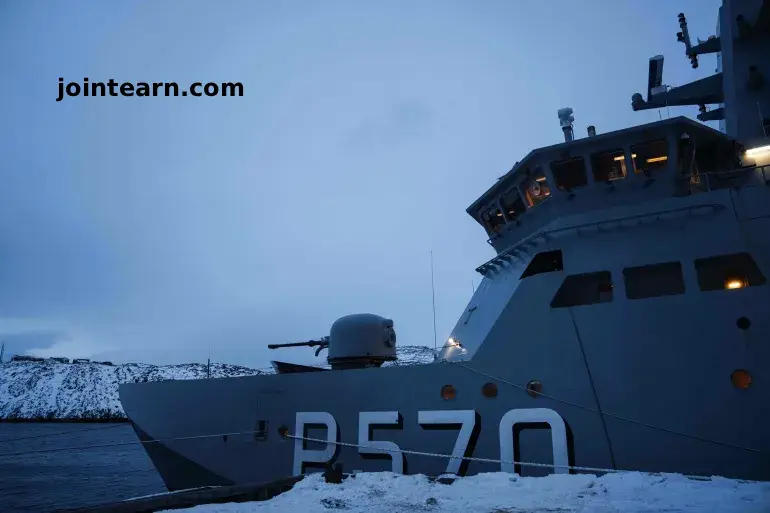
Nuuk / Copenhagen – Denmark has dispatched additional troops to Greenland, reinforcing its military presence in the Arctic territory amid escalating tensions with United States President Donald Trump, who has repeatedly suggested that Washington could take control of the strategically vital island.
Danish media reported that Royal Danish Army chief Peter Boysen arrived in Kangerlussuaq, western Greenland, on Monday evening alongside what officials described as a “substantial contribution” of troops. Public broadcaster TV2 said 58 soldiers were deployed, joining roughly 60 Danish troops already stationed in the territory as part of multinational military exercises known as Operation Arctic Endurance.
The Danish Ministry of Defence and the armed forces declined to provide immediate comment on the scale or duration of the deployment, but the move signals Copenhagen’s determination to assert sovereignty over the self-governing Arctic territory, which remains part of the Kingdom of Denmark.
Trump Refuses to Rule Out Military Action
The troop deployment came just hours after Trump declined to rule out the use of military force to seize Greenland, a mineral-rich island he claims is essential to US national security.
Asked in an interview with NBC News whether he could take Greenland by force, Trump replied: “No comment.” His response followed a series of controversial remarks and private messages to European leaders that have alarmed NATO allies.
Over the weekend, Trump reportedly told Norwegian Prime Minister Jonas Gahr Støre in a text message that he no longer felt bound to “think purely of peace” after being passed over for the Nobel Peace Prize, a statement that further intensified diplomatic unease across Europe.
Greenland at the Center of a Strategic Standoff
Greenland occupies a crucial position in the Arctic, a region of growing geopolitical competition due to climate change, emerging shipping routes, and vast untapped reserves of rare earth minerals, oil, and gas. The island is already home to a major US military installation, Pituffik Space Base (formerly Thule Air Base), which plays a key role in missile defence and space surveillance.
Denmark has stated it is open to a stronger US military presence in Greenland in coordination with allies, but it has repeatedly rejected any notion of selling the territory. Danish officials have warned that a forced takeover would amount to a direct attack on Denmark and could spell the end of NATO as it currently exists.
NATO and European Allies Close Ranks
Trump’s renewed focus on Greenland has pushed US-European relations to their lowest point in decades, raising fears about the stability of the transatlantic security alliance.
Under Article 5 of NATO’s charter, an armed attack against one member is considered an attack against all. Both Denmark and the United States are NATO members, creating a potential constitutional crisis for the alliance should tensions escalate further.
On Monday, NATO Secretary-General Mark Rutte met with Danish Defence Minister Troels Lund Poulsen and Greenland’s Foreign Affairs Minister Vivian Motzfeldt to discuss bolstering Arctic security. Proposals reportedly included the creation of a joint NATO mission in Greenland and increased allied coordination in the High North.
“The Arctic is of growing importance to our collective security,” Rutte said in a statement, praising Denmark’s rising defence investments. “We will continue to work together as Allies on these critical issues.”
Poulsen echoed the call for unity, thanking NATO partners for standing by Denmark and Greenland during the standoff.
Trade War Fears Grow Alongside Security Crisis
Beyond military tensions, Trump’s threat to impose punitive tariffs on Denmark and seven other European countries unless Copenhagen agrees to negotiations over Greenland has sparked fears of a broader transatlantic trade war.
The European Union is expected to convene an emergency meeting later this week to discuss potential countermeasures. Among the options under consideration is activating the EU’s Anti-Coercion Instrument, often referred to as the bloc’s “trade bazooka.”
If triggered, the mechanism would allow the EU to impose sweeping restrictions on US investments and business activities, including limits on major American technology companies operating within the single market.
European Commission President Ursula von der Leyen, speaking after meetings with US diplomats at the Davos World Economic Forum, said the sovereignty of Denmark and Greenland must be respected unequivocally.
“This is of utmost importance to our transatlantic relationship,” she said, while stressing that the EU remains open to cooperation with the US and NATO on shared security interests.
Greenlanders Oppose Joining the United States
Despite Trump’s insistence that Greenland should fall under US control, public opinion on the island remains overwhelmingly opposed to such a move.
An opinion poll commissioned last year by Danish newspaper Berlingske found that 85 percent of Greenland’s residents do not want to join the United States, while only 6 percent supported the idea. Many Greenlanders have instead expressed a desire for greater autonomy or eventual independence, not annexation by another power.
A Defining Moment for Arctic Security
Analysts say Denmark’s troop deployment is as much a political message as a military one, underscoring that Greenland’s future will be decided by Greenlanders and Denmark, not external pressure.
As Arctic competition intensifies and alliances are tested, the standoff over Greenland is shaping up to be one of the most consequential geopolitical disputes of Trump’s return to power—one that could redefine NATO, EU-US relations, and security in the High North for years to come.


Leave a Reply