London – The United Kingdom is weighing the introduction of an Australia-style ban on social media for children, as the government launches a wide-ranging consultation aimed at strengthening protections for minors in the digital space.
UK ministers announced on Monday that they will examine international evidence on children’s online safety, including whether banning social media for young users would be effective and how such a policy could realistically be enforced. The move reflects mounting political and public concern over the impact of social media, artificial intelligence, and addictive online design features on children and teenagers.
Ministers to Study Australia’s Under-16 Social Media Ban
As part of the consultation, UK government ministers will travel to Australia, which last month became the first country in the world to implement a nationwide ban on social media use for children under the age of 16.
Officials said the visit will allow policymakers to study Australia’s approach in detail, including how the ban is being enforced, how platforms are complying, and what early challenges or unintended consequences have emerged.
“The government will look carefully at lessons from around the world,” a UK government statement said, “including whether a ban for children under a certain age would be an effective tool to improve online safety.”
Australia’s legislation has drawn global attention, with supporters arguing it prioritises child wellbeing, while critics warn of enforcement difficulties, privacy risks, and potential exclusion of young people from digital spaces.
Range of Measures Under Review
The UK consultation goes beyond the possibility of a social media ban and includes a suite of potential reforms aimed at curbing excessive and harmful online behaviour among children.
According to the government, options under consideration include:
- Raising the digital age of consent, currently set at 13 in the UK
- Introducing phone curfews to reduce excessive screen time
- Restricting or banning addictive design features such as “streaks,” “likes,” and “infinite scrolling”
- Strengthening age-verification systems across social media platforms
The government said it would assess whether these measures could work alongside or instead of an outright ban, and how they could be implemented without infringing on privacy or freedom of expression.
AI and Deepfake Concerns Add Urgency
The consultation comes at a time of heightened alarm over AI-generated content, particularly tools capable of creating non-consensual sexual images.
This month, international outrage followed reports that Elon Musk’s Grok AI chatbot had generated explicit deepfake images, including of minors, prompting investigations by UK regulators. The controversy has underscored how rapidly advancing AI technology is outpacing existing child-protection frameworks.
In response, the UK government has already outlined plans to:
- Ban AI nudification tools outright
- Prevent children from being able to create, share, or view nude images on their devices
- Strengthen penalties for platforms that fail to protect minors
Technology Secretary Liz Kendall said the government’s goal is to rebalance the relationship between children and technology.
“We are determined to ensure technology enriches children’s lives, not harms them – and to give every child the childhood they deserve,” Kendall said.
Political Divide Over Speed and Strategy
While there appears to be broad cross-party agreement that children need stronger online protections, the pace and approach of reform has become a political flashpoint.
The consultation announcement did not specify a fixed age threshold for a potential ban, instead noting that ministers are considering restrictions for children “under a certain age.” That ambiguity has drawn criticism from the opposition.
Kemi Badenoch, leader of the Conservative Party, said her party would introduce a social media ban for under-16s if it were in power, according to PA Media. She accused Prime Minister Keir Starmer’s Labour government of delaying action.
“The prime minister is trying to copy an announcement that the Conservatives made a week ago, and still not getting it right,” Badenoch said.
“This is yet more dither and delay from Starmer and a Labour Party that have entirely run out of ideas.”
Labour officials, however, argue that careful consultation is necessary to ensure any new restrictions are effective, enforceable, and legally robust.
A Global Shift on Children and Social Media
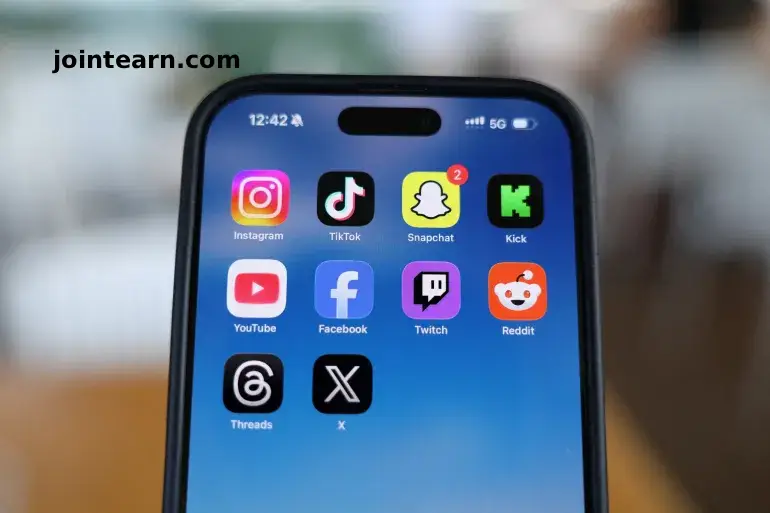
The UK’s move reflects a broader global shift in how governments view children’s access to social media. Once celebrated as tools for connection and creativity, platforms like Instagram, TikTok, Snapchat, YouTube, X, and Facebook are increasingly criticised for their effects on mental health, attention spans, and exposure to harmful content.
With Australia setting a precedent and other countries watching closely, the UK’s decision could mark a turning point in global digital regulation.
Whether Britain ultimately adopts a full social media ban for children or opts for a combination of age limits, design restrictions, and AI controls, the consultation signals that the era of minimal oversight for tech platforms is coming to an end.


Leave a Reply