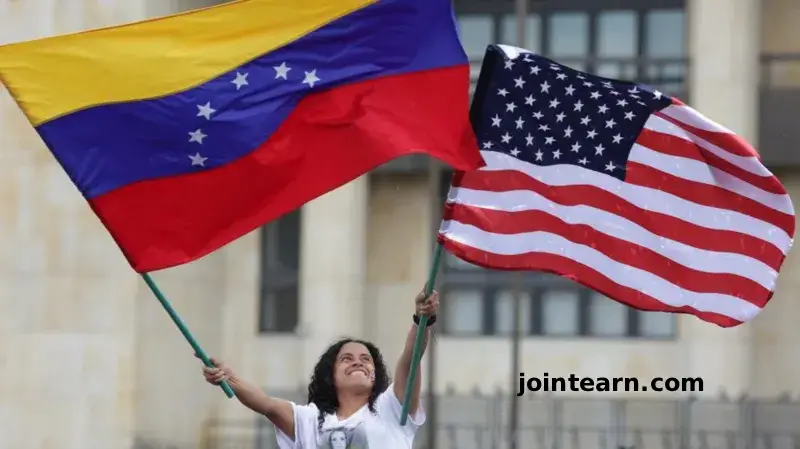
As the smoke and tension settle in Caracas, Venezuelans are reacting with a mix of hope, fear, and uncertainty following the capture of President Nicolás Maduro by US forces. The dramatic development has ignited celebrations in some neighborhoods and protests in others, highlighting the deep divisions within the country.
On Saturday, after a night rocked by explosions in the Caracas Valley, residents began emerging into the streets. Moods ranged from relief and optimism to worry and caution.
Dina, a local resident who spoke anonymously to the BBC, said she felt a glimmer of hope following Maduro’s removal:
“For now, I am grateful to the US for taking Maduro out of here. At least I can see some light at the end of the tunnel again.”
However, Dina also expressed caution, acknowledging the lingering uncertainty about Venezuela’s future and the risk of further instability.
Mixed Reactions from Venezuelans
Jorge, another Caracas resident, shared his appreciation for US support but stressed the unpredictability of the coming days:
“Now that they are taking this man away, what’s going to happen? It doesn’t guarantee us anything. There is a bit of uncertainty. We don’t know what the coming days will bring.”
While some Venezuelans celebrated Maduro’s removal, pro-government supporters rallied in the streets demanding his release. Caracas Mayor Carmen Meléndez, a loyalist of Maduro, participated in demonstrations, calling the US-led capture of the president a “kidnapping.”
US Operation and Maduro’s Arrest
Early Saturday, under orders from then-President Donald Trump, US forces carried out a series of targeted operations in Caracas, ultimately taking Maduro into custody. The US has accused him of running a “narco-terrorist regime,” charges that Maduro has consistently denied. Critics within Venezuela and some international governments have labeled his 2024 re-election as illegitimate.
Maduro, who has led the United Socialist Party of Venezuela since 2013, has faced repeated accusations of repressing opposition, silencing dissent, and using violence to maintain control.
Following his capture, Maduro and his wife were transported to New York City to face drug trafficking and weapons charges in US courts. President Trump announced that the US would temporarily manage Venezuela, including its oil reserves, until a permanent government replacement is established.
Fear and Uncertainty Remain
Despite gratitude among many Venezuelans, the nation remains in a fragile state. Dina voiced skepticism about relying on Trump’s promises:
“He says something now and tomorrow he changes his mind. I mean, I’m not used to taking his words seriously.”
However, she noted one positive potential outcome: US investment in Venezuela, which she hopes could improve the country’s economic crisis.
The danger of speaking out against Maduro remains real. Weeks prior, the National Assembly, dominated by loyalists, passed a law labeling anyone supporting US naval blockades as a “traitor.” Jorge described seeing armed colectivos—pro-government paramilitary groups—patrolling the streets, making everyday activities like buying bread feel unsafe.
He also expressed concern about Diosdado Cabello, Venezuela’s powerful Minister of Interior, Justice, and Peace, and a close ally of Maduro, questioning how much control he still maintains.
Venezuelan Exiles and the Road Ahead
The capture has sparked celebrations among Venezuelans living abroad. Nearly eight million Venezuelans have left the country since Maduro came to power, seeking safety and stability elsewhere. Many in exile celebrated Maduro’s capture publicly, seeing it as a symbol of potential change.
Sandra, another Venezuelan, echoed this sense of relief but emphasized the long and challenging path ahead:
“This is only the beginning. We know there is still a long road ahead. No country had previously heard the cry of Venezuelans in the face of this tragedy.”
She noted that millions remain missing, imprisoned, or struggling to survive under Maduro’s regime—a humanitarian crisis that, she says, had been largely ignored by the international community.
The Future of Venezuela
The political landscape in Venezuela remains uncertain. While Maduro’s removal signals a shift in power, questions about governance, security, and economic recovery loom large. Venezuelans both inside and outside the country are cautiously optimistic but aware that rebuilding the nation and restoring democracy will require patience, vigilance, and international support.


Leave a Reply