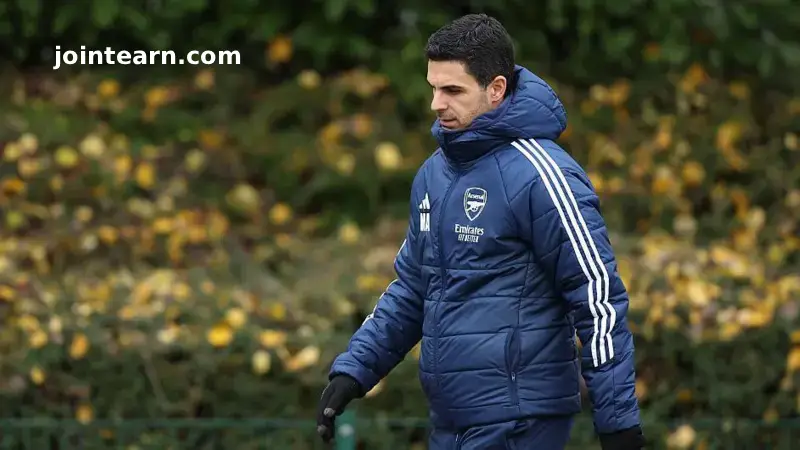
Arsenal manager Mikel Arteta has admitted that his squad is trapped in a “really dangerous circle” of injuries, but he insisted that overtraining is not to blame. With key players sidelined ahead of their Champions League clash against Club Brugge, the Gunners face a challenging period as they attempt to navigate a congested fixture schedule.
Arsenal’s Key Injury Absences
Arsenal will be without several first-team regulars for Wednesday’s European showdown. Midfielder Declan Rice, defender William Saliba, and forward Leandro Trossard are all ruled out. Trossard, who had just returned from injury and scored in Arsenal’s recent defeat to Aston Villa, was substituted before the end of the game despite only entering as a second-half substitute.
Other long-term absentees include:
- Forward Kai Havertz
- Defenders Gabriel Magalhaes and Cristhian Mosquera
- Striker Viktor Gyokeres, who is just returning from injury
In addition, Arsenal made a change to their Champions League squad due to injuries. Gabriel Jesus, sidelined since January after cruciate ligament surgery, has replaced 15-year-old Max Dowman, who picked up a knock playing for Arsenal Under-21s against Manchester United.
Arteta Rejects Overtraining Theory
When asked if overtraining contributed to the spate of injuries, Arteta firmly denied the notion:
“No, because we don’t train… We don’t have time to train. So training is not there, but obviously the fact that you are missing players, you are loading other players more. It’s a really dangerous circle.”
Arteta highlighted the strain placed on players who have participated in over 150 matches in the past two seasons. He emphasized that constant match demands naturally lead to injuries, and the club is monitoring this closely with the medical staff:
“We have played a lot of games with a lot of players missing, that puts a lot of stress and then more injuries, but we are on it. I’m really happy with what we’re doing in terms of medical stuff and everything that we are trying to bring together.”
Fixture Congestion and Football Scheduling Challenges
Arsenal’s injury woes are compounded by fixture congestion. The club, alongside Crystal Palace, recently had league matches rescheduled to ease the burden on players. Arsenal’s Premier League trip to Everton, originally set for 21 December, has been moved to 20:00 a day earlier to accommodate the EFL Cup quarter-final against Palace on 23 December.
So far this season, Arsenal have played 22 matches across the Premier League, Champions League, and Carabao Cup, and will begin their FA Cup campaign in January against Portsmouth.
Broader Concerns About Player Welfare
Arsenal’s struggles reflect a wider concern in European football regarding player welfare. Last year, the top European leagues and global players’ union FIFPro filed a legal complaint against FIFA, accusing the organization of abusing its dominance and failing to adequately address player welfare.
FIFA recently announced measures aimed at protecting players, including minimum 72-hour rest periods between matches and a 21-day end-of-season rest period. However, FIFPro criticized the process, claiming that FIFA consulted “friendly organizations” instead of recognized player bodies.
Arteta’s comments reinforce the challenges top clubs face in balancing success with the physical demands placed on elite players.
Key Takeaways
- Arsenal are battling injuries to key players, including Rice, Saliba, Trossard, and Havertz.
- Arteta rejects overtraining as the cause, citing match overload and fixture congestion.
- The Gunners face a critical Champions League group stage match against Club Brugge.
- Fixture rescheduling has helped manage congestion, but the squad remains stretched.
- Player welfare remains a debated issue in European football, with FIFA and FIFPro at odds over best practices.


Leave a Reply