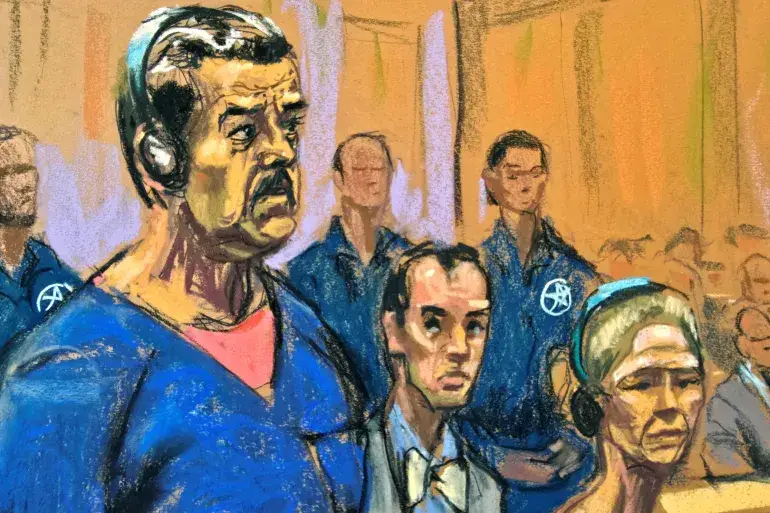
The recent abduction of Venezuelan President Nicolas Maduro by US forces has sparked global controversy, raising serious questions about international law, state sovereignty, and the legality of cross-border military operations. While US officials have justified the operation based on federal charges against Maduro, legal experts insist that domestic indictments cannot serve as a legal basis to seize a head of state on foreign soil.
“A state cannot enforce its law on the territory of another state without that state’s consent,” said Margaret Satterthwaite, United Nations special rapporteur on the independence of judges and lawyers, in an interview with Al Jazeera.
Maduro, who was indicted by the US Justice Department in 2020 on drug and firearm charges, appeared in a New York courtroom on January 5 after being forcibly taken from Venezuela. He maintained his innocence, calling the operation a “kidnapping.”
US Legal Justification vs. International Law
Washington has argued that Maduro’s indictment provides a legal basis for the military operation, framing it as a law enforcement action rather than an act of aggression. US Vice President JD Vance and Republican lawmakers, including Senators Tom Cotton and Mike Lee, defended the operation, emphasizing that Maduro cannot avoid justice due to his position as Venezuela’s president.
“Maduro has multiple indictments in the United States for narcoterrorism,” Vance stated on social media. “You don’t get to avoid justice for drug trafficking in the United States because you live in a palace in Caracas.”
However, international law experts are unanimous in rejecting this rationale. Yusra Suedi, assistant professor of international law at the University of Manchester, explained:
“A state cannot lawfully justify violating international law by citing its own domestic law. This is a cardinal principle of international law.”
Ian Hurd, professor of political science at Northwestern University, echoed this view:
“It is very clearly illegal under international law. Governments cannot use force against another sovereign state to enforce domestic legal claims. What happened here is effectively the overthrow of a government by a foreign power.”
Head-of-State Immunity and Legal Protections
The abduction of Maduro also raises issues of head-of-state immunity, which protects sitting presidents and high-ranking officials from prosecution abroad. This principle has been affirmed by the International Court of Justice (ICJ) and is recognized in customary international law.
Exceptions exist for international tribunals, such as the International Criminal Court (ICC), which issued an arrest warrant for Israeli Prime Minister Benjamin Netanyahu in 2024 over alleged war crimes in Gaza. Unlike ICC proceedings, US domestic indictments do not exempt a foreign head of state from the protections of international law.
Satterthwaite noted:
“Even if there are serious concerns about the legitimacy of an election or government, that does not allow another country to unilaterally abduct a head of state.”
Legitimacy and Domestic Politics
Some US supporters of the operation argued that Maduro’s legitimacy had been undermined by alleged voter fraud in the 2024 Venezuelan elections, claiming the move would not constitute a regime change.
Experts caution that such assessments are irrelevant under international law. At the time of his abduction, Maduro was legally recognized as Venezuela’s president, a status acknowledged by the US Justice Department itself.
“If one government could go around claiming that another leader is illegitimate and seize them, it would create global chaos,” Satterthwaite said.
Historical Comparisons: Noriega and Panama
Defenders of the US operation have compared it to the 1989-1990 US invasion of Panama and the capture of President Manuel Noriega. While Noriega was convicted in the US on drug charges, experts stress that the situation is not directly analogous.
“The Noriega case also raised significant legal issues under international law,” Satterthwaite explained. “The US argued consent from Panama’s President-elect Guillermo Endara existed, and there was already a declared state of war. Those factors do not apply in Maduro’s case, making this abduction clearly illegal.”
Global Implications and UN Response
International experts warn that such actions undermine the sovereignty of nations and violate the UN Charter, which prohibits “the threat or use of force against the territorial integrity or political independence of any state.” Legal scholars emphasize that citing domestic law cannot override international legal obligations.
The abduction has drawn widespread condemnation, with the UN stressing that respecting the sovereignty of other states is essential to global stability. Critics argue that the US action sets a dangerous precedent, potentially encouraging other nations to unilaterally seize foreign leaders under domestic legal pretexts.
Key Takeaways
- US forces abducted Venezuelan President Nicolas Maduro, citing federal charges for narcoterrorism.
- International law experts deem the operation illegal, citing sovereignty and head-of-state immunity.
- Domestic indictments do not justify cross-border military operations.
- Historical comparisons to Manuel Noriega’s capture in Panama do not legitimize Maduro’s abduction.
- The case highlights tensions between US foreign policy ambitions and the rules-based international system.
As the world reacts to the US action, the Maduro abduction underscores the delicate balance between pursuing accountability and respecting international law. Legal experts emphasize that unilateral military operations against foreign leaders could destabilize global norms and lead to widespread diplomatic crises.


Leave a Reply