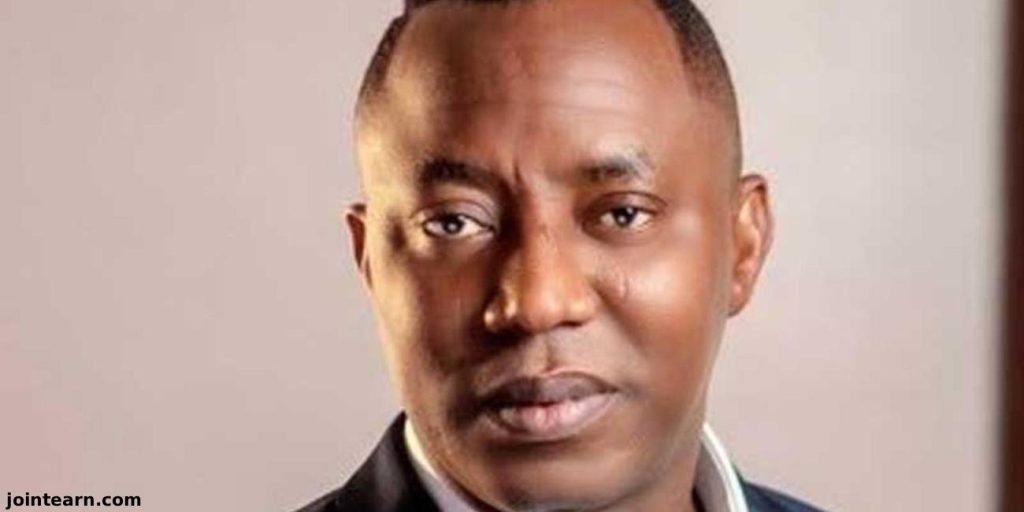
Justice Mohammed Umar of the Federal High Court in Abuja has ordered the Department of State Services (DSS) to furnish human rights activist Omoyele Sowore with all necessary prosecution documents, including proof of evidence and a list of witnesses, to allow him adequate preparation for his ongoing cyberstalking trial.
The ruling came after Sowore’s lead counsel, Abubakar Marshal, strongly objected to the DSS proceeding without providing the defence with essential trial materials. Marshal argued that supplying proof of evidence and witness particulars is sacrosanct, fundamental, and mandatory under the law, noting that denial of these documents violates Sowore’s constitutional right to a fair hearing and undermines due process.
In his brief but firm ruling, Justice Umar agreed, emphasizing that compliance with the law is non-negotiable, regardless of the nature of the witnesses. “Even if you are calling a spirit as a witness, you must follow the law,” the judge remarked, prompting laughter in the courtroom.
The judge cited Section 36 of the 1999 Constitution (as amended), which guarantees the right to fair hearing, stressing that the court would not tolerate any actions undermining justice.
Earlier, counsel for the DSS, Akinlolu Kehinde, SAN, had argued that the trial should proceed despite procedural gaps. However, he disclosed that President Bola Ahmed Tinubu, named as the complainant, did not personally instruct the prosecution to initiate the case. The admission raised questions about whose directive the DSS was acting upon in filing the suit.
Speaking to journalists after the proceedings, Marshal described the DSS’s failure to provide evidence and witness statements as a clear breach of constitutional and statutory provisions, leaving the defence without sufficient time or resources to prepare.
He also framed the case as indicative of broader governance challenges, criticizing the government for deploying state resources to suppress dissent while the country grapples with terrorism and insecurity. Marshal highlighted selective prosecution, noting that another critic of the President, previously accused of similar conduct, was recently appointed as an ambassador.
The defence urged the government to focus on its core mandate of protecting lives and property rather than using state power to intimidate citizens.
The case has been adjourned to Thursday, January 22, 2026, for definite trial.


Leave a Reply