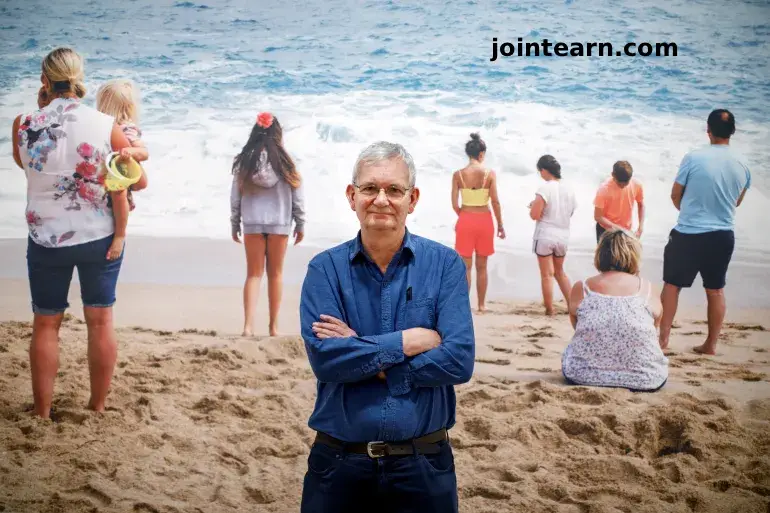
British documentary photographer Martin Parr, one of the most influential chroniclers of contemporary British life, has died at the age of 73, his foundation confirmed. Parr passed away at his home in Bristol, England, leaving behind a remarkable legacy of satirical and highly vivid photography that captured the quirks and contradictions of everyday life.
Celebrated for Chronicling the Everyday
Martin Parr rose to prominence as a master of documentary photography, focusing his lens on the peculiarities of the English class system, consumer culture, and modern leisure. Over a career spanning decades, he became renowned for his sharply observed images delivered in strikingly saturated color, often highlighting both humor and critique.
“Martin will be greatly missed,” the Martin Parr Foundation said on Instagram, noting that it would continue working with Magnum Photos to preserve and share his extensive body of work.
Parr had previously revealed a diagnosis of myeloma, a type of blood cancer, but details of his passing were not disclosed.
Early Life and Inspiration
Born in Surrey, south of London, in the 1950s, Parr’s interest in photography was sparked by his grandfather, a keen amateur photographer. He pursued photography seriously while still a teenager, ultimately studying at the University of Manchester, where he began capturing black-and-white images influenced by legendary photographers like Henri Cartier-Bresson.
However, Parr soon embraced color photography, drawn to the aesthetic of seaside postcards and kitschy objects that defined 1970s Britain. “Once I tried color, I never looked back,” he told AFP in 2022. This decision would become a hallmark of his distinctive, satirical style.
Iconic Works and Themes
Parr gained widespread recognition in the 1980s with his groundbreaking series The Last Resort, which depicted working-class holidaymakers in the seaside town of New Brighton. His images, characterized by lurid flash and vivid saturation, offered a candid yet biting view of British leisure culture.
In The Cost of Living, Parr turned his lens on gentrification during Margaret Thatcher’s government, documenting suburban garden parties, fundraising events, and middle-class pretense with sharp, satirical observation.
His unflinching style was not without controversy. Some accused him of cruelty for failing to flatter his subjects, but Parr remained unapologetic, insisting on the importance of realism in documentary photography. Even Cartier-Bresson, one of the founders of Magnum, reportedly resisted Parr’s entry into the agency, remarking that he seemed “from a totally different planet.” Parr famously responded, “I know what you mean, but why shoot the messenger?”
Global Reach and Continued Relevance
Though his work often focused on Britain, Parr traveled extensively, capturing images in North Korea, Albania, Japan, and Russia, among other countries. Yet his best-known work remained rooted in Britain, offering unvarnished portraits of the nation’s class dynamics, consumer habits, and cultural idiosyncrasies.
He spoke openly about his “love-hate relationship” with Britain, particularly during the Brexit era, capturing the social divisions and volatility following the 2016 referendum. “I love the country… the hate is from the bigotry, xenophobia that caused the Brexit vote,” he said, reflecting on the nation’s contradictions.
In recent interviews, Parr stressed the continued need for satire and social commentary in photography. “The state we’re all in is appalling,” he told AFP last month. “We’re all too rich. We’re consuming all these things in the world. And we can’t. It’s unsustainable.”
Martin Parr’s Legacy
Martin Parr’s contribution to documentary photography and British visual culture is unparalleled. His images, at once humorous, critical, and deeply human, have inspired generations of photographers. Through the Martin Parr Foundation, his work will continue to educate, provoke, and delight audiences worldwide.
Parr’s commitment to color photography, social critique, and capturing the everyday ensures that his influence will endure, securing his place among the most important British photographers of the modern era.


Leave a Reply