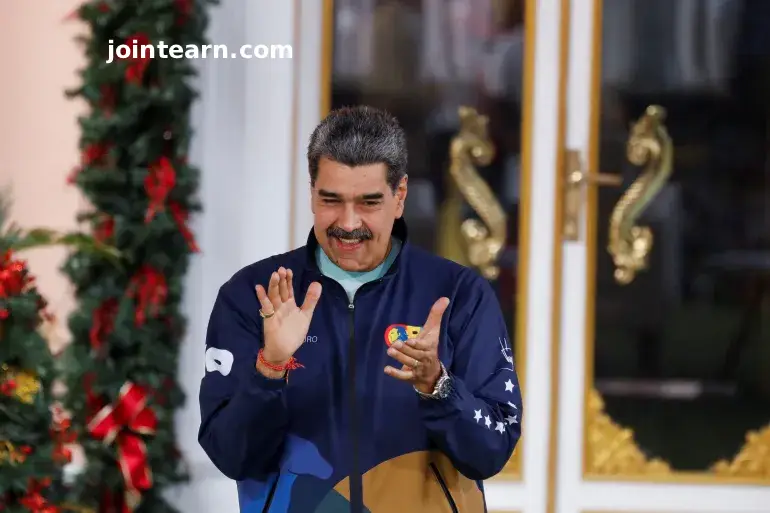
Six major international airlines have suspended flights to Venezuela following warnings from the United States about a “potentially hazardous situation” in and around the country due to heightened military activity.
The airlines halting services include:
- Iberia (Spain)
- TAP Portugal
- LATAM (Chile)
- Avianca (Colombia)
- GOL (Brazil)
- Caribbean Airlines (Trinidad and Tobago)
The Venezuelan Airlines Association, led by Marisela de Loaiza, confirmed the suspensions on Saturday. TAP cited the US notice, which indicated that safety conditions in Venezuelan airspace are not guaranteed, as the reason for halting flights. Iberia similarly suspended its flights to Caracas until further notice.
Other carriers, including Panama’s Copa Airlines, Air Europa, PlusUltra, Turkish Airlines, and Venezuela’s LASER, continue to operate flights for now.
Escalating Tensions Between Washington and Caracas
Flight suspensions come amid soaring US-Venezuela tensions, with Washington deploying troops and the world’s largest aircraft carrier to the Caribbean. While the US frames the operation as an anti-narcotics campaign, Caracas sees it as an effort to force Venezuelan President Nicolas Maduro from power.
Since the start of the campaign, the US military has reportedly carried out at least 21 attacks on alleged drug trafficking boats, resulting in at least 83 deaths. Critics argue the actions violate both international law and US domestic law.
President Trump has sent mixed signals about potential US intervention. In a CBS interview earlier this month, he denied that the US was at war with Venezuela but hinted at the possibility of direct action, stating that Maduro’s days as president might be numbered.
The US Federal Aviation Administration (FAA) issued a cautionary notice urging all flights in the region to exercise heightened vigilance at all altitudes, during overflights, arrivals, departures, and on the ground at airports.
Historical and Political Context
Tensions between Washington and Caracas trace back to the early 2000s with the rise of Hugo Chavez. The relationship further deteriorated after Maduro succeeded Chavez in 2013. Successive US administrations have refused to recognize Maduro’s legitimacy, citing corruption, election fraud, and authoritarianism, while imposing economic sanctions.
The Trump administration has escalated the stance by designating Venezuela’s Cartel de los Soles as a “terrorist” organization, alleging that Maduro leads the group, though no evidence has been provided publicly. Conservative US policy hawks have increasingly called for Maduro’s removal in recent weeks.
Maduro’s Response
President Maduro has accused the US of inventing “pretexts” for war, while expressing willingness to engage in dialogue. He warned that any foreign aggression would be met with strong resistance:
“No foreign power will impose its will on our sovereign homeland. But if they break peace and persist in their neocolonial intentions, they will face a huge surprise.”
Meanwhile, Venezuelan opposition leader Maria Corina Machado, a recent Nobel Peace Prize laureate, emphasized that her goal is not regime change but the respect of democratic elections and a peaceful, orderly transition. She has also advocated for privatizing Venezuela’s oil sector and opening the country to foreign investment.


Leave a Reply