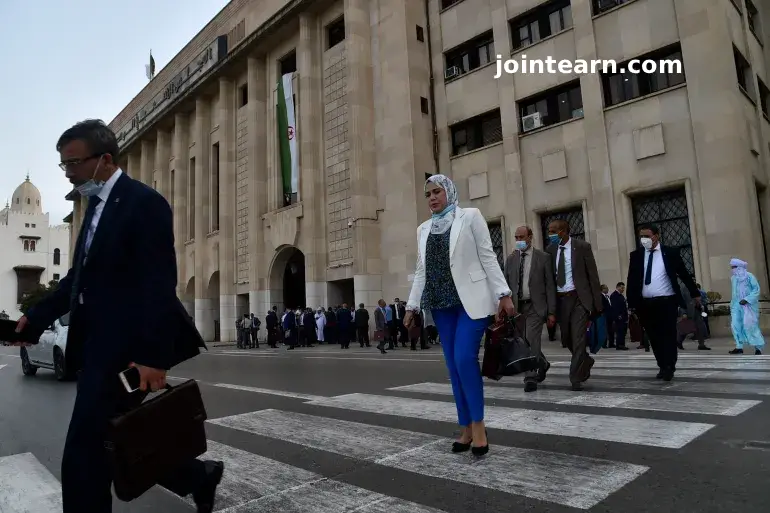
Algerian lawmakers are preparing to vote on a historic draft law that seeks to criminalise France’s colonial rule over Algeria, a move that could further strain already tense relations between the two countries. The bill is being debated in Algeria’s People’s National Assembly and is scheduled for a vote on Wednesday, according to parliamentary officials.
Supporters of the legislation describe it as a defining moment for Algeria’s national identity and historical justice, more than six decades after the country gained independence from France following one of the bloodiest anti-colonial struggles of the 20th century.
What Is the Proposed Law About?
The draft legislation aims to formally criminalise France’s colonisation of Algeria between 1830 and 1962, a period marked by widespread violence, economic exploitation, forced displacement, and the systematic marginalisation of Algeria’s Indigenous Muslim population.
Introduced over the weekend in the lower house of parliament, the bill reportedly consists of five chapters and 27 articles. According to Algeria’s public broadcaster AL24 News, the proposed law is grounded in principles of international law that recognise the right of peoples to legal redress for historical crimes.
The legislation seeks to:
- Establish legal and moral responsibility for colonial-era crimes
- Secure official recognition and an apology from France
- Preserve Algeria’s national memory
- Lay the groundwork for historical reconciliation
Lawmakers backing the bill argue that criminalising colonial rule is essential to addressing long-standing grievances and acknowledging the suffering endured by millions of Algerians.
Parliamentary Speaker Calls Bill a “Defining Milestone”
Speaking during the opening of parliamentary debate, People’s National Assembly Speaker Ibrahim Boughali described the draft law as a major turning point in Algeria’s modern history.
According to remarks cited by the Anadolu news agency, Boughali said the bill represents:
- “A supreme act of sovereignty”
- A clear moral and political stance
- A reaffirmation of Algeria’s loyalty to the sacrifices made during the independence struggle
He stressed that French colonisation went far beyond economic exploitation, accusing colonial authorities of implementing policies designed to impoverish, starve, and socially exclude Algerians.
“These policies aimed to break the will of the Algerian people, erase their identity, and sever their connection to their historical and cultural roots,” Boughali said.
France’s Position on Colonial Apology
The French government has not yet formally responded to the draft law or the ongoing parliamentary debate. However, French President Emmanuel Macron has repeatedly stated that he will not issue an official apology for France’s colonial past in Algeria.
In a 2023 interview with Le Point magazine, Macron said reconciliation should not hinge on a formal apology.
“It’s not up to me to ask forgiveness,” Macron said at the time, adding that historical reflection should not be treated as a final settlement of accounts.
Instead, he has expressed support for continued dialogue with Algerian President Abdelmadjid Tebboune, emphasising what he described as a shared responsibility to work through historical memory rather than closing the chapter unilaterally.
A Brutal Colonial Legacy
France ruled Algeria for more than 130 years, beginning with its invasion in 1830. The colonial era culminated in a brutal war of independence from 1954 to 1962, during which up to 1.5 million Algerians are believed to have been killed.
Historical records and testimonies have documented:
- Systematic torture by French forces
- Summary executions and enforced disappearances
- The destruction of thousands of villages
- The forced displacement of nearly two million Algerians
In 2018, France officially acknowledged its use of systematic torture during the war, though critics say that acknowledgment fell short of full accountability.
Algeria gained independence in 1962, but the war left deep scars that continue to shape the country’s politics, national identity, and relationship with France.
Strained France–Algeria Relations
The parliamentary debate comes at a time of heightened tension between Algiers and Paris. While the two countries maintain close ties—particularly through migration, trade, and cultural exchange—relations have deteriorated in recent months.
A major source of friction has been France’s recognition of Morocco’s autonomy plan for Western Sahara in July 2024. Algeria strongly supports the Sahrawi people’s right to self-determination and backs the Polisario Front, which rejects Morocco’s proposal.
Tensions escalated further in April when an Algerian diplomat and two Algerian nationals were arrested in Paris, triggering a diplomatic crisis just days after Macron and Tebboune publicly committed to reviving bilateral dialogue.
What Comes Next?
If passed, the bill could have significant political and symbolic consequences, potentially opening the door to renewed demands for reparations, formal apologies, or international legal action.
While the law’s immediate legal impact remains unclear, its supporters argue that it sends a powerful message about Algeria’s determination to confront its colonial past and protect its historical memory.
As the vote approaches, the proposed legislation underscores how unresolved colonial legacies continue to influence modern diplomacy, identity, and regional politics in North Africa.


Leave a Reply