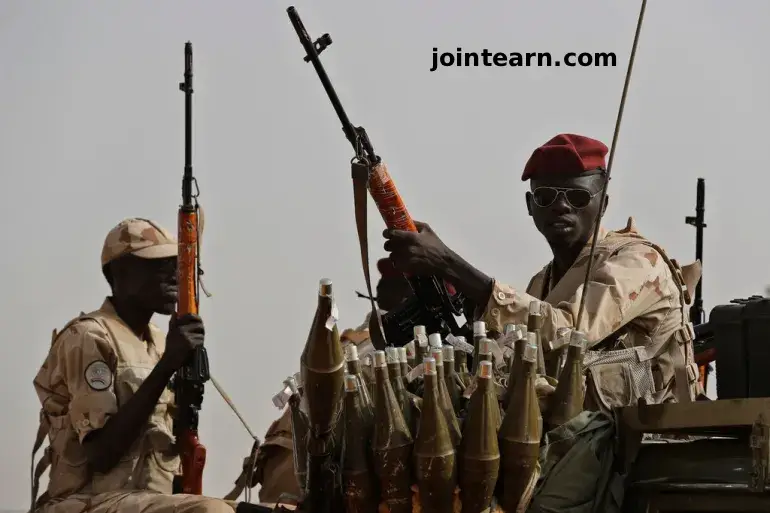
Arab League Endorses Sudanese Peace Plan
Ahmed Aboul Gheit, the secretary-general of the Arab League, has praised a peace plan introduced by Sudanese Prime Minister Kamil Idris to the UN Security Council (UNSC) earlier this week.
Gheit confirmed on Wednesday that the 22-member Arab League backs the initiative, highlighting its “highly important political, humanitarian, and security messages.” The League called for international stakeholders to engage positively with the plan, emphasizing the urgency of ending hostilities in Sudan.
Key Points of the Sudanese Peace Proposal
Prime Minister Idris, who leads Sudan’s transitional civilian government, described the proposal as “homemade,” contrasting it with previous ceasefire initiatives supported by the Quad—a coalition consisting of the United States, Saudi Arabia, Egypt, and the United Arab Emirates.
The peace plan calls for:
- Immediate ceasefire between the Sudanese military and the Rapid Support Forces (RSF).
- Global monitoring to ensure adherence to the truce.
- RSF withdrawal to designated camps and full disarmament, considered crucial for the success of any ceasefire.
Idris emphasized to the UNSC that without the RSF’s compliance, any truce would likely fail.
RSF Rejects Peace Plan
The RSF, led by General Mohamed Hamdan ‘Hemedti’ Dagalo, quickly dismissed the proposal. Adviser Al-Basha Tibiq stated that the idea of the RSF withdrawing is “closer to fantasy than to politics.”
In a statement posted on Facebook, the RSF criticized Idris’s plan as “recycling outdated exclusionary rhetoric” similar to positions previously held by Sudan’s military chief, General Abdel-Fattah al-Burhan.
Historically, the RSF had agreed to a Quad-backed humanitarian truce in November 2025, but Idris’s plan demands a more comprehensive withdrawal and disarmament, which the paramilitary group rejects.
Escalating Violence in Sudan
Fighting in Sudan has intensified, particularly in the Kordofan and Darfur regions, causing a severe humanitarian crisis. Since April 2023, the conflict between the Sudanese army and the RSF has:
- Killed tens of thousands of civilians.
- Displaced approximately 14 million people.
In October, the RSF captured el-Fasher, a strategic city in Western Darfur, after an 18-month siege that cut residents off from essential supplies like food and medicine. The paramilitary has been accused of mass killings, kidnappings, and sexual violence in its territorial gains.
Recent developments show the RSF advancing in North Darfur, seizing areas such as Abu Qamra and Ambro, while the army reports destroying RSF convoys and retaliating with shelling in Kadugli, South Kordofan. Tragically, General Muawiya Hamad, commander of the army’s 22nd Brigade, was killed in Babnusa during the fighting.
Humanitarian Crisis and Displacement
The ongoing conflict has displaced thousands of civilians. Officials report that 1,700 people fled to Sudan’s White Nile state, joining an already overwhelmed population of about two million refugees and displaced people in Kosti.
Al Jazeera correspondent Mohamed Vall described the city as under “amazing, huge stress,” with a severe shortage of basic facilities. Humanitarian organizations face significant funding cuts, exacerbating the crisis.
International Responses
US Deputy Ambassador to the UN, Jeffrey Bartos, urged both parties to accept the Quad’s humanitarian truce proposal immediately. Meanwhile, UAE Ambassador Mohamed Abushahab emphasized the opportunity to implement the truce and provide urgent aid to civilians.
Despite international pressure, the RSF remains defiant, rejecting calls for withdrawal, while the Sudanese military continues to clash with paramilitary forces across multiple regions.
Conclusion
The Sudanese peace plan presented by Prime Minister Kamil Idris represents a critical attempt to end one of Africa’s most devastating conflicts. Backed by the Arab League, the initiative faces significant challenges due to RSF resistance and escalating violence.
As the humanitarian crisis worsens, international attention and support are increasingly vital to prevent further loss of life and ensure aid reaches millions of displaced Sudanese.


Leave a Reply